Rapoport Benjamin I, Wattanapanitch Woradorn, Penagos Hector L, Musallam Sam, Andersen Richard A, Sarpeshkar Rahul
Department of Electrical Engineering and Computer Science, Massachusetts Institute of Technology (MIT), Cambridge, Massachusetts 02139, USA.
Annu Int Conf IEEE Eng Med Biol Soc. 2009;2009:4214-7. doi: 10.1109/IEMBS.2009.5333793.
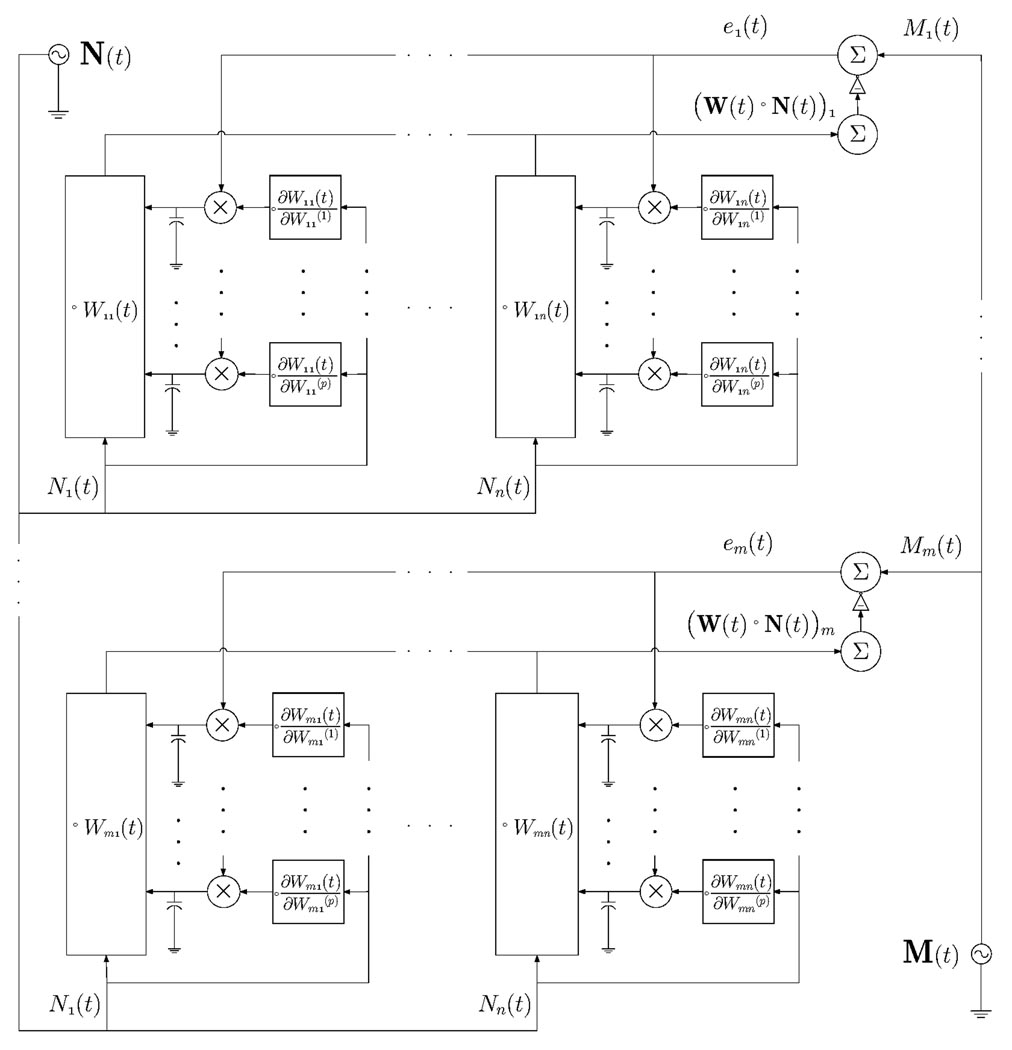
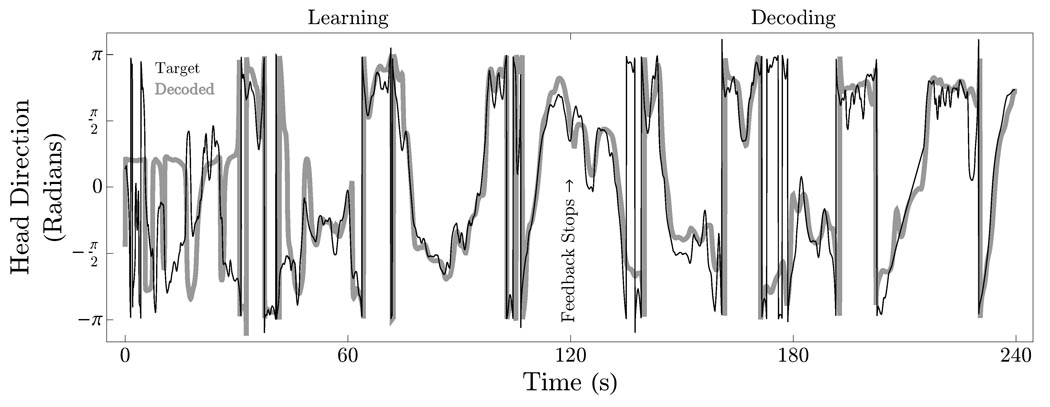
Algorithmically and energetically efficient computational architectures that operate in real time are essential for clinically useful neural prosthetic devices. Such devices decode raw neural data to obtain direct control signals for external devices. They can also perform data compression and vastly reduce the bandwidth and consequently power expended in wireless transmission of raw data from implantable brain-machine interfaces. We describe a biomimetic algorithm and micropower analog circuit architecture for decoding neural cell ensemble signals. The decoding algorithm implements a continuous-time artificial neural network, using a bank of adaptive linear filters with kernels that emulate synaptic dynamics. The filters transform neural signal inputs into control-parameter outputs, and can be tuned automatically in an on-line learning process. We provide experimental validation of our system using neural data from thalamic head-direction cells in an awake behaving rat.
对于临床上有用的神经假体设备而言,实时运行且在算法和能量方面高效的计算架构至关重要。此类设备对原始神经数据进行解码,以获取用于外部设备的直接控制信号。它们还能执行数据压缩,大幅降低带宽,从而减少从植入式脑机接口无线传输原始数据所消耗的功率。我们描述了一种用于解码神经细胞集合信号的仿生算法和微功率模拟电路架构。该解码算法实现了一个连续时间人工神经网络,使用一组具有模拟突触动力学内核的自适应线性滤波器。这些滤波器将神经信号输入转换为控制参数输出,并可在在线学习过程中自动调整。我们使用来自清醒行为大鼠丘脑头部方向细胞的神经数据对我们的系统进行了实验验证。