Department of Health Technology and Informatics, The Hong Kong Polytechnic University, Hong Kong, China.
Acta Biomater. 2010 Jun;6(6):2013-9. doi: 10.1016/j.actbio.2009.12.008. Epub 2009 Dec 11.
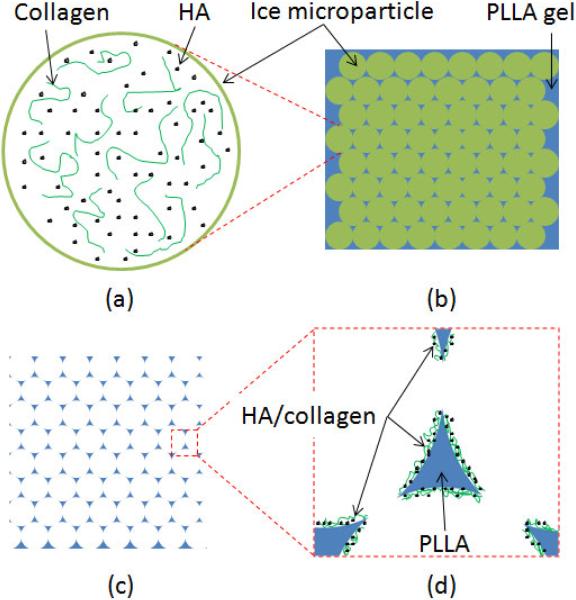
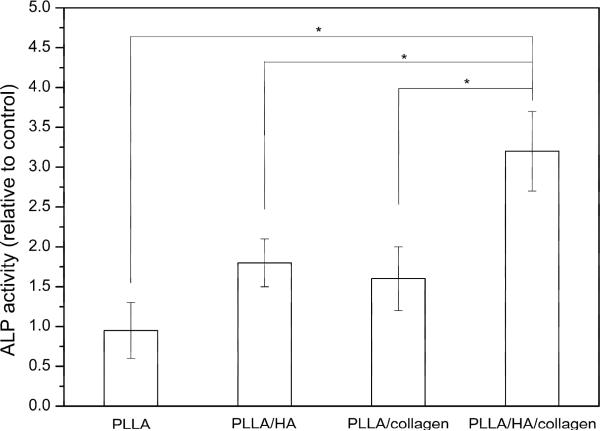
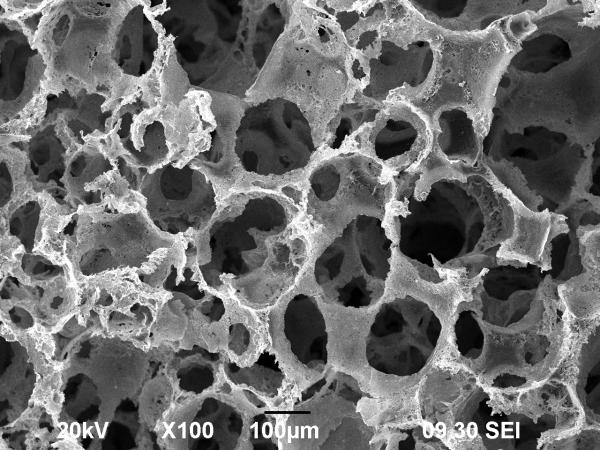
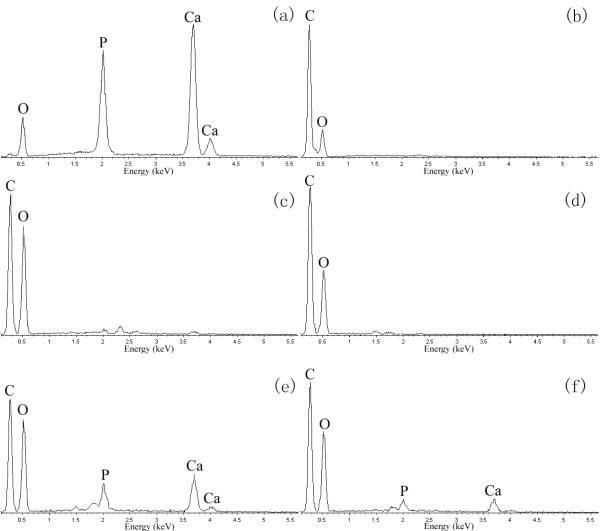
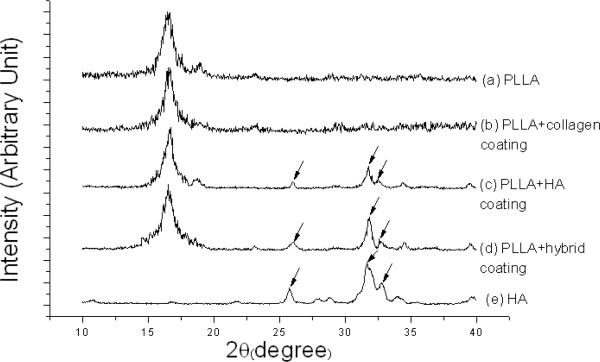
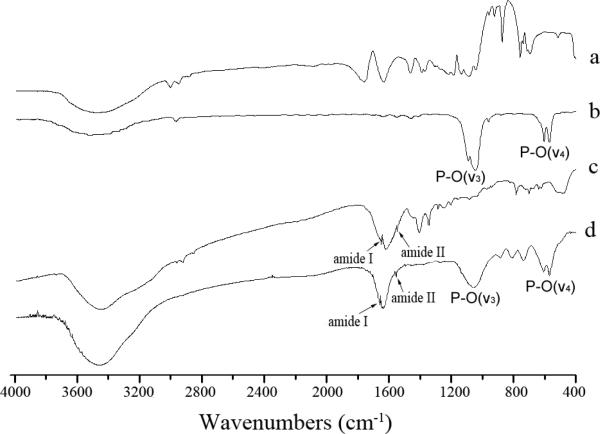
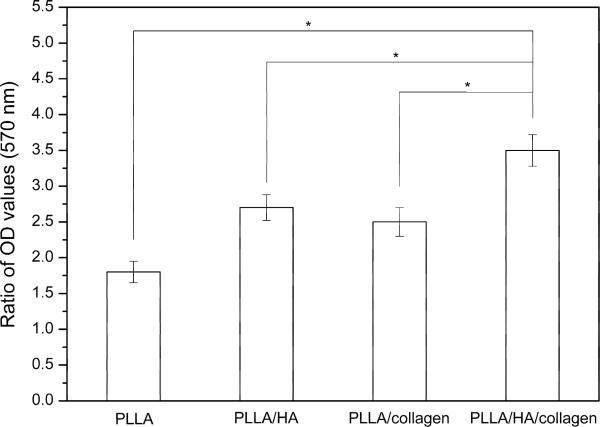
Porous poly(l-lactic acid) (PLLA) scaffolds with bioactive coatings were prepared by a novel one-step method. In this process, ice-based microporogens containing bioactive molecules, such as hydroxyapatite (HA) and collagen, served as both porogens to form the porous structure and vehicles to transfer the bioactive molecules to the inside of PLLA scaffolds in a single step. Based on scanning electron microscopy, energy-dispersive X-ray spectroscopy, X-ray diffraction and Fourier transform infrared spectroscopy analysis, the bioactive components were found to be transferred successfully from the porogens to PLLA scaffolds evenly. Osteoblast cells were used to evaluate the cellular behaviors of the composite scaffolds. After culturing for 8days, MTT assay and alkaline phosphatase activity results suggested that HA/collagen could improve the interactions between osteoblast cells and the polymeric scaffold.
多孔聚(L-乳酸)(PLLA)支架与生物活性涂层是通过一种新颖的一步法制备的。在这个过程中,含有生物活性分子的基于冰的微孔剂,如羟基磷灰石(HA)和胶原,既作为成孔剂形成多孔结构,又作为载体将生物活性分子在一步内转移到 PLLA 支架的内部。基于扫描电子显微镜、能谱、X 射线衍射和傅里叶变换红外光谱分析,发现生物活性成分成功地从微孔剂均匀地转移到 PLLA 支架中。成骨细胞用于评估复合支架的细胞行为。培养 8 天后,MTT 检测和碱性磷酸酶活性结果表明,HA/胶原可以改善成骨细胞与聚合物支架之间的相互作用。