Department of Human Development and Family Studies, The Gerontology Center, Pennsylvania State University, University Park, PA 16802, USA.
Psychol Aging. 2009 Dec;24(4):828-40. doi: 10.1037/a0017925.
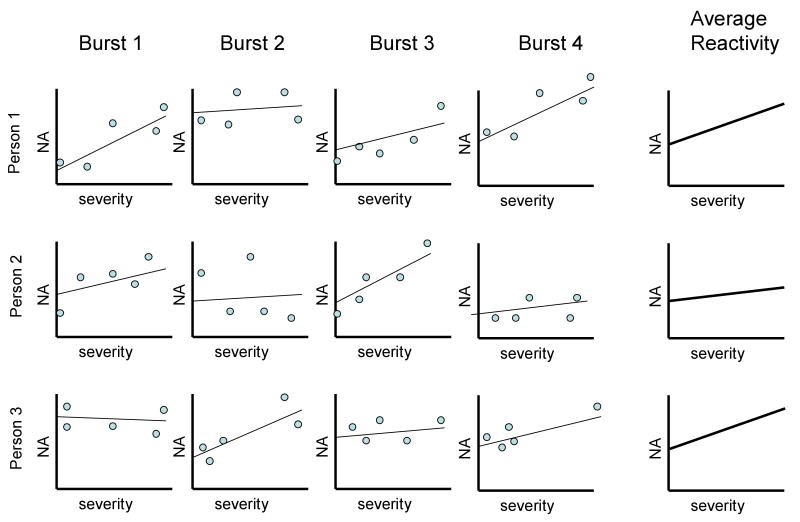
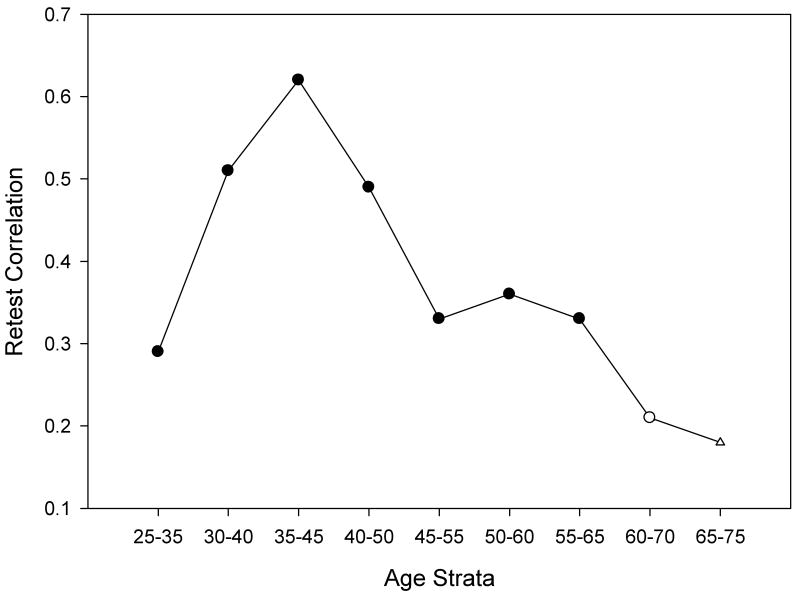
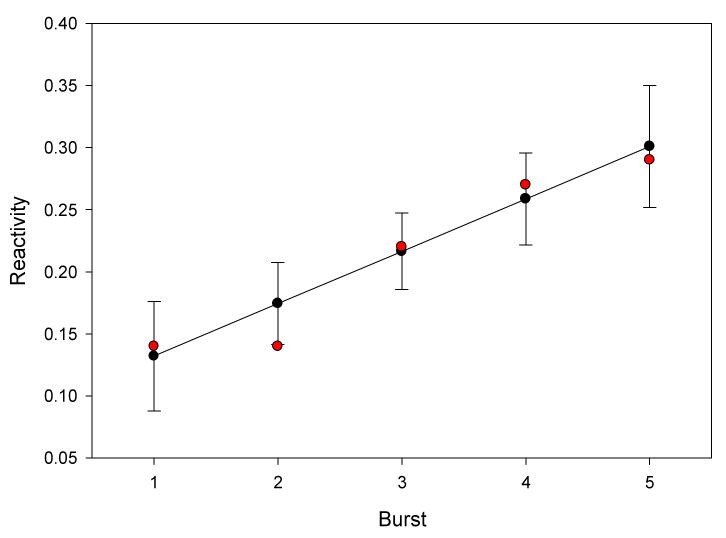
There is little longitudinal information on aging-related changes in emotional responses to negative events. In the present article, we examined intraindividual change and variability in the within-person coupling of daily stress and negative affect using data from 2 measurement-burst daily diary studies. Three main findings emerged. First, average reactivity to daily stress increased longitudinally, and this increase was evident across most of the adult lifespan. Second, individual differences in emotional reactivity to daily stress exhibited long-term temporal stability, but this stability was greatest in midlife and decreased in old age. Third, reactivity to daily stress varied reliably within-persons (across-time), with individuals exhibiting higher levels of reactivity during times when reporting high levels of global subject stress in the previous month. Taken together, the present results emphasize the importance of modeling dynamic psychosocial and aging processes that operate across different time scales for understanding age-related changes in daily stress processes.
关于负面事件引起的情绪反应与衰老相关的纵向变化信息较少。在本文中,我们使用来自 2 项测量爆发式日常日记研究的数据,研究了个体内部每日压力和负面情绪之间的个体内耦合的变化和可变性。主要有三个发现。首先,对日常压力的平均反应会随时间逐渐增强,而且这种增强在成年期的大部分时间都很明显。其次,个体对日常压力的情绪反应存在长期的时间稳定性,但这种稳定性在中年时最大,在老年时会下降。第三,日常压力的反应在个体内部(随时间)可靠地变化,与个体在报告上个月整体主观压力水平较高时表现出更高水平的反应一致。总之,本研究结果强调了在不同时间尺度上对动态心理社会和衰老过程进行建模的重要性,这有助于理解与年龄相关的日常压力过程的变化。