Department of Pharmacology, Toxicology and Therapeutics, School of Medicine, University of Kansas Medical Center, Kansas City, KS 66160, USA.
Free Radic Biol Med. 2010 Mar 15;48(6):821-30. doi: 10.1016/j.freeradbiomed.2009.12.024. Epub 2010 Jan 11.
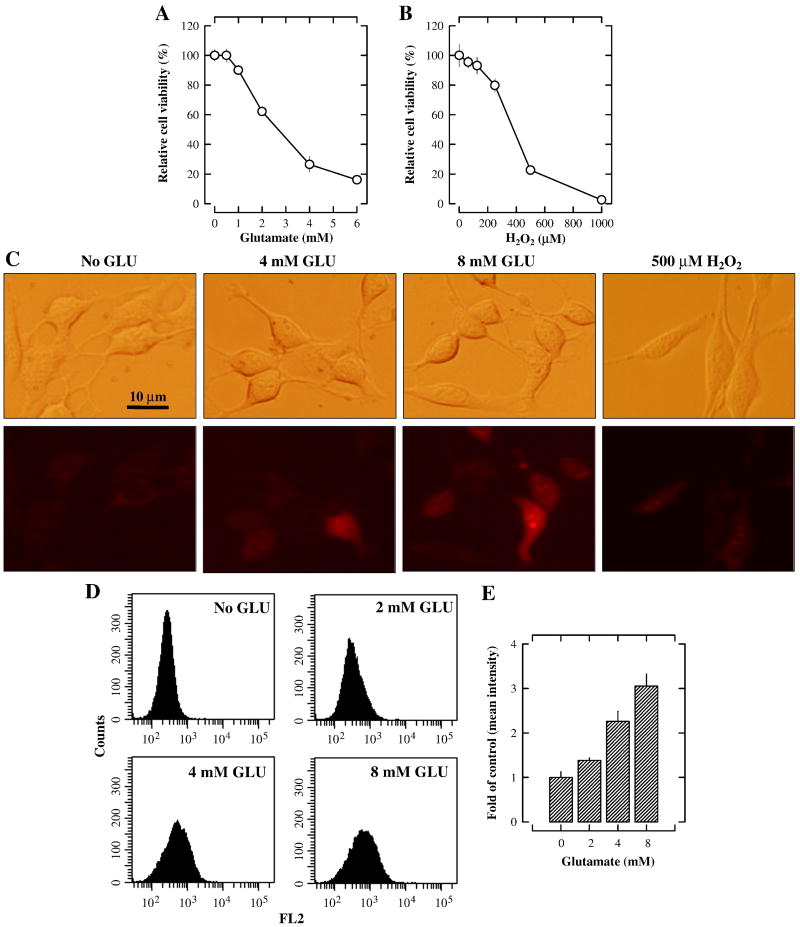
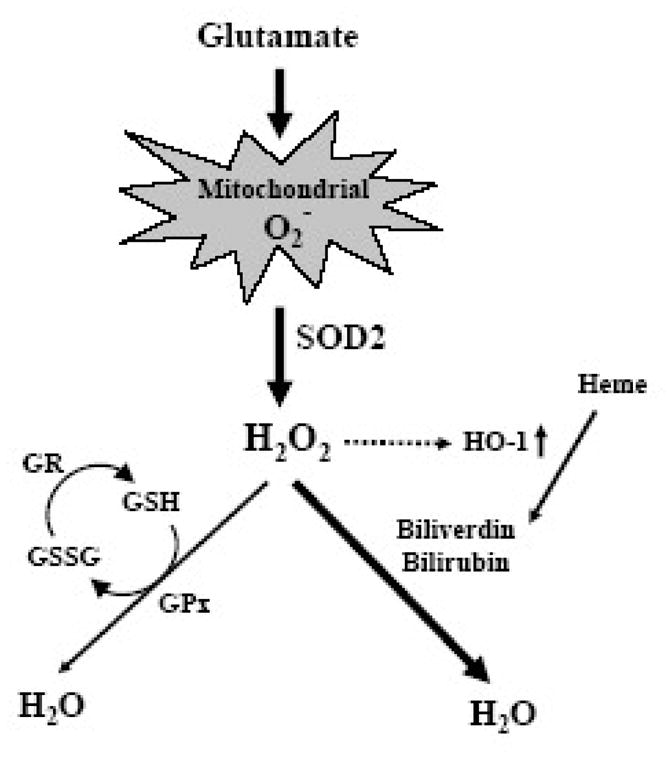
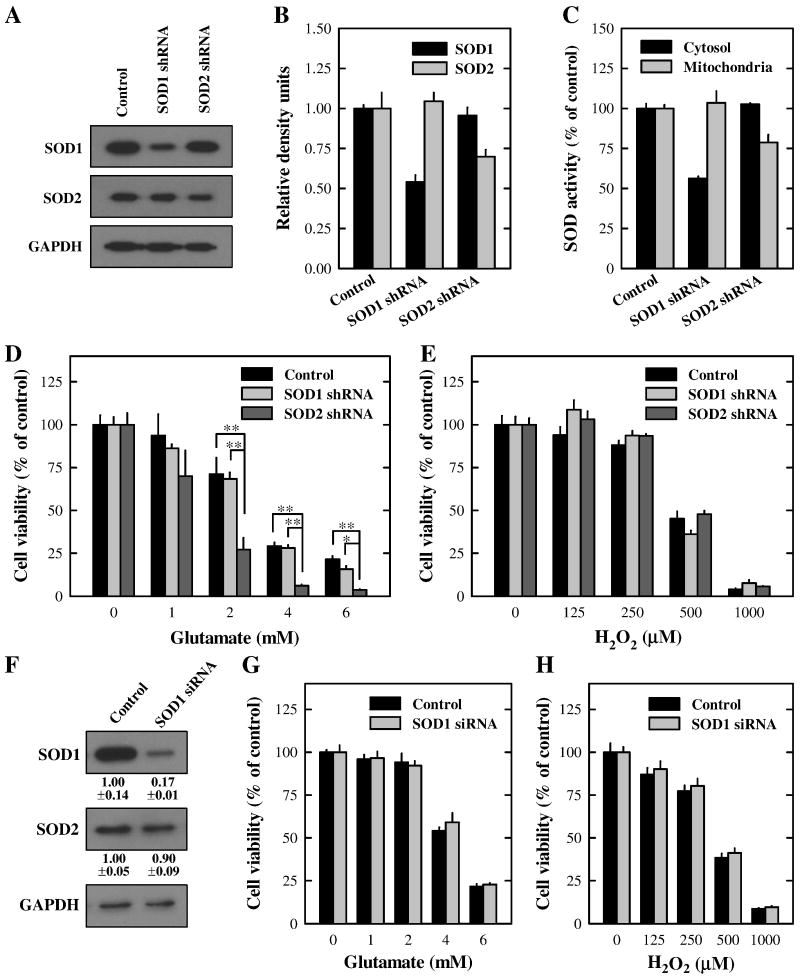
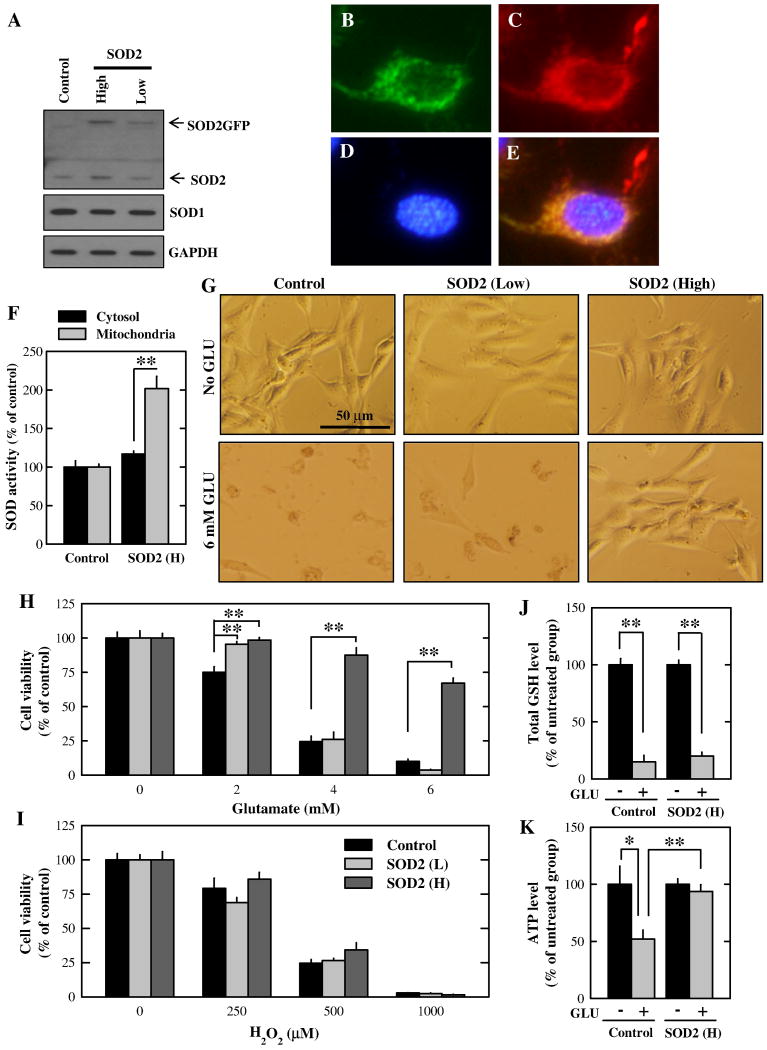
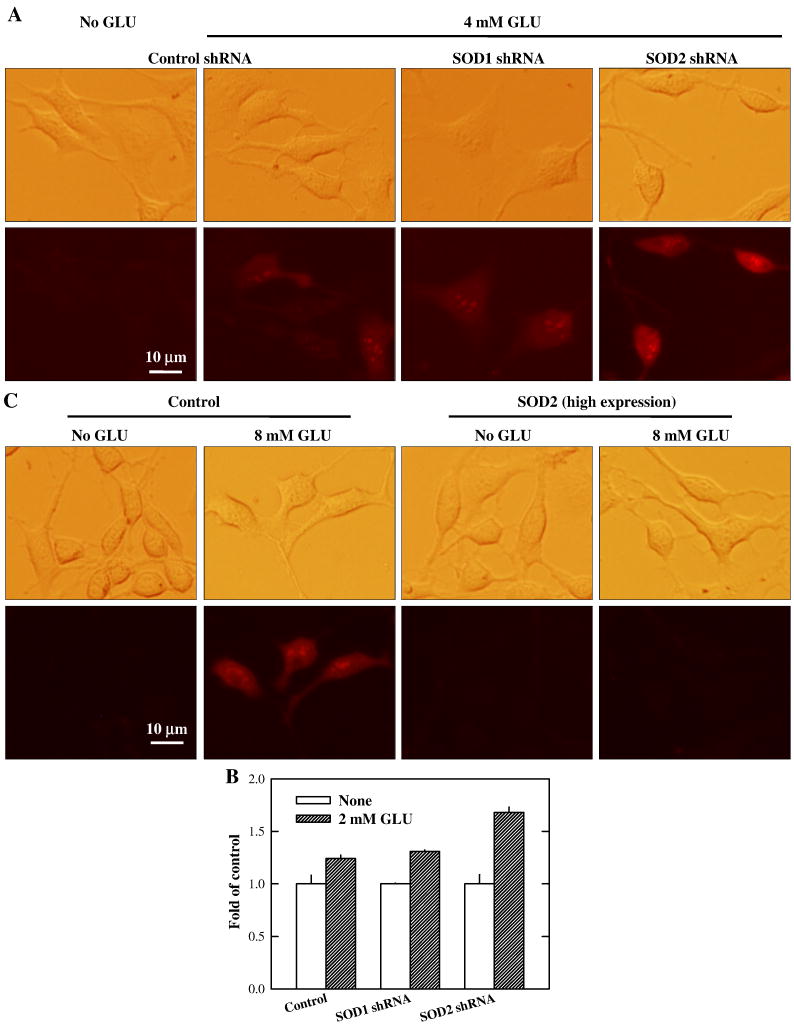
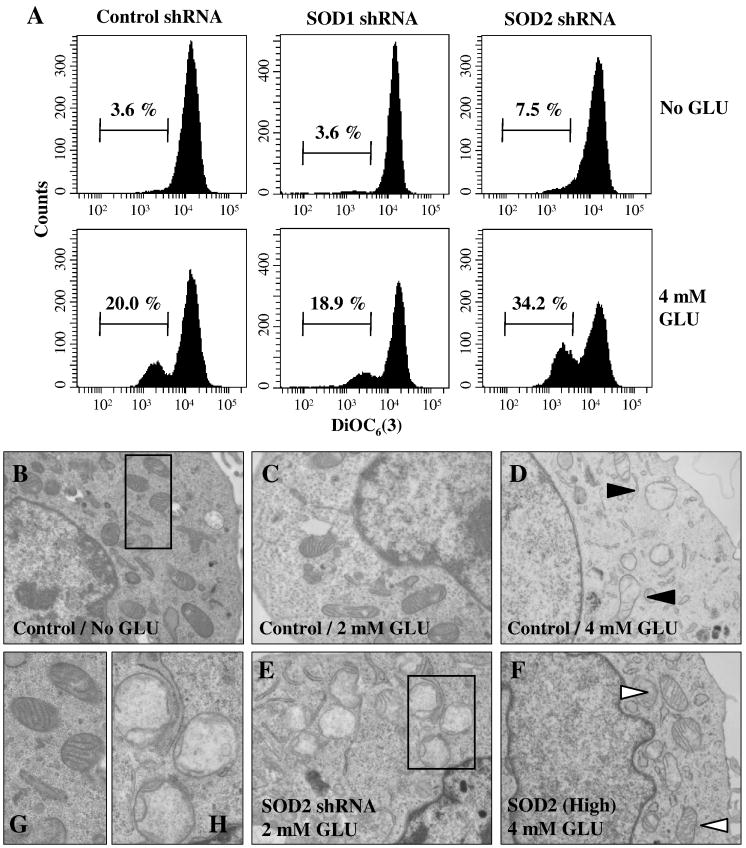
Oxidative cell death is an important contributing factor in neurodegenerative diseases. Using HT22 mouse hippocampal neuronal cells as a model, we sought to demonstrate that mitochondria are crucial early targets of glutamate-induced oxidative cell death. We show that when HT22 cells were transfected with shRNA for knockdown of the mitochondrial superoxide dismutase (SOD2), these cells became more susceptible to glutamate-induced oxidative cell death. The increased susceptibility was accompanied by increased accumulation of mitochondrial superoxide and loss of normal mitochondrial morphology and function at early time points after glutamate exposure. However, overexpression of SOD2 in these cells reduced the mitochondrial superoxide level, protected mitochondrial morphology and functions, and provided resistance against glutamate-induced oxidative cytotoxicity. The change in the sensitivity of these SOD2-altered HT22 cells was neurotoxicant-specific, because the cytotoxicity of hydrogen peroxide was not altered in these cells. In addition, selective knockdown of the cytosolic SOD1 in cultured HT22 cells did not appreciably alter their susceptibility to either glutamate or hydrogen peroxide. These findings show that the mitochondrial SOD2 plays a critical role in protecting neuronal cells from glutamate-induced oxidative stress and cytotoxicity. These data also indicate that mitochondria are important early targets of glutamate-induced oxidative neurotoxicity.
氧化细胞死亡是神经退行性疾病的一个重要致病因素。我们使用 HT22 小鼠海马神经元细胞作为模型,旨在证明线粒体是谷氨酸诱导的氧化细胞死亡的早期关键靶点。我们发现,当 HT22 细胞被转染用于敲低线粒体超氧化物歧化酶(SOD2)的 shRNA 时,这些细胞对谷氨酸诱导的氧化细胞死亡变得更加敏感。在谷氨酸暴露后的早期时间点,这种增加的敏感性伴随着线粒体超氧化物的积累增加以及正常线粒体形态和功能的丧失。然而,这些细胞中超氧化物歧化酶 2 的过表达降低了线粒体超氧化物水平,保护了线粒体形态和功能,并提供了对谷氨酸诱导的氧化细胞毒性的抗性。这些 SOD2 改变的 HT22 细胞敏感性的变化是神经毒剂特异性的,因为这些细胞中过氧化氢的细胞毒性没有改变。此外,在培养的 HT22 细胞中选择性敲低胞质 SOD1 并没有明显改变它们对谷氨酸或过氧化氢的敏感性。这些发现表明,线粒体 SOD2 在保护神经元细胞免受谷氨酸诱导的氧化应激和细胞毒性方面发挥着关键作用。这些数据还表明,线粒体是谷氨酸诱导的氧化神经毒性的早期重要靶点。