Tumor Targeting Group, University of Sheffield Medical School, Sheffield S10 2RX, UK.
Br J Cancer. 2010 Feb 2;102(3):594-601. doi: 10.1038/sj.bjc.6605495. Epub 2010 Jan 12.
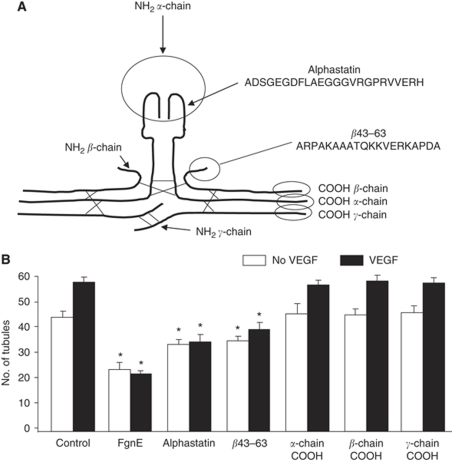
Angiogenesis and haemostasis are closely linked within tumours with many haemostatic proteins regulating tumour angiogenesis. Indeed we previously identified a fragment of human fibrinogen, fibrinogen E-fragment (FgnE) with potent anti-angiogenic properties in vitro and cytotoxic effects on tumour vessels in vivo. We therefore investigated which region of FgnE was mediating vessel cytotoxicity.
Human dermal microvascular endothelial cells (ECs) were used to test the efficacy of peptides derived from FgnE on proliferation, migration, differentiation, apoptosis and adhesion before testing the efficacy of an active peptide on tumour vasculature in vivo.
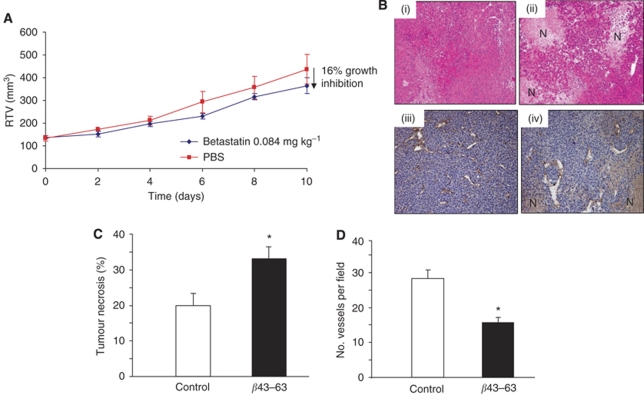
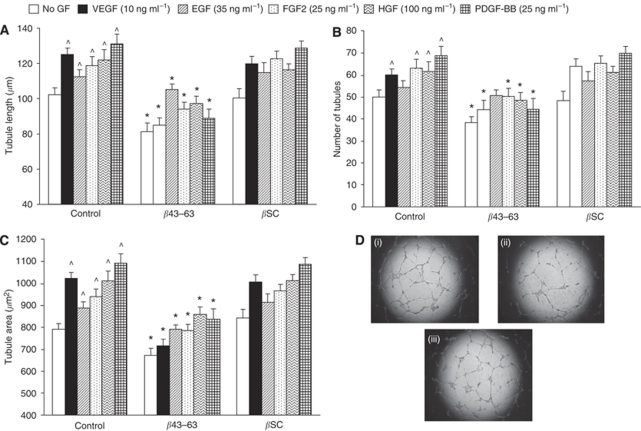
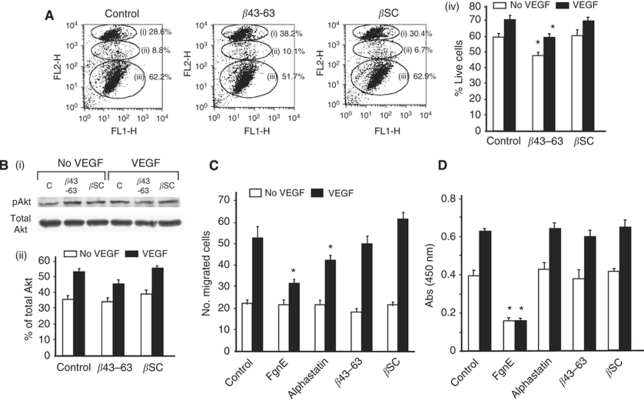
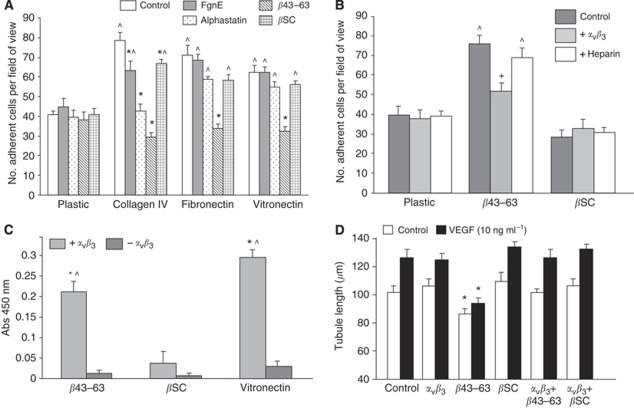
We identified a 20-amino-acid peptide derived from the beta chain of FgnE, beta43-63, which had no effect on EC proliferation or migration but markedly inhibited the ability of activated ECs to form tubules or to adhere to various constituents of the extracellular matrix - collagen IV, fibronectin and vitronectin. Furthermore, our data show that beta43-63 interacts with ECs, in part, by binding to alpha(v)beta(3), so soluble alpha(v)beta(3) abrogated beta43-63 inhibition of tubule formation by activated ECs. Finally, when injected into mice bearing tumour xenografts, beta43-63 inhibited tumour vascularisation and induced formation of significant tumour necrosis.
Taken together, these data suggest that beta43-63 is a novel anti-tumour peptide whose anti-angiogenic effects are mediated by alpha(v)beta(3).
血管生成和止血在肿瘤中密切相关,许多止血蛋白调节肿瘤血管生成。事实上,我们之前在体外鉴定出一种人纤维蛋白原的片段,纤维蛋白原 E 片段(FgnE),具有很强的抗血管生成特性,并对体内肿瘤血管具有细胞毒性作用。因此,我们研究了 FgnE 的哪个区域介导血管细胞毒性。
用人真皮微血管内皮细胞(ECs)测试源自 FgnE 的肽对增殖、迁移、分化、凋亡和粘附的功效,然后在体内测试活性肽对肿瘤血管的功效。
我们鉴定出一种源自 FgnE 的β链的 20 个氨基酸肽,β43-63,对 EC 增殖或迁移没有影响,但明显抑制激活的 EC 形成小管或粘附到细胞外基质的各种成分的能力 - 胶原 IV、纤连蛋白和 vitronectin。此外,我们的数据表明,β43-63 通过与 EC 上的α(v)β(3)结合在部分上发挥作用,因此可溶性α(v)β(3) 阻断了β43-63 对激活的 EC 小管形成的抑制作用。最后,当将β43-63 注射到携带肿瘤异种移植物的小鼠中时,它抑制了肿瘤血管生成并诱导了明显的肿瘤坏死形成。
综上所述,这些数据表明,β43-63 是一种新型的抗肿瘤肽,其抗血管生成作用是通过α(v)β(3)介导的。