Dept. of Engineering Science, Institute of Biomedical Engineering, University of Oxford, Oxford, UK.
Biotechnol Prog. 2010 May-Jun;26(3):827-37. doi: 10.1002/btpr.368.
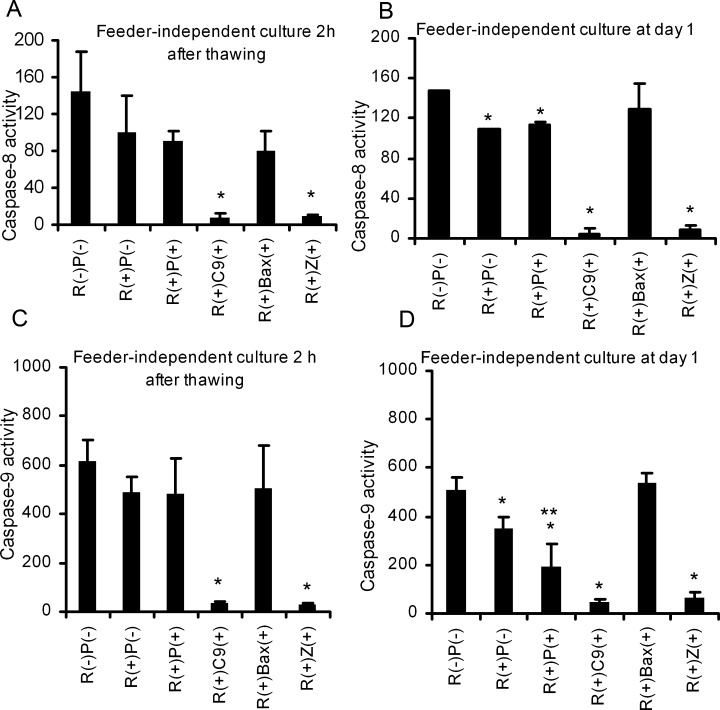
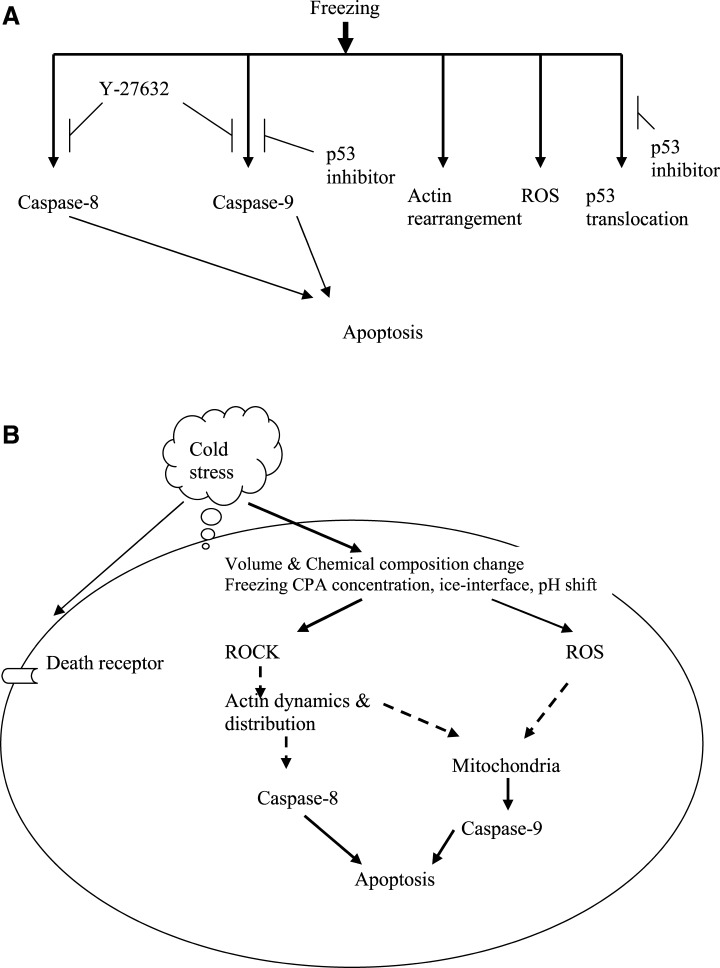
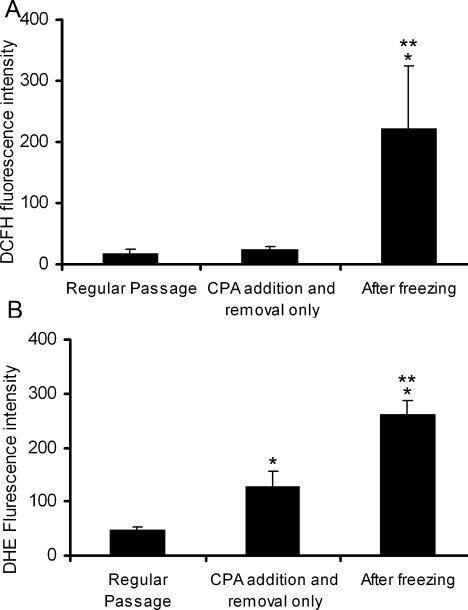
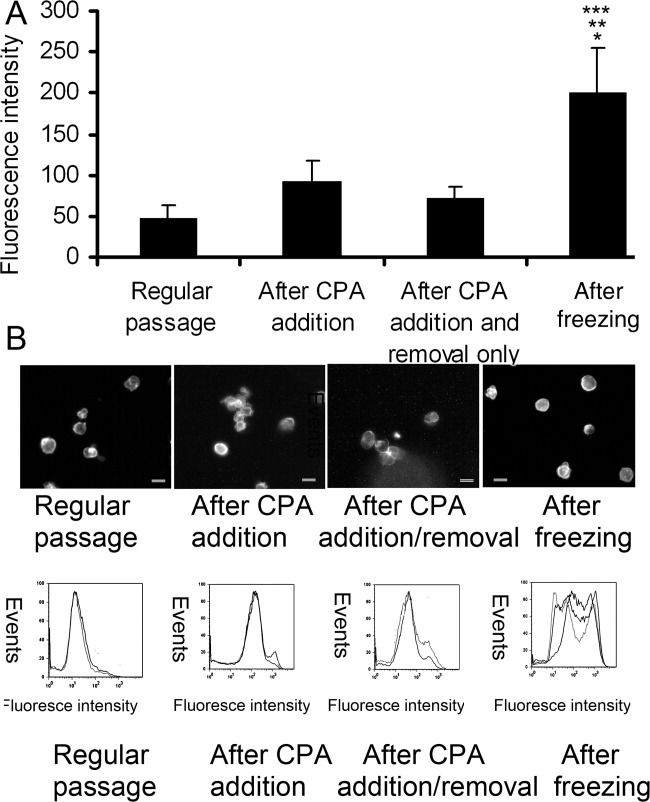
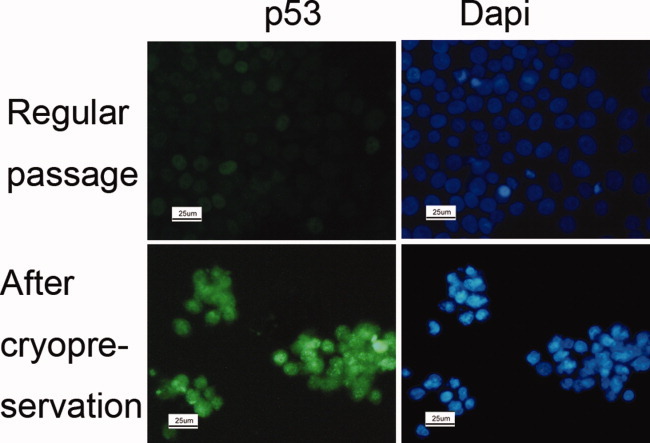
Human embryonic stem (hES) cells have enormous potential for clinical applications. However, one major challenge is to achieve high cell recovery rate after cryopreservation. Understanding how the conventional cryopreservation protocol fails to protect the cells is a prerequisite for developing efficient and successful cryopreservation methods for hES cell lines and banks. We investigated how the stimuli from cryopreservation result in apoptosis, which causes the low cell recovery rate after cryopreservation. The level of reactive oxygen species (ROS) is significantly increased, F-actin content and distribution is altered, and caspase-8 and caspase-9 are activated after cryopreservation. p53 is also activated and translocated into nucleus. During cryopreservation apoptosis is induced by activation of both caspase-8 through the extrinsic pathway and caspase-9 through the intrinsic pathway. However, exactly how the extrinsic pathway is activated is still unclear and deserves further investigation.
人类胚胎干细胞(hES)细胞在临床应用方面具有巨大的潜力。然而,一个主要的挑战是在冷冻保存后实现高细胞回收率。了解传统的冷冻保存方案为何不能保护细胞,是开发高效和成功的 hES 细胞系和细胞库冷冻保存方法的前提。我们研究了冷冻保存带来的刺激如何导致细胞凋亡,从而导致冷冻保存后细胞回收率低。冷冻保存后,活性氧(ROS)水平显著升高,F-肌动蛋白含量和分布发生改变,caspase-8 和 caspase-9 被激活。p53 也被激活并转移到细胞核中。在冷冻保存过程中,通过外在途径激活 caspase-8 和内在途径激活 caspase-9 诱导细胞凋亡。然而,外在途径如何被激活仍不清楚,值得进一步研究。