Department of Microbiology and Immunology, University of North Carolina, Chapel Hill, NC 27599-7290, USA.
Curr Opin Microbiol. 2010 Apr;13(2):177-83. doi: 10.1016/j.mib.2010.01.004. Epub 2010 Feb 3.
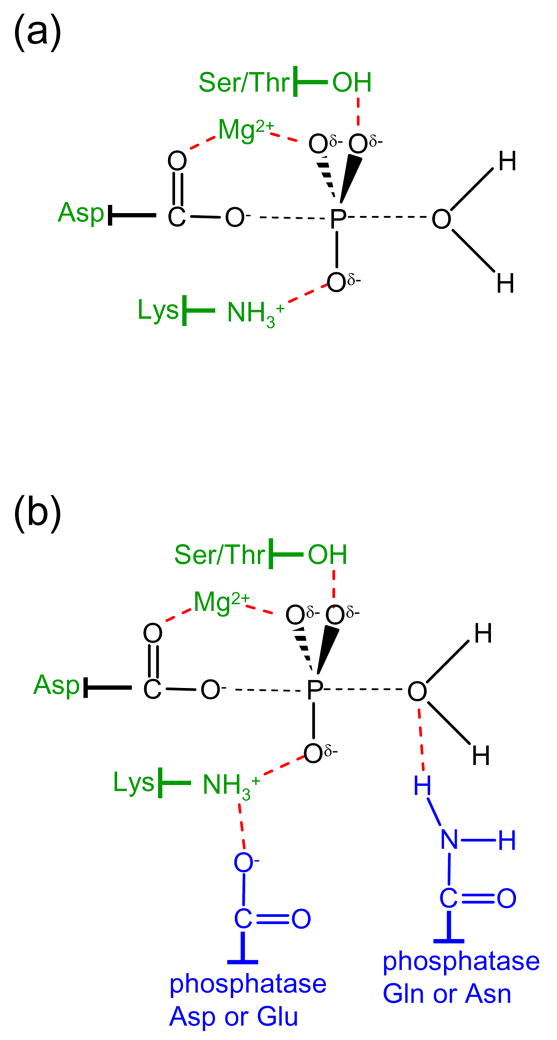
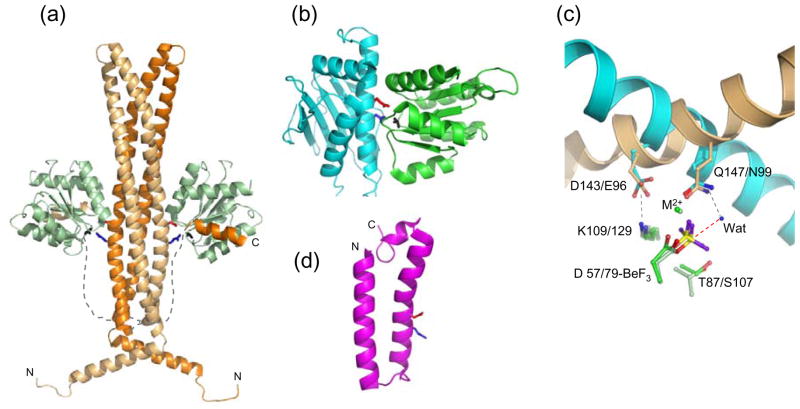
Signal termination in two-component systems occurs by loss of the phosphoryl group from the response regulator protein. This review explores our current understanding of the structures, catalytic mechanisms and means of regulation of the known families of phosphatases that catalyze response regulator dephosphorylation. The CheZ and CheC/CheX/FliY families, despite different overall structures, employ identical catalytic strategies using an amide side chain to orient a water molecule for in-line attack of the aspartyl phosphate. Spo0E phosphatases contain sequence and structural features that suggest a strategy similar to the chemotaxis phosphatases but the mechanism used by the Rap phosphatases is not yet elucidated. Identification of features shared by phosphatase families may aid in the identification of currently unrecognized classes of response regulator phosphatases.
信号在双组分系统中终止是通过响应调节蛋白失去磷酸基团来实现的。本综述探讨了我们目前对已知的磷酸酶家族的结构、催化机制和调节方式的理解,这些磷酸酶家族催化响应调节蛋白的去磷酸化。尽管 CheZ 和 CheC/CheX/FliY 家族具有不同的整体结构,但它们采用相同的催化策略,利用酰胺侧链来定向一个水分子,使其进行直线攻击天冬氨酸磷酸酯。Spo0E 磷酸酶含有序列和结构特征,表明其策略类似于趋化性磷酸酶,但 Rap 磷酸酶的机制尚未阐明。鉴定磷酸酶家族共有的特征可能有助于识别目前尚未被识别的响应调节蛋白磷酸酶类别。