• 文献检索
  • 文档翻译
  • 深度研究
  • 学术资讯
  • Suppr Zotero 插件Zotero 插件
  • 邀请有礼
  • 套餐&价格
  • 历史记录
应用&插件
Suppr Zotero 插件Zotero 插件浏览器插件Mac 客户端Windows 客户端微信小程序
定价
高级版会员购买积分包购买API积分包
服务
文献检索文档翻译深度研究API 文档MCP 服务
关于我们
关于 Suppr公司介绍联系我们用户协议隐私条款
关注我们

Suppr 超能文献

核心技术专利:CN118964589B侵权必究
粤ICP备2023148730 号-1Suppr @ 2026

文献检索

告别复杂PubMed语法,用中文像聊天一样搜索,搜遍4000万医学文献。AI智能推荐,让科研检索更轻松。

立即免费搜索

文件翻译

保留排版,准确专业,支持PDF/Word/PPT等文件格式,支持 12+语言互译。

免费翻译文档

深度研究

AI帮你快速写综述,25分钟生成高质量综述,智能提取关键信息,辅助科研写作。

立即免费体验

采用选择性激光烧结技术制备具有一维、二维和三维正交取向多孔结构的聚己内酯支架的力学和微观结构性能。

Mechanical and microstructural properties of polycaprolactone scaffolds with one-dimensional, two-dimensional, and three-dimensional orthogonally oriented porous architectures produced by selective laser sintering.

机构信息

George W. Woodruff School of Mechanical Engineering, Georgia Institute of Technology, Atlanta, GA 30332-0405, USA.

出版信息

Acta Biomater. 2010 Jul;6(7):2467-76. doi: 10.1016/j.actbio.2010.02.002. Epub 2010 Feb 8.

DOI:10.1016/j.actbio.2010.02.002
PMID:20144914
原文链接:https://pmc.ncbi.nlm.nih.gov/articles/PMC2874084/
Abstract

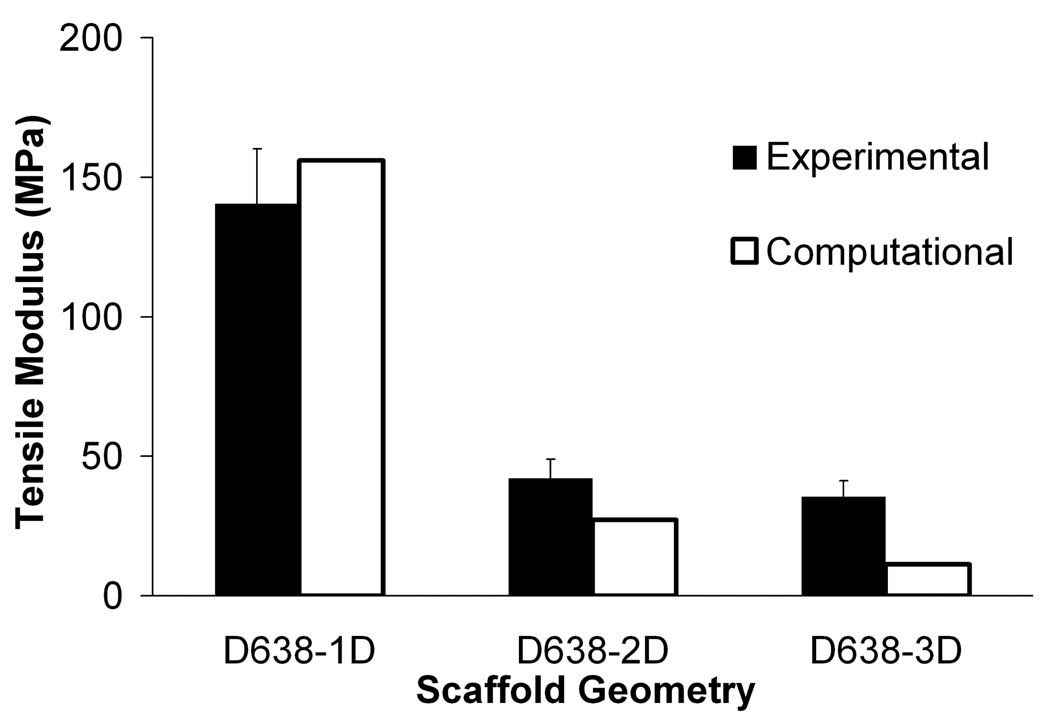
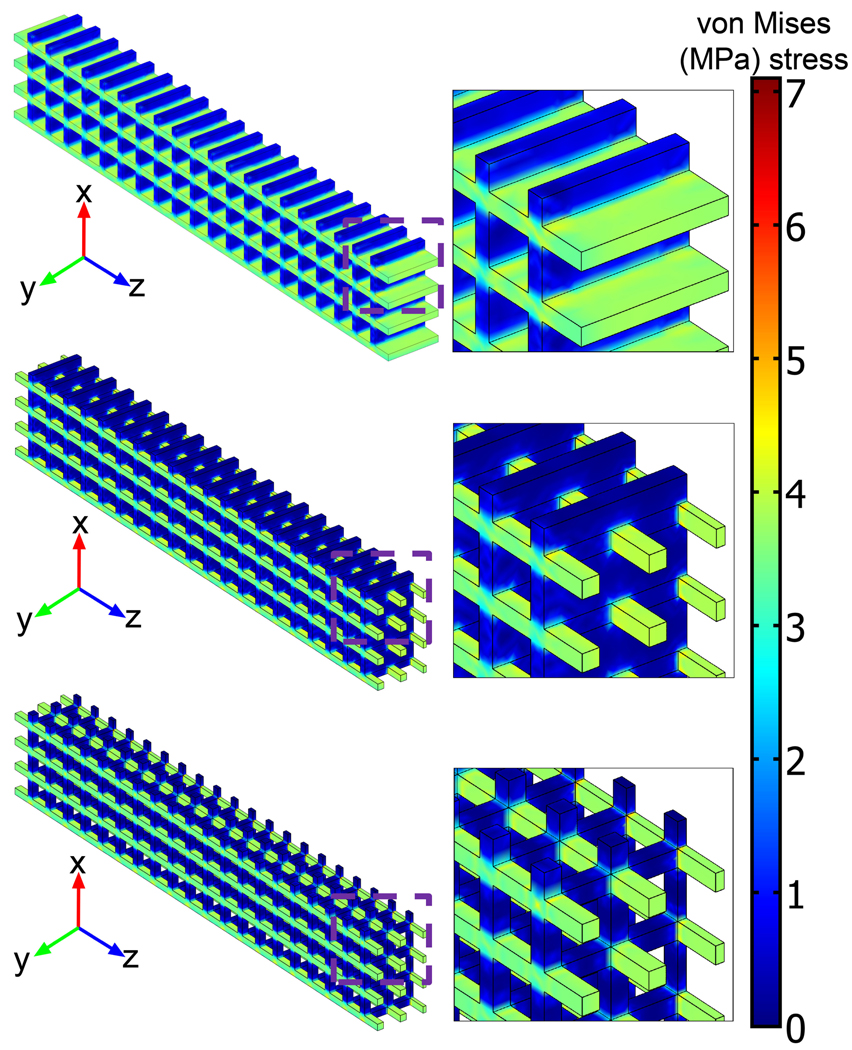
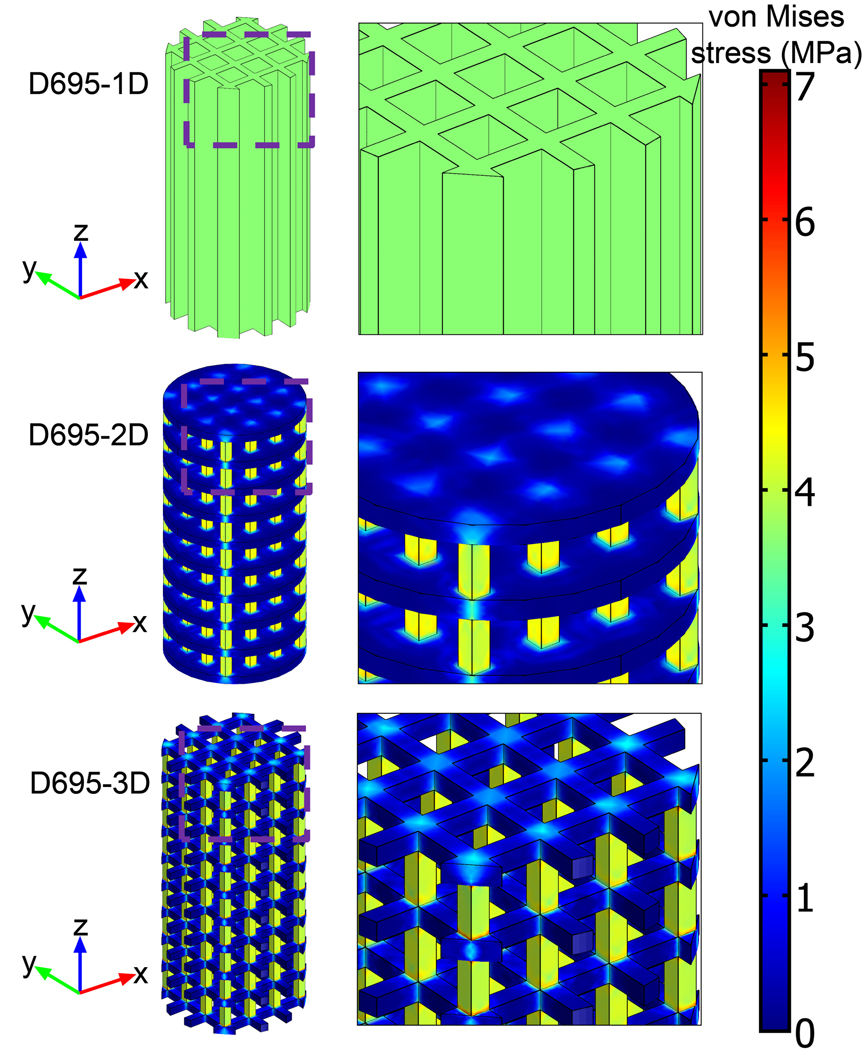
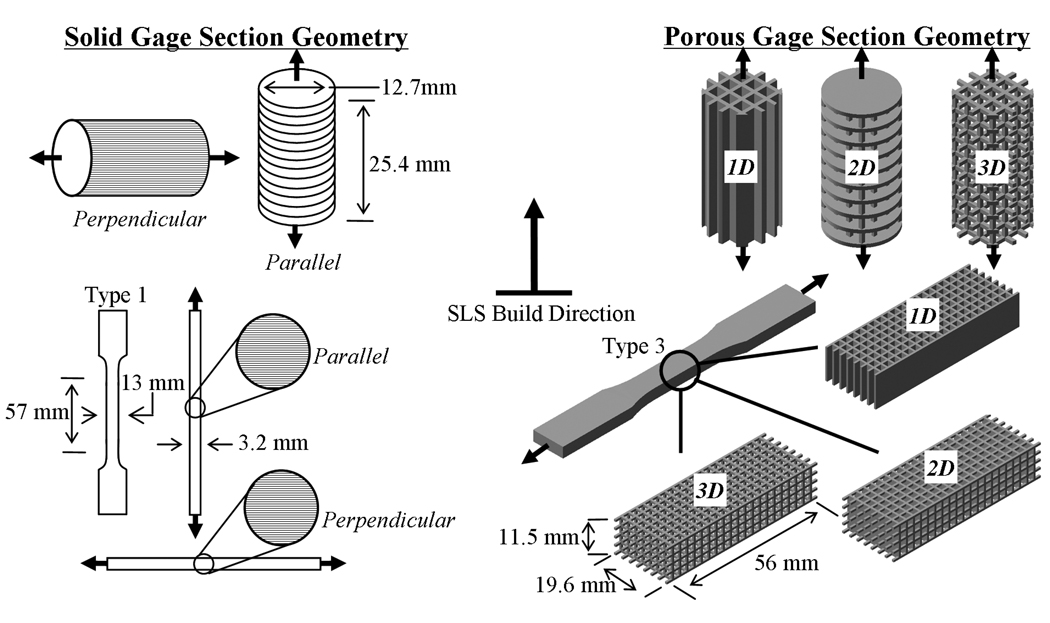
This article reports on the experimental determination and finite element modeling of tensile and compressive mechanical properties of solid polycaprolactone (PCL) and of porous PCL scaffolds with one-dimensional, two-dimensional and three-dimensional orthogonal, periodic porous architectures produced by selective laser sintering (SLS). PCL scaffolds were built using optimum processing parameters, ensuring scaffolds with nearly full density (>95%) in the designed solid regions and with excellent geometric and dimensional control (within 3-8% of design). The tensile strength of bulk PCL ranged from 10.5 to 16.1 MPa, its modulus ranged from 343.9 to 364.3 MPa, and the tensile yield strength ranged from 8.2 to 10.1 MPa. These values are consistent with reported literature values for PCL processed through various manufacturing methods. Across porosity ranged from 56.87% to 83.3%, the tensile strength ranged from 4.5 to 1.1 MPa, the tensile modulus ranged from 140.5 to 35.5 MPa, and the yield strength ranged from 3.2 to 0.76 MPa. The compressive strength of bulk PCL was 38.7 MPa, the compressive modulus ranged from 297.8 to 317.1 MPa, and the compressive yield strength ranged from 10.3 to 12.5 MPa. Across porosity ranged from 51.1% to 80.9%, the compressive strength ranged from 10.0 to 0.6 MPa, the compressive modulus ranged from 14.9 to 12.1 MPa, and the compressive yield strength ranged from 4.25 to 0.42 MPa. These values, while being in the lower range of reported values for trabecular bone, are the highest reported for PCL scaffolds produced by SLS and are among the highest reported for similar PCL scaffolds produced through other layered manufacturing techniques. Finite element analysis showed good agreement between experimental and computed effective tensile and compressive moduli. Thus, the construction of bone tissue engineering scaffolds endowed with oriented porous architectures and with predictable mechanical properties through SLS is demonstrated.

摘要

本文报告了通过选择性激光烧结(SLS)制造的具有一维、二维和三维正交周期性多孔结构的固体聚己内酯(PCL)和多孔 PCL 支架的拉伸和压缩力学性能的实验测定和有限元建模。使用最佳的加工参数制造 PCL 支架,确保设计的实心区域中的支架具有几乎完全的密度(>95%)和出色的几何和尺寸控制(在设计的 3-8%范围内)。大块 PCL 的拉伸强度范围为 10.5 至 16.1 MPa,其模量范围为 343.9 至 364.3 MPa,拉伸屈服强度范围为 8.2 至 10.1 MPa。这些值与通过各种制造方法加工的 PCL 的报告文献值一致。多孔率范围为 56.87%至 83.3%时,拉伸强度范围为 4.5 至 1.1 MPa,拉伸模量范围为 140.5 至 35.5 MPa,屈服强度范围为 3.2 至 0.76 MPa。大块 PCL 的压缩强度为 38.7 MPa,压缩模量范围为 297.8 至 317.1 MPa,压缩屈服强度范围为 10.3 至 12.5 MPa。多孔率范围为 51.1%至 80.9%时,压缩强度范围为 10.0 至 0.6 MPa,压缩模量范围为 14.9 至 12.1 MPa,压缩屈服强度范围为 4.25 至 0.42 MPa。虽然这些值处于报告的小梁骨值的较低范围,但它们是通过 SLS 制造的 PCL 支架中报告的最高值,并且与通过其他层制造技术制造的类似 PCL 支架的报告值相比处于较高水平。有限元分析表明,实验和计算的有效拉伸和压缩模量之间具有良好的一致性。因此,通过 SLS 制造具有定向多孔结构和可预测机械性能的骨组织工程支架的构建得到了证明。
https://cdn.ncbi.nlm.nih.gov/pmc/blobs/f1ad/2874084/0332e45f29cb/nihms184383f6.jpg
https://cdn.ncbi.nlm.nih.gov/pmc/blobs/f1ad/2874084/b57992c8d5b6/nihms184383f1.jpg
https://cdn.ncbi.nlm.nih.gov/pmc/blobs/f1ad/2874084/09e210f3c0f5/nihms184383f2.jpg
https://cdn.ncbi.nlm.nih.gov/pmc/blobs/f1ad/2874084/b25ce2d682e5/nihms184383f3a.jpg
https://cdn.ncbi.nlm.nih.gov/pmc/blobs/f1ad/2874084/8f39dead28cb/nihms184383f4.jpg
https://cdn.ncbi.nlm.nih.gov/pmc/blobs/f1ad/2874084/07f1c2d12058/nihms184383f5.jpg
https://cdn.ncbi.nlm.nih.gov/pmc/blobs/f1ad/2874084/0332e45f29cb/nihms184383f6.jpg
https://cdn.ncbi.nlm.nih.gov/pmc/blobs/f1ad/2874084/b57992c8d5b6/nihms184383f1.jpg
https://cdn.ncbi.nlm.nih.gov/pmc/blobs/f1ad/2874084/09e210f3c0f5/nihms184383f2.jpg
https://cdn.ncbi.nlm.nih.gov/pmc/blobs/f1ad/2874084/b25ce2d682e5/nihms184383f3a.jpg
https://cdn.ncbi.nlm.nih.gov/pmc/blobs/f1ad/2874084/8f39dead28cb/nihms184383f4.jpg
https://cdn.ncbi.nlm.nih.gov/pmc/blobs/f1ad/2874084/07f1c2d12058/nihms184383f5.jpg
https://cdn.ncbi.nlm.nih.gov/pmc/blobs/f1ad/2874084/0332e45f29cb/nihms184383f6.jpg

相似文献

1
Mechanical and microstructural properties of polycaprolactone scaffolds with one-dimensional, two-dimensional, and three-dimensional orthogonally oriented porous architectures produced by selective laser sintering.采用选择性激光烧结技术制备具有一维、二维和三维正交取向多孔结构的聚己内酯支架的力学和微观结构性能。
Acta Biomater. 2010 Jul;6(7):2467-76. doi: 10.1016/j.actbio.2010.02.002. Epub 2010 Feb 8.
2
Micromechanical finite-element modeling and experimental characterization of the compressive mechanical properties of polycaprolactone-hydroxyapatite composite scaffolds prepared by selective laser sintering for bone tissue engineering.采用选择性激光烧结技术制备用于骨组织工程的聚己内酯-羟基磷灰石复合支架的压缩力学性能的微机械有限元建模与实验表征。
Acta Biomater. 2012 Aug;8(8):3138-43. doi: 10.1016/j.actbio.2012.04.022. Epub 2012 Apr 19.
3
Bone tissue engineering using polycaprolactone scaffolds fabricated via selective laser sintering.使用通过选择性激光烧结制造的聚己内酯支架进行骨组织工程。
Biomaterials. 2005 Aug;26(23):4817-27. doi: 10.1016/j.biomaterials.2004.11.057. Epub 2005 Jan 23.
4
Mechanical study of polycaprolactone-hydroxyapatite porous scaffolds created by porogen-based solid freeform fabrication method.基于致孔剂的实体自由成型制造法制备的聚己内酯-羟基磷灰石多孔支架的力学研究
J Appl Biomater Funct Mater. 2014 Dec 30;12(3):145-54. doi: 10.5301/JABFM.5000163.
5
Osteogenesis of adipose-derived stem cells on polycaprolactone-β-tricalcium phosphate scaffold fabricated via selective laser sintering and surface coating with collagen type I.通过选择性激光烧结制备并经I型胶原表面涂层的聚己内酯-β-磷酸三钙支架上脂肪来源干细胞的成骨作用
J Tissue Eng Regen Med. 2016 Oct;10(10):E337-E353. doi: 10.1002/term.1811. Epub 2013 Aug 16.
6
In-situ re-melting and re-solidification treatment of selective laser sintered polycaprolactone lattice scaffolds for improved filament quality and mechanical properties.选区激光烧结聚己内酯晶格支架的原位重熔和再凝固处理,以改善丝材质量和力学性能。
Biofabrication. 2020 May 15;12(3):035012. doi: 10.1088/1758-5090/ab860e.
7
3D-printed poly(Ɛ-caprolactone) scaffold with gradient mechanical properties according to force distribution in the mandible for mandibular bone tissue engineering.根据下颌骨受力分布具有梯度力学性能的3D打印聚(ε-己内酯)支架用于下颌骨组织工程
J Mech Behav Biomed Mater. 2020 Apr;104:103638. doi: 10.1016/j.jmbbm.2020.103638. Epub 2020 Jan 14.
8
Printing tissue-engineered scaffolds made of polycaprolactone and nano-hydroxyapatite with mechanical properties appropriate for trabecular bone substitutes.用具有适合小梁骨替代物机械性能的聚己内酯和纳米羟基磷灰石打印组织工程支架。
Biomed Eng Online. 2023 Jul 20;22(1):73. doi: 10.1186/s12938-023-01135-6.
9
Mechano-morphological studies of aligned nanofibrous scaffolds of polycaprolactone fabricated by electrospinning.通过静电纺丝制备的聚己内酯定向纳米纤维支架的力学形态学研究。
J Biomater Sci Polym Ed. 2006;17(9):969-84. doi: 10.1163/156856206778366022.
10
Finite element predictions compared to experimental results for the effective modulus of bone tissue engineering scaffolds fabricated by selective laser sintering.通过选择性激光烧结制造的骨组织工程支架有效模量的有限元预测与实验结果的比较。
J Mater Sci Mater Med. 2009 Jun;20(6):1255-62. doi: 10.1007/s10856-009-3693-5. Epub 2009 Feb 8.

引用本文的文献

1
Advancements in biomaterials and bioactive solutions for lumbar spine fusion cages: Current trends and future perspectives.腰椎融合器生物材料与生物活性解决方案的进展:当前趋势与未来展望
Bioact Mater. 2025 Jul 31;53:656-703. doi: 10.1016/j.bioactmat.2025.07.035. eCollection 2025 Nov.
2
The Science of Polymer Chemical Recycling Catalysis: Uncovering Kinetic and Thermodynamic Linear Free Energy Relationships.聚合物化学循环催化科学:揭示动力学和热力学线性自由能关系
J Am Chem Soc. 2025 Jun 23;147(26):22734-46. doi: 10.1021/jacs.5c04603.
3
Tailoring the surface pore morphology of bioceramic scaffolds through colloidal processing for bone tissue engineering.

本文引用的文献

1
Precision extruding deposition (PED) fabrication of polycaprolactone (PCL) scaffolds for bone tissue engineering.聚己内酯(PCL)支架的精密挤压沉积(PED)制造用于骨组织工程。
Biofabrication. 2009 Mar;1(1):015003. doi: 10.1088/1758-5082/1/1/015003. Epub 2009 Mar 20.
2
Cell adhesion and proliferation evaluation of SFF-based biodegradable scaffolds fabricated using a multi-head deposition system.基于多喷头沉积系统制备的 SFF 生物可降解支架的细胞黏附与增殖评价。
Biofabrication. 2009 Mar;1(1):015002. doi: 10.1088/1758-5082/1/1/015002. Epub 2009 Mar 20.
3
Maxillofacial reconstruction using custom-made artificial bones fabricated by inkjet printing technology.
通过胶体加工定制用于骨组织工程的生物陶瓷支架的表面孔隙形态。
PLoS One. 2025 Feb 27;20(2):e0318100. doi: 10.1371/journal.pone.0318100. eCollection 2025.
4
Polycaprolactone for Hard Tissue Regeneration: Scaffold Design and In Vivo Implications.用于硬组织再生的聚己内酯:支架设计及体内影响
Bioengineering (Basel). 2025 Jan 8;12(1):46. doi: 10.3390/bioengineering12010046.
5
Recent Developments in Glioblastoma-On-A-Chip for Advanced Drug Screening Applications.用于先进药物筛选应用的胶质母细胞瘤芯片的最新进展
Small. 2025 Jan;21(1):e2405511. doi: 10.1002/smll.202405511. Epub 2024 Nov 13.
6
Materials designed to degrade: structure, properties, processing, and performance relationships in polyhydroxyalkanoate biopolymers.用于降解的材料:聚羟基脂肪酸酯生物聚合物的结构、性能、加工及性能关系
Polym Chem. 2024 Oct 15;16(3):235-265. doi: 10.1039/d4py00623b. eCollection 2025 Jan 14.
7
3D Printing for Personalized Solutions in Cervical Spondylosis.用于颈椎病个性化解决方案的3D打印技术
Orthop Res Rev. 2024 Oct 17;16:251-259. doi: 10.2147/ORR.S486438. eCollection 2024.
8
Photo-Clickable Triazine-Trione Thermosets as Promising 3D Scaffolds for Tissue Engineering Applications.光点击三嗪-1,3,5-三酮热固性塑料作为有前途的组织工程应用 3D 支架。
Adv Healthc Mater. 2024 Oct;13(27):e2401202. doi: 10.1002/adhm.202401202. Epub 2024 Jul 17.
9
Optimization of the Modular Reinforced Bone Scaffold for Customized Alveolar Bone Defects.定制化牙槽骨缺损模块化增强骨支架的优化
Mater Lett. 2023 Jan 15;331. doi: 10.1016/j.matlet.2022.133413. Epub 2022 Oct 29.
10
3D printed polycaprolactone/β-tricalcium phosphate/carbon nanotube composite - Physical properties and biocompatibility.3D打印聚己内酯/β-磷酸三钙/碳纳米管复合材料——物理性能与生物相容性
Heliyon. 2024 Feb 20;10(5):e26071. doi: 10.1016/j.heliyon.2024.e26071. eCollection 2024 Mar 15.
使用喷墨打印技术制造的定制人工骨进行颌面重建。
J Artif Organs. 2009;12(3):200-5. doi: 10.1007/s10047-009-0462-7. Epub 2009 Sep 19.
4
The effect of mean pore size on cell attachment, proliferation and migration in collagen-glycosaminoglycan scaffolds for bone tissue engineering.平均孔径对用于骨组织工程的胶原糖胺聚糖支架中细胞黏附、增殖和迁移的影响。
Biomaterials. 2010 Jan;31(3):461-6. doi: 10.1016/j.biomaterials.2009.09.063. Epub 2009 Oct 9.
5
Finite Element Analysis of Meniscal Anatomical 3D Scaffolds: Implications for Tissue Engineering.半月板解剖三维支架的有限元分析:对组织工程的启示
Open Biomed Eng J. 2007 Aug 7;1:23-34. doi: 10.2174/1874120700701010023.
6
Selective laser sintering of hydroxyapatite/poly-epsilon-caprolactone scaffolds.羟基磷灰石/聚己内酯支架的选择性激光烧结。
Acta Biomater. 2010 Jul;6(7):2511-7. doi: 10.1016/j.actbio.2009.07.018. Epub 2009 Jul 17.
7
The interaction between bone marrow stromal cells and RGD-modified three-dimensional porous polycaprolactone scaffolds.骨髓基质细胞与RGD修饰的三维多孔聚己内酯支架之间的相互作用。
Biomaterials. 2009 Sep;30(25):4063-9. doi: 10.1016/j.biomaterials.2009.04.015. Epub 2009 May 31.
8
Biocompatibility and osteogenic potential of human fetal femur-derived cells on surface selective laser sintered scaffolds.人胎儿股骨来源细胞在表面选择性激光烧结支架上的生物相容性和成骨潜力
Acta Biomater. 2009 Jul;5(6):2063-71. doi: 10.1016/j.actbio.2009.03.010. Epub 2009 Mar 17.
9
Finite element predictions compared to experimental results for the effective modulus of bone tissue engineering scaffolds fabricated by selective laser sintering.通过选择性激光烧结制造的骨组织工程支架有效模量的有限元预测与实验结果的比较。
J Mater Sci Mater Med. 2009 Jun;20(6):1255-62. doi: 10.1007/s10856-009-3693-5. Epub 2009 Feb 8.
10
Prevascularization of porous biodegradable polymers.多孔可生物降解聚合物的预血管化。
Biotechnol Bioeng. 1993 Sep 5;42(6):716-23. doi: 10.1002/bit.260420606.