Department of Cancer Prevention and Controls, Roswell Park Cancer Institute, Buffalo, NY 14263, USA.
BMC Cancer. 2010 Feb 18;10:47. doi: 10.1186/1471-2407-10-47.
Half of the familial aggregation of ovarian cancer can't be explained by any known risk genes, suggesting the existence of other genetic risk factors. Some of these unknown factors may not be traditional protein encoding genes. MicroRNA (miRNA) plays a critical role in tumorigenesis, but it is still unknown if variants in miRNA genes lead to predisposition to cancer. Considering the fact that miRNA regulates a number of tumor suppressor genes (TSGs) and oncogenes, genetic variations in miRNA genes could affect the levels of expression of TSGs or oncogenes and, thereby, cancer risk.
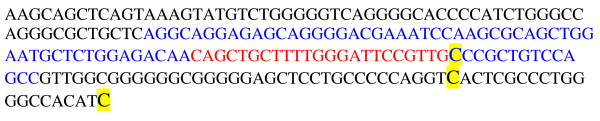
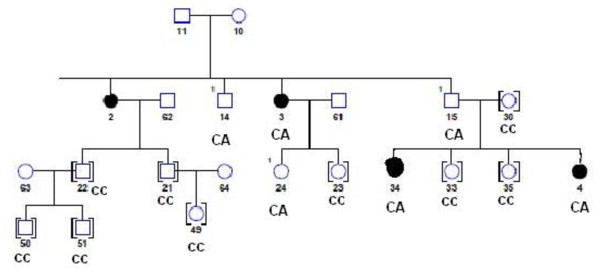
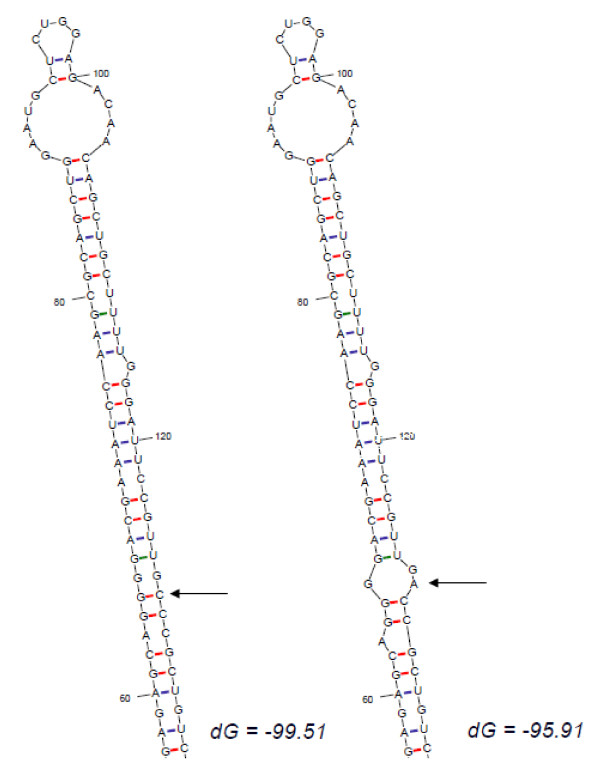
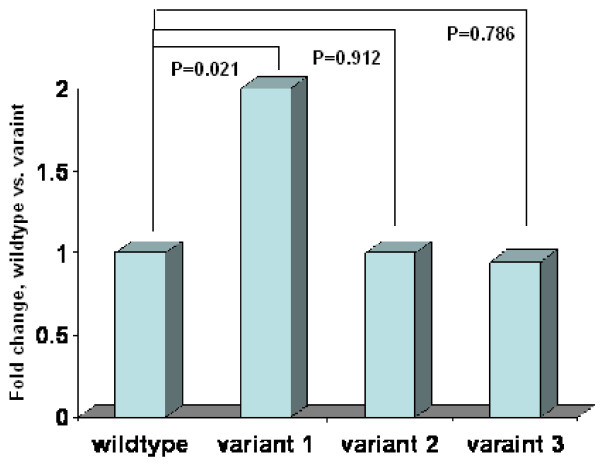
To test this hypothesis in familial ovarian cancer, we screened for genetic variants in thirty selected miRNA genes, which are predicted to regulate key ovarian cancer genes and are reported to be misexpressed in ovarian tumor tissues, in eighty-three patients with familial ovarian cancer. All of the patients are non-carriers of any known BRCA1/2 or mismatch repair (MMR) gene mutations. Seven novel genetic variants were observed in four primary or precursor miRNA genes. Among them, three rare variants were found in the precursor or primary precursor of the miR-191 gene. In functional assays, the one variant located in the precursor of miR-191 resulted in conformational changes in the predicted secondary structures, and consequently altered the expression of mature miR-191. In further analysis, we found that this particular variant exists in five family members who had ovarian cancer.
Our findings suggest that there are novel genetic variants in miRNA genes, and those certain genetic variants in miRNA genes can affect the expression of mature miRNAs and, consequently, might alter the regulation of TSGs or oncogenes. Additionally, the variant might be potentially associated with the development of familial ovarian cancer.
卵巢癌家族聚集的一半不能用任何已知的风险基因来解释,这表明存在其他遗传风险因素。其中一些未知因素可能不是传统的蛋白质编码基因。microRNA (miRNA) 在肿瘤发生中起着关键作用,但目前还不清楚 miRNA 基因的变异是否会导致癌症易感性。考虑到 miRNA 调节许多肿瘤抑制基因(TSG)和癌基因,miRNA 基因的遗传变异可能会影响 TSG 或癌基因的表达水平,从而影响癌症风险。
为了在家族性卵巢癌中检验这一假设,我们在 83 名有家族性卵巢癌的患者中筛选了三十个选定的 miRNA 基因的遗传变异,这些基因被预测调节关键的卵巢癌基因,并报道在卵巢肿瘤组织中表达异常。所有患者均不携带任何已知的 BRCA1/2 或错配修复(MMR)基因突变。在四个初级或前体 miRNA 基因中观察到七个新的遗传变异。其中,miR-191 基因的前体或初级前体中发现了三个罕见变异。在功能分析中,位于 miR-191 前体中的一个变异导致预测二级结构的构象变化,从而改变了成熟 miR-191 的表达。在进一步分析中,我们发现该特定变异存在于五个患有卵巢癌的家族成员中。
我们的研究结果表明,miRNA 基因中存在新的遗传变异,这些特定的 miRNA 基因遗传变异可能影响成熟 miRNA 的表达,进而可能改变 TSG 或癌基因的调节。此外,该变异可能与家族性卵巢癌的发生有关。