Department of Immunology, University of Toronto, Toronto, Ontario, Canada.
J Immunol. 2010 Mar 15;184(6):3174-85. doi: 10.4049/jimmunol.0902881. Epub 2010 Feb 19.
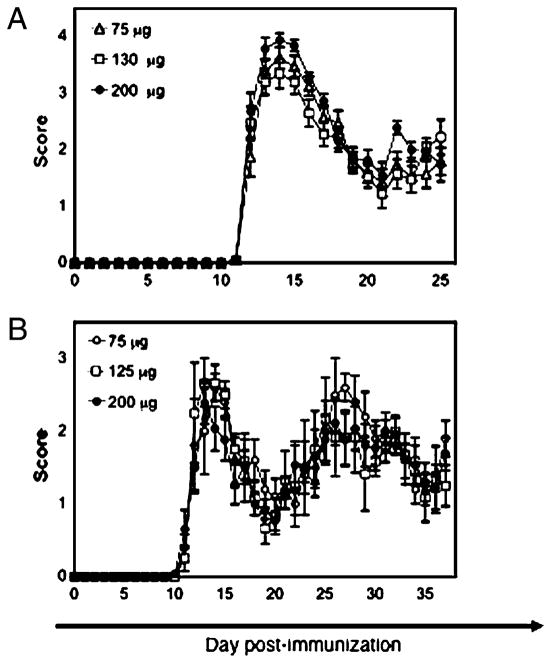
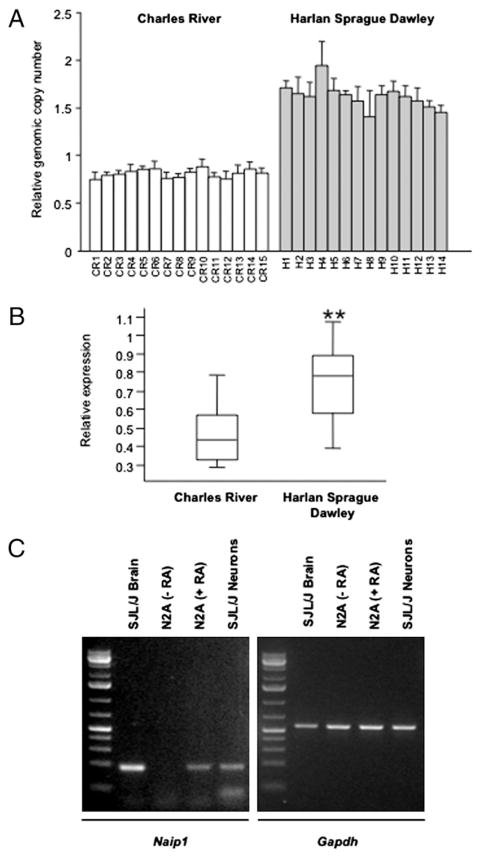
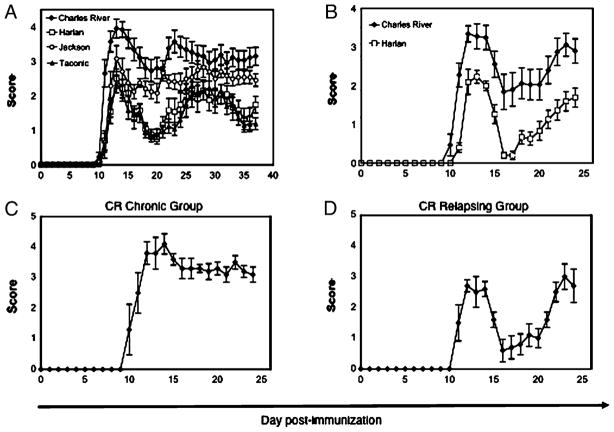
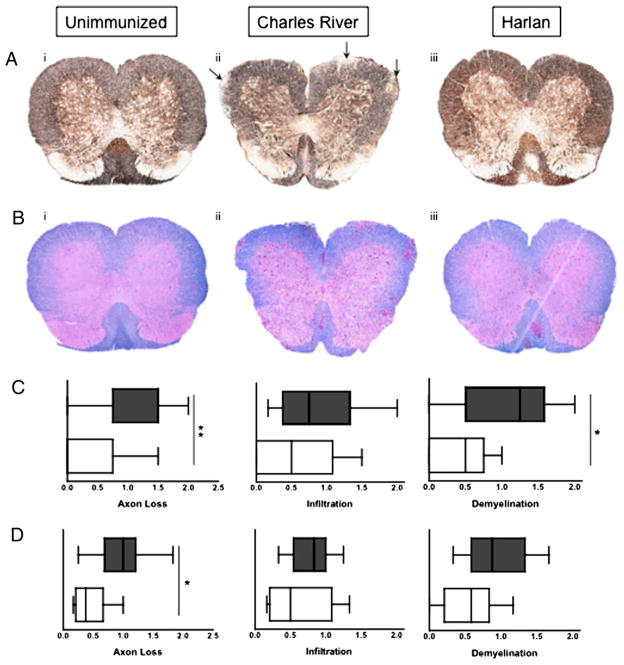
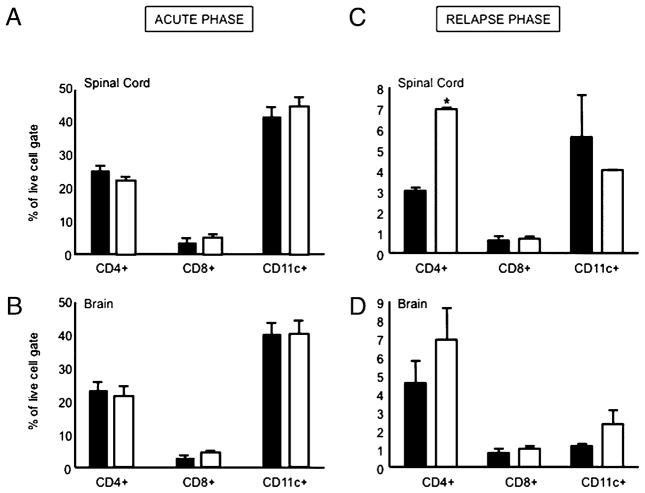
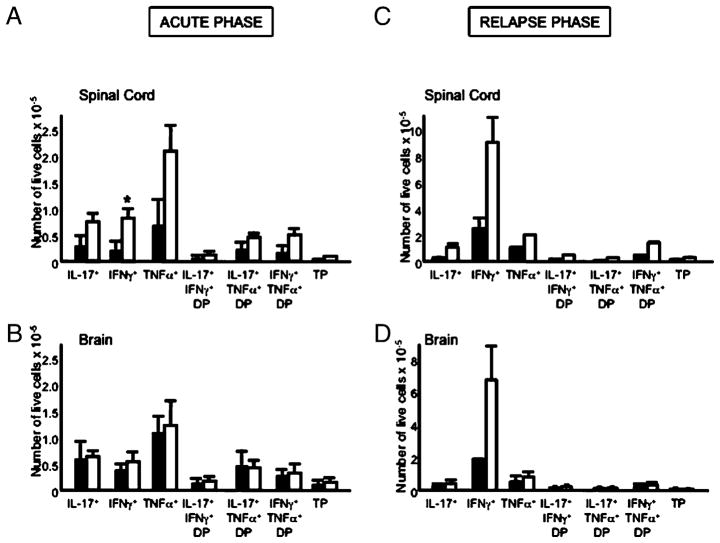
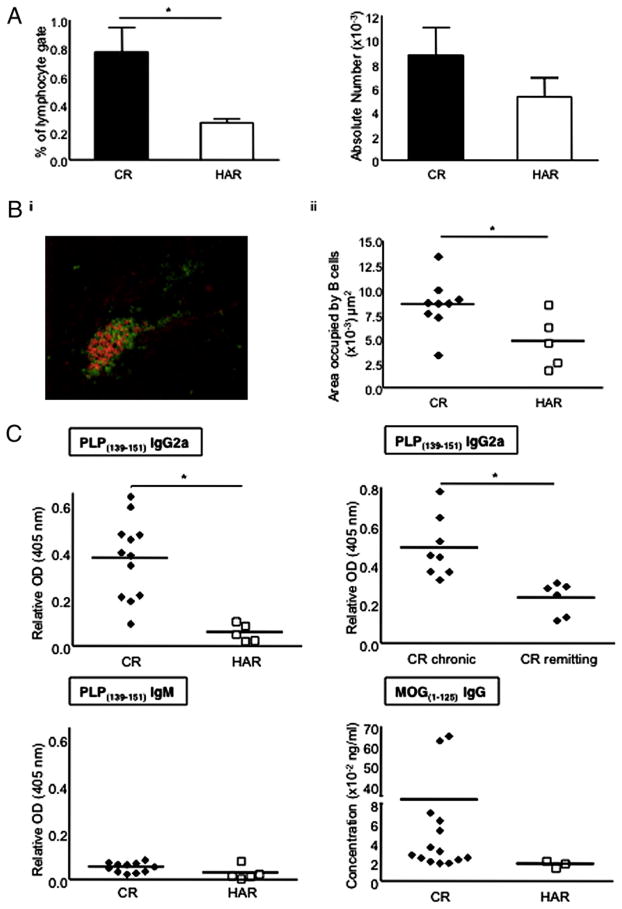
Experimental autoimmune encephalomyelitis (EAE) is a rodent model of multiple sclerosis that is executed in animals by immunization with myelin Ag in adjuvant. The SJL/J autoimmune-prone strain of mouse has been used to model relapsing-remitting multiple sclerosis. However, significant variations in peak scores, timing of onset, and incidence are observed among laboratories, with the postacute (relapse) phase of the disease exhibiting significant inconsistency. We characterized two substrains of SJL/J mice that exhibit profoundly different EAE disease parameters. Induction of EAE in the first SJL/J substrain resulted in many cases of chronic EAE that was dominated by an aggressive B cell response to the immunizing Ag and to endogenous CNS Ags. In contrast, the other SJL/J substrain exhibited a relapsing-remitting form of EAE concomitant with an elevated number of cytokine-producing CD4(+) T cells in the CNS. Exploiting these interstrain differences, we performed a genome-wide copy number analysis on the two disparate SJL/J substrains and discovered numerous gene-dosage differences. In particular, one inflammation-associated gene, Naip1, was present at a higher copy number in the SJL/J substrain that exhibited relapsing-remitting EAE. These results demonstrate that substrain differences, perhaps at the level of genomic copy number, can account for variability in the postacute phase of EAE and may drive chronic versus relapsing disease.
实验性自身免疫性脑脊髓炎(EAE)是一种多发性硬化症的啮齿动物模型,通过在佐剂中免疫髓鞘 Ag 在动物中进行。SJL/J 自身免疫倾向的小鼠品系已被用于模拟复发性多发性硬化症。然而,在不同实验室之间观察到峰值评分、发病时间和发生率的显著差异,疾病的后期(复发)阶段表现出显著的不一致性。我们对表现出明显不同 EAE 疾病参数的两种 SJL/J 亚系进行了表征。在第一种 SJL/J 亚系中诱导 EAE 导致许多慢性 EAE 病例,这些病例主要由针对免疫原和内源性中枢神经系统 Ag 的侵袭性 B 细胞反应引起。相比之下,另一种 SJL/J 亚系表现出复发性 EAE,同时中枢神经系统中产生细胞因子的 CD4(+) T 细胞数量增加。利用这些亚系差异,我们对两种不同的 SJL/J 亚系进行了全基因组拷贝数分析,发现了许多基因剂量差异。特别是,在表现出复发性 EAE 的 SJL/J 亚系中,一个与炎症相关的基因 Naip1 以更高的拷贝数存在。这些结果表明,亚系差异,可能在基因组拷贝数水平上,可以解释 EAE 后期阶段的变异性,并可能导致慢性与复发性疾病。