Department of Molecular, Cell, and Developmental Biology, Molecular Biology Institute, University of California, Los Angeles, Los Angeles, CA 90095, USA.
J Cell Biol. 2010 Feb 22;188(4):473-9. doi: 10.1083/jcb.200912024.
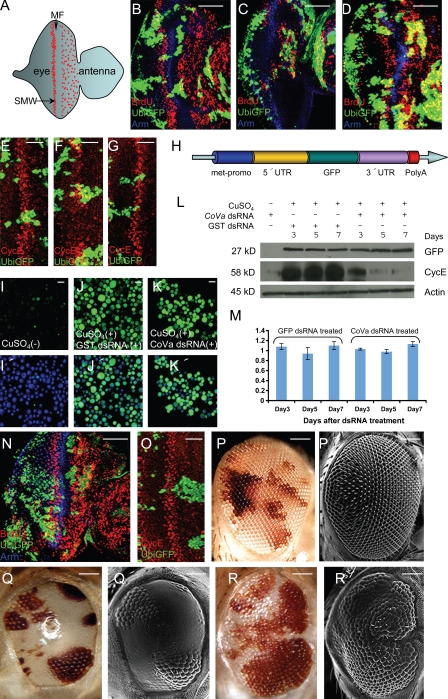
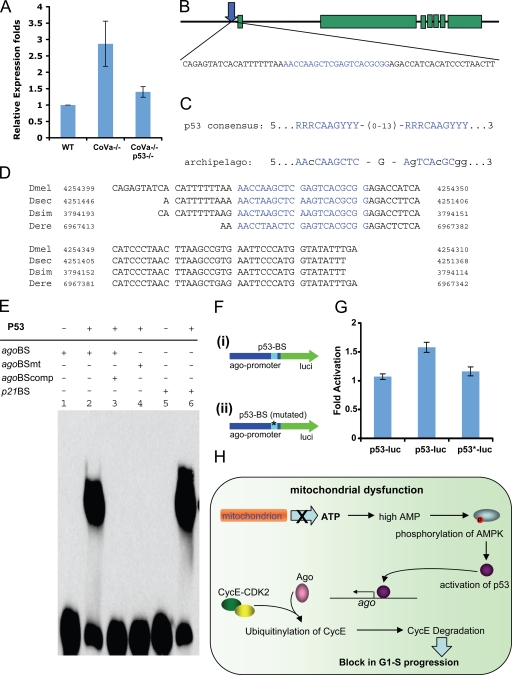
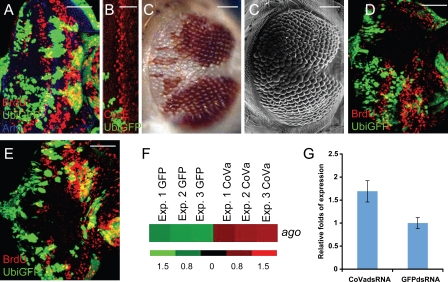
Cell cycle progression is precisely regulated by diverse extrinsic and intrinsic cellular factors. Previous genetic analysis in Drosophila melanogaster has shown that disruption of the mitochondrial electron transport chain activates a G1-S checkpoint as a result of a control of cyclin E by p53. This regulation does not involve activation of the p27 homologue dacapo in flies. We demonstrate that regulation of cyclin E is not at the level of transcription or translation. Rather, attenuated mitochondrial activity leads to transcriptional upregulation of the F-box protein archipelago, the Fbxw7 homologue in flies. We establish that archipelago and the proteasomal machinery contribute to degradation of cyclin E in response to mitochondrial dysfunction. Our work provides in vivo genetic evidence for p53-mediated integration of metabolic stress signals, which modulate the activity of the ubiquitin-proteasome system to degrade cyclin E protein and thereby impose cell cycle arrest.
细胞周期的进展受到多种外在和内在细胞因素的精确调控。在黑腹果蝇中的先前遗传分析表明,线粒体电子传递链的破坏会激活 G1-S 检查点,这是由于 p53 对细胞周期蛋白 E 的控制。这种调节不涉及苍蝇中 p27 同源物 dacapo 的激活。我们证明细胞周期蛋白 E 的调节不在转录或翻译水平。相反,减弱的线粒体活性导致 F-box 蛋白岛的转录上调,这是苍蝇中的 Fbxw7 同源物。我们确定 archipelago 和蛋白酶体机制有助于降解细胞周期蛋白 E 以响应线粒体功能障碍。我们的工作为 p53 介导的代谢应激信号整合提供了体内遗传证据,这些信号可调节泛素-蛋白酶体系统的活性以降解细胞周期蛋白 E 蛋白,从而导致细胞周期停滞。