Japan Science and Technology Agency (JST)/Research Institute of Science and Technology for Society (RISTEX), Japan.
J Epidemiol. 2010;20 Suppl 2(Suppl 2):S427-34. doi: 10.2188/jea.je20090176. Epub 2010 Feb 23.
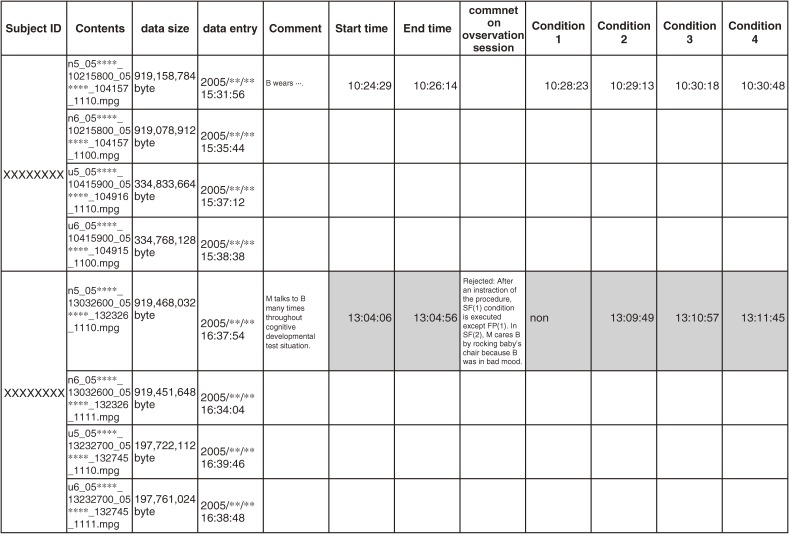
It is clear that early social interaction follows from mother-infant interaction after pregnancy. Many researchers have illuminated this interaction in the first years of life. Most common mother-infant interaction is the attachment behavior of an infant. The Japan Children's Study (JCS) development psychology group hypothesis is that the early mother-infant interaction will predict later social behaviors. But the method applied to evaluate this interaction mainly comes from the evaluation of the whole observation situation and is dependent upon the coder. We applied a new observational method that checked the on/off status of behavior and recorded sequentially.
Using a semi-structured observation setting as our method, we analyzed the developmental change of mother-infant interaction within a toy situation.
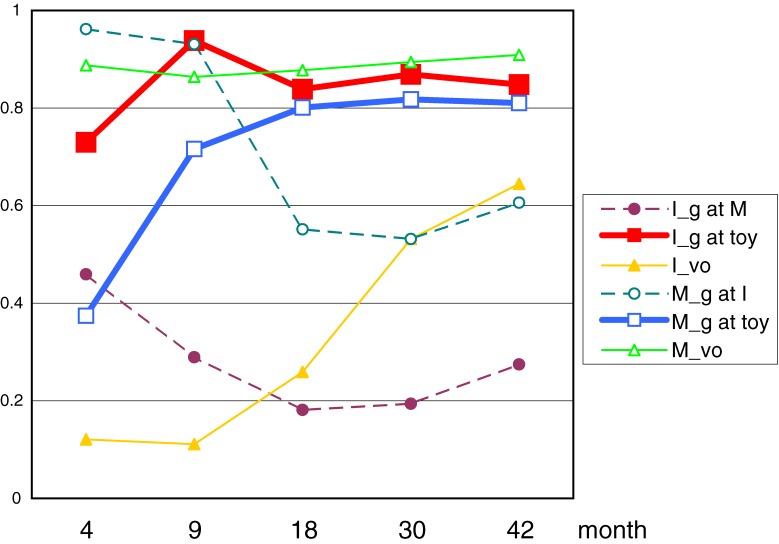
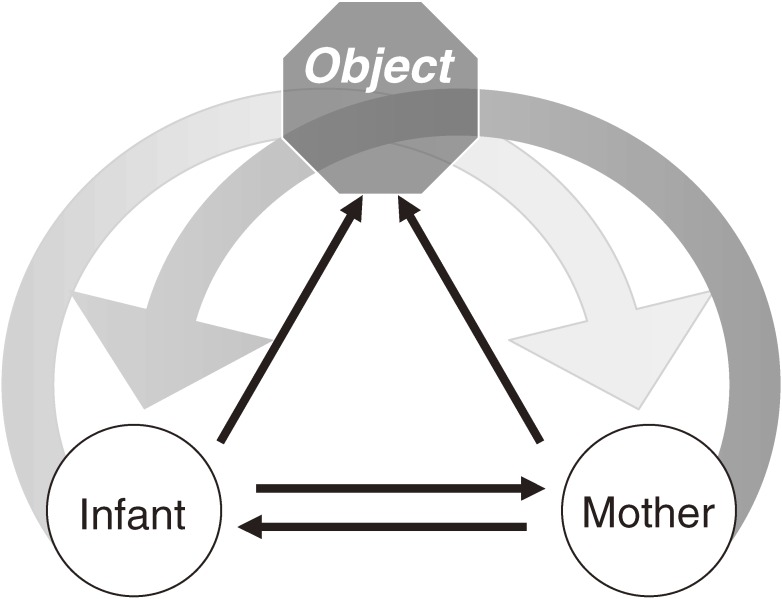
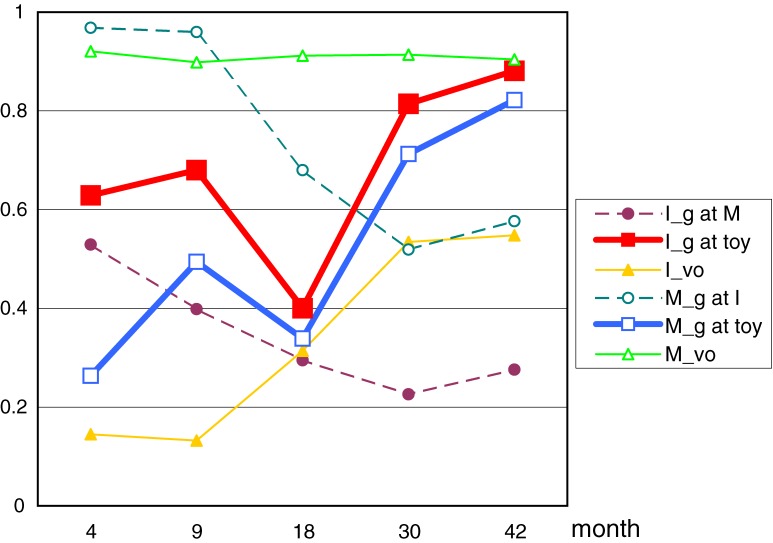
The result indicated that mother-infant interaction with a toy altered at around 9-months and is salient to the usual developmental change of joint attention. Additionally cluster analysis suggested that the developmental pattern is divided into two clusters. This is the first report on a developmental pattern of joint attention.
These results indicated that the developmental trend of gaze direction and vocalization is one candidate of measure for evaluating the mother infant social interaction from the point of joint attention.
很明显,怀孕后早期的社会互动是从母婴互动开始的。许多研究人员已经在生命的头几年揭示了这种互动。最常见的母婴互动是婴儿的依恋行为。日本儿童研究(JCS)发展心理学小组假设,早期的母婴互动将预测以后的社会行为。但是,用于评估这种互动的方法主要来自于对整体观察情况的评估,并且依赖于编码员。我们应用了一种新的观察方法,该方法检查行为的开/关状态并顺序记录。
我们使用半结构化观察设置作为方法,分析了玩具情境中母婴互动的发展变化。
结果表明,母婴与玩具的互动在 9 个月左右发生了变化,这与共同注意力的通常发展变化有关。此外,聚类分析表明,发展模式分为两类。这是关于共同注意力发展模式的第一个报告。
这些结果表明,注视方向和发声的发展趋势是从共同注意力的角度评估母婴社交互动的一种候选指标。