Department of Epidemiology and Preventive Medicine, Alfred Hospital, Monash University, Melbourne Victoria 3004, Australia.
BMC Health Serv Res. 2010 Feb 25;10:50. doi: 10.1186/1472-6963-10-50.
While there is considerable research on medical workforce supply trends, there is little research examining the determinants of labour supply decisions for the medical workforce. The "Medicine in Australia: Balancing Employment and Life (MABEL)" study investigates workforce participation patterns and their determinants using a longitudinal survey of Australian doctors. It aims to generate evidence to support developing effective policy responses to workforce issues such as shortages and maldistribution. This paper describes the study protocol and baseline cohort, including an analysis of response rates and response bias.
METHODS/DESIGN: MABEL is a prospective cohort study. All Australian doctors undertaking clinical work in 2008 (n = 54,750) were invited to participate, and annual waves of data collections will be undertaken until at least 2011. Data are collected by paper or optional online version of a questionnaire, with content tailored to four sub-groups of clinicians: general practitioners, specialists, specialists in training, and hospital non-specialists. In the baseline wave, data were collected on: job satisfaction, attitudes to work and intentions to quit or change hours worked; a discrete choice experiment examining preferences and trade-offs for different types of jobs; work setting; workload; finances; geographic location; demographics; and family circumstances.
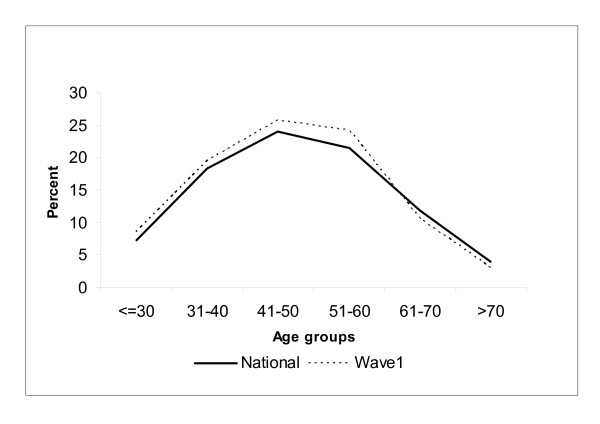
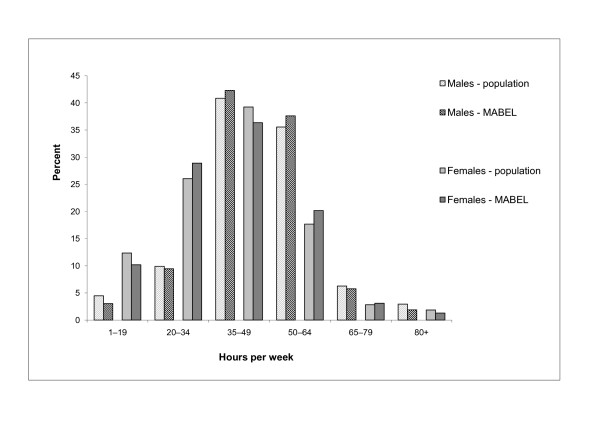
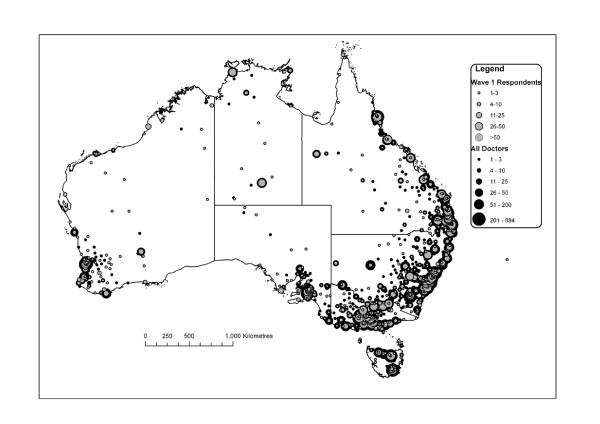
The baseline cohort includes 10,498 Australian doctors, representing an overall response rate of 19.36%. This includes 3,906 general practitioners, 4,596 specialists, 1,072 specialists in training, and 924 hospital non-specialists. Respondents were more likely to be younger, female, and to come from non-metropolitan areas, the latter partly reflecting the effect of a financial incentive on response for doctors in remote and rural areas. Specialists and specialists in training were more likely to respond, whilst hospital non-specialists were less likely to respond. The distribution of hours worked was similar between respondents and data from national medical labour force statistics. The MABEL survey provides a large, representative cohort of Australian doctors. It enables investigation of the determinants of doctors' decisions about how much, where and in what circumstances they practice, and of changes in these over time. MABEL is intended to provide an important resource for policy makers and other stakeholders in the Australian medical workforce.
尽管有大量关于医疗劳动力供应趋势的研究,但很少有研究探讨医疗劳动力供应决策的决定因素。“澳大利亚的医学:平衡就业和生活(MABEL)”研究使用对澳大利亚医生的纵向调查来研究劳动力参与模式及其决定因素。它旨在为制定有效政策应对劳动力短缺和分布不均等问题提供证据。本文描述了研究方案和基线队列,包括对响应率和响应偏差的分析。
方法/设计:MABEL 是一项前瞻性队列研究。邀请所有 2008 年从事临床工作的澳大利亚医生参加(n=54750),并将至少在 2011 年之前进行年度数据采集。数据通过纸质或可选的在线问卷收集,内容针对临床医生的四个亚组进行了定制:全科医生、专科医生、专科培训医生和医院非专科医生。在基线波中,收集了以下数据:工作满意度、对工作的态度和离职或改变工作时间的意愿;一个离散选择实验,用于检查不同类型工作的偏好和权衡;工作环境;工作量;财务状况;地理位置;人口统计学;和家庭情况。
基线队列包括 10498 名澳大利亚医生,总体响应率为 19.36%。这包括 3906 名全科医生、4596 名专科医生、1072 名专科培训医生和 924 名医院非专科医生。受访者更年轻、女性更多,来自非城市地区,后者部分反映了对偏远和农村地区医生的经济激励对响应的影响。专科医生和专科培训医生更有可能做出回应,而医院非专科医生则不太可能做出回应。受访者的工作时间分布与全国医疗劳动力统计数据相似。MABEL 调查提供了一个大型的、有代表性的澳大利亚医生队列。它使研究人员能够调查医生关于他们工作多少、在哪里以及在什么情况下工作的决定的决定因素,以及这些决定随时间的变化。MABEL 旨在为澳大利亚医疗劳动力的政策制定者和其他利益相关者提供重要资源。