Genome Institute of Singapore, Genome, 60 Biopolis Street, Singapore.
Nucleic Acids Res. 2010 May;38(9):e111. doi: 10.1093/nar/gkq089. Epub 2010 Feb 25.
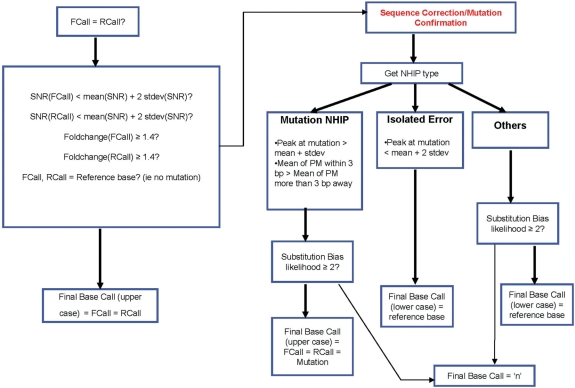
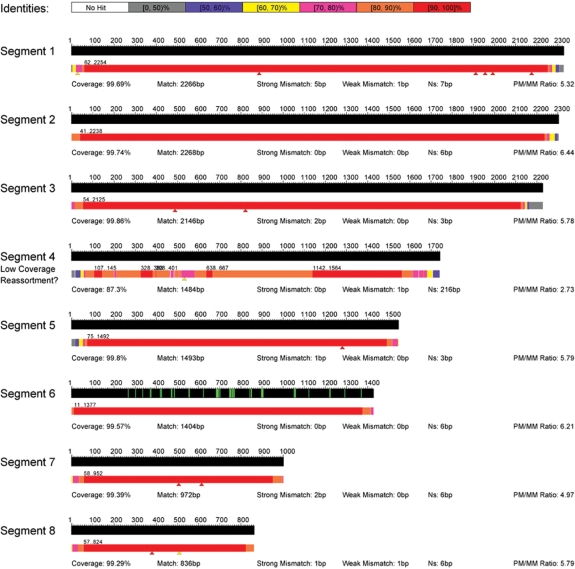
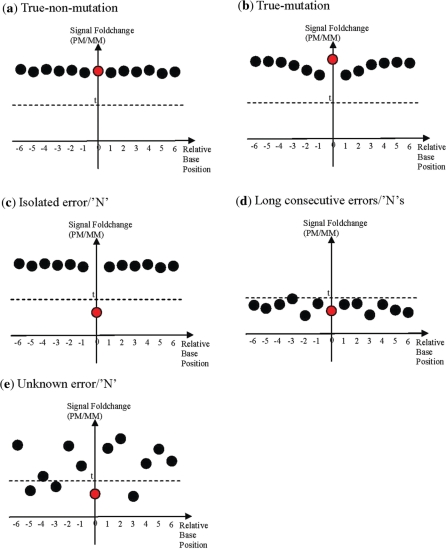
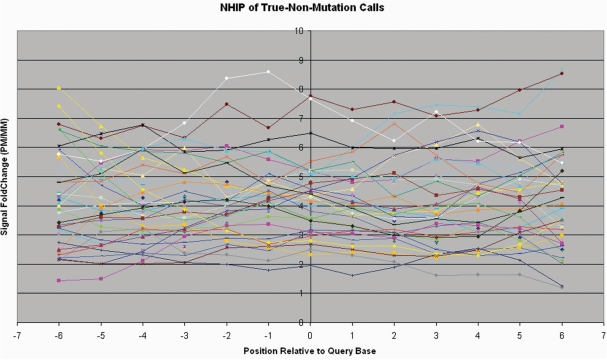
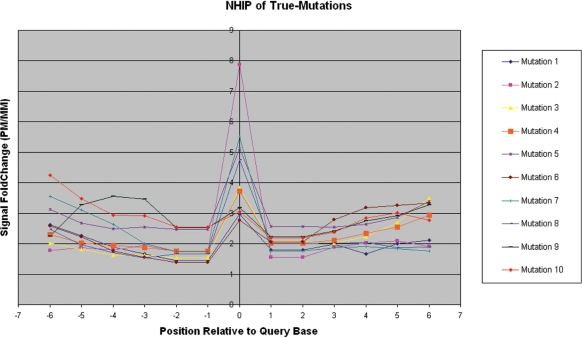
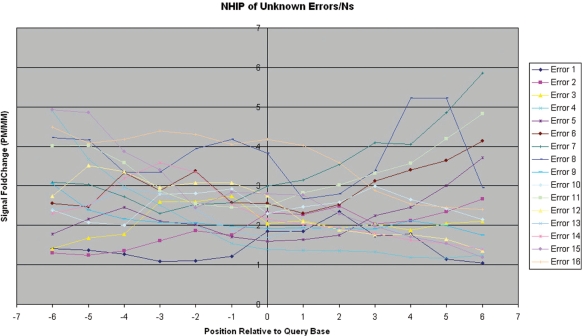
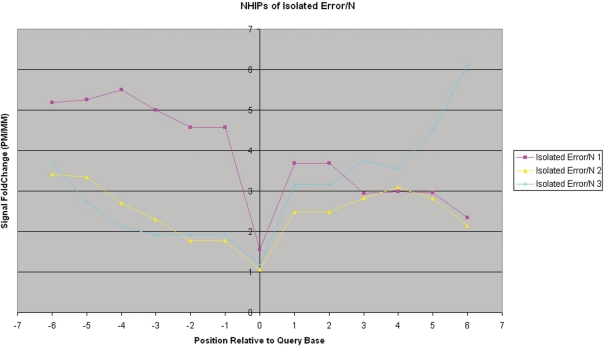
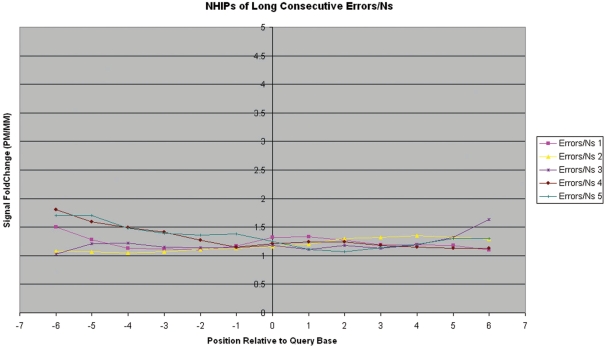
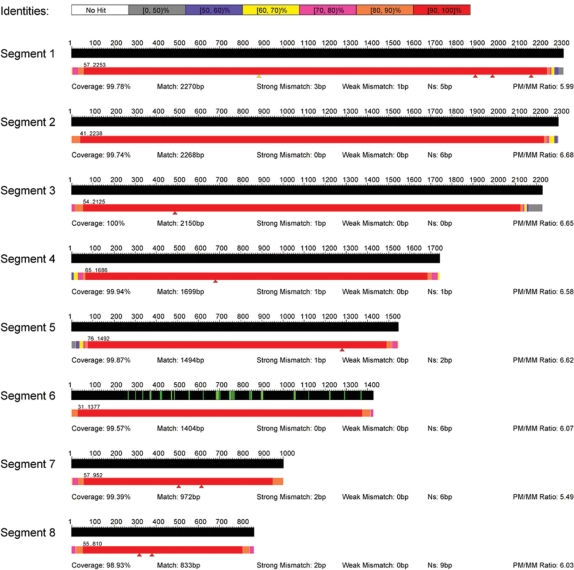
In April 2009, a new influenza A (H1N1 2009) virus emerged that rapidly spread around the world. While current variants of this virus have caused widespread disease, particularly in vulnerable groups, there remains the possibility that future variants may cause increased virulence, drug resistance or vaccine escape. Early detection of these virus variants may offer the chance for increased containment and potentially prevention of the virus spread. We have developed and field-tested a resequencing kit that is capable of interrogating all eight segments of the 2009 influenza A(H1N1) virus genome and its variants, with added focus on critical regions such as drug-binding sites, structural components and mutation hotspots. The accompanying base-calling software (EvolSTAR) introduces novel methods that utilize neighbourhood hybridization intensity profiles and substitution bias of probes on the microarray for mutation confirmation and recovery of ambiguous base queries. Our results demonstrate that EvolSTAR is highly accurate and has a much improved call rate. The high throughput and short turn-around time from sample to sequence and analysis results (30 h for 24 samples) makes this kit an efficient large-scale evolutionary biosurveillance tool.
2009 年 4 月,一种新型甲型 H1N1 流感病毒出现,迅速在全球范围内传播。虽然这种病毒的现有变体已导致广泛的疾病,特别是在弱势群体中,但仍有可能出现未来的变体导致更高的毒力、耐药性或疫苗逃逸。早期检测这些病毒变体可能提供增加控制和潜在预防病毒传播的机会。我们已经开发并现场测试了一种重测序试剂盒,该试剂盒能够检测 2009 年甲型 H1N1 流感病毒基因组及其变体的所有 8 个片段,并且特别关注药物结合位点、结构成分和突变热点等关键区域。随附的碱基调用软件(EvolSTAR)引入了新的方法,利用微阵列上探针的邻域杂交强度分布和取代偏倚来进行突变确认和模糊碱基查询的恢复。我们的结果表明,EvolSTAR 具有高度的准确性和改进的调用率。从样品到序列和分析结果的高通量和短周转时间(24 个样品 30 小时)使该试剂盒成为一种高效的大规模进化生物监测工具。