Department of Biochemistry, Boston University School of Medicine, Boston, Massachusetts, United States of America.
PLoS One. 2010 Feb 23;5(2):e9389. doi: 10.1371/journal.pone.0009389.
Increasing evidence has revealed important roles for complex glycans as mediators of normal and pathological processes. Glycosaminoglycans are a class of glycans that bind and regulate the function of a wide array of proteins at the cell-extracellular matrix interface. The specific sequence and chemical organization of these polymers likely define function; however, identification of the structure-function relationships of glycosaminoglycans has been met with challenges associated with the unique level of complexity and the nontemplate-driven biosynthesis of these biopolymers.
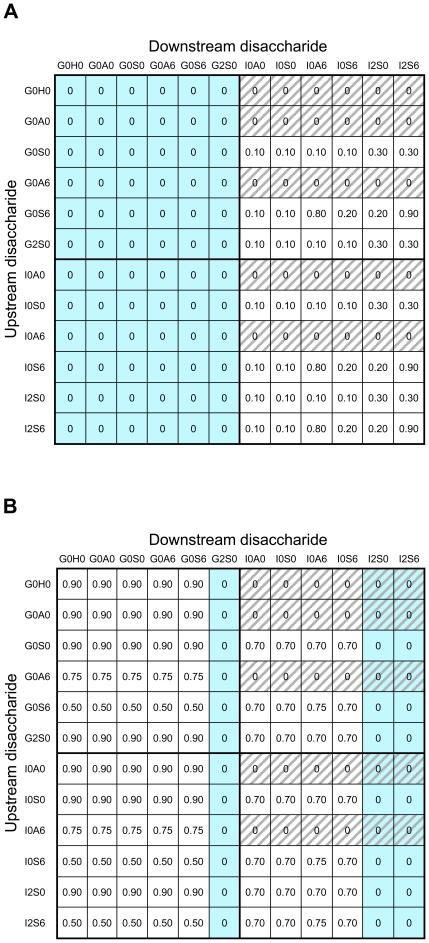
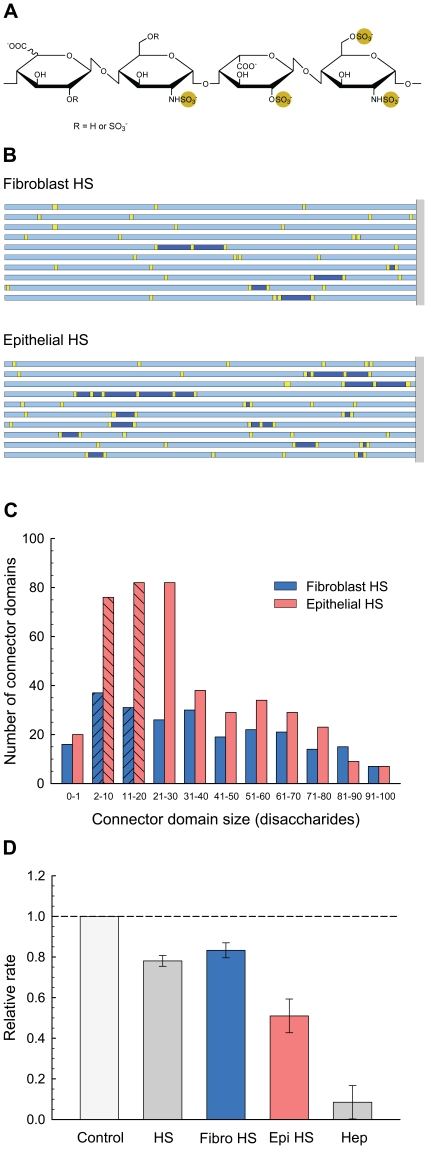
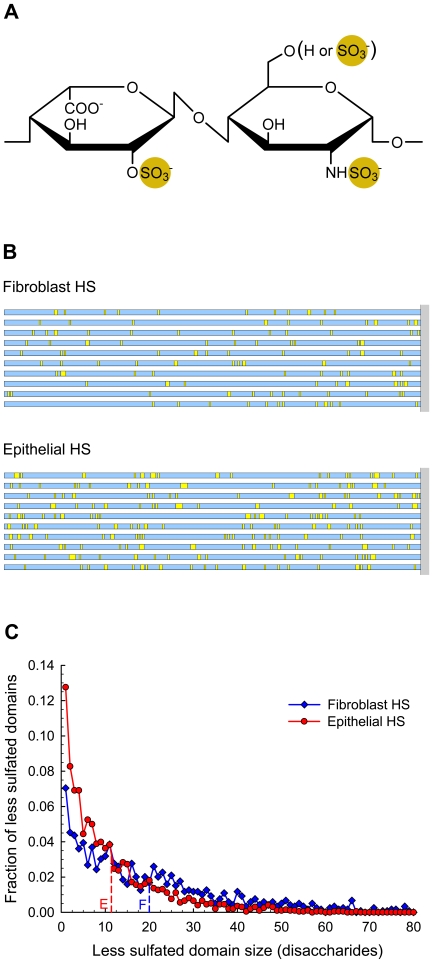
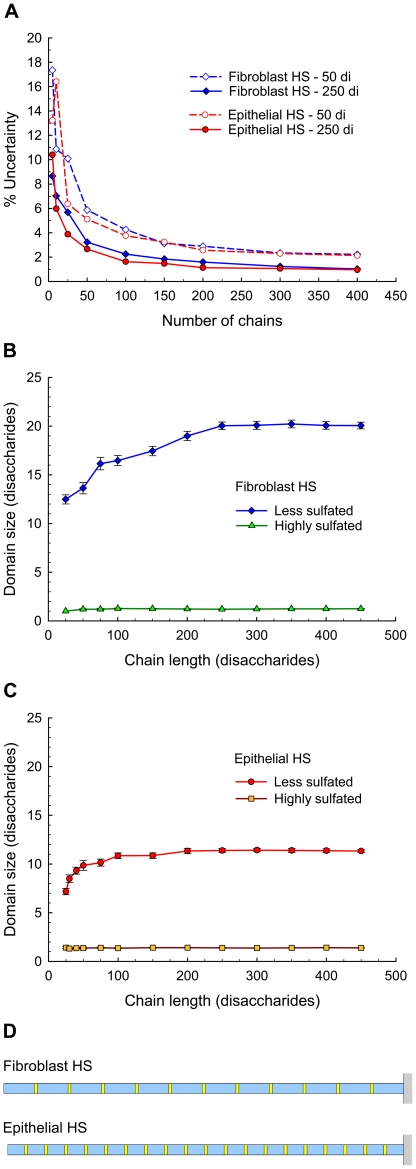
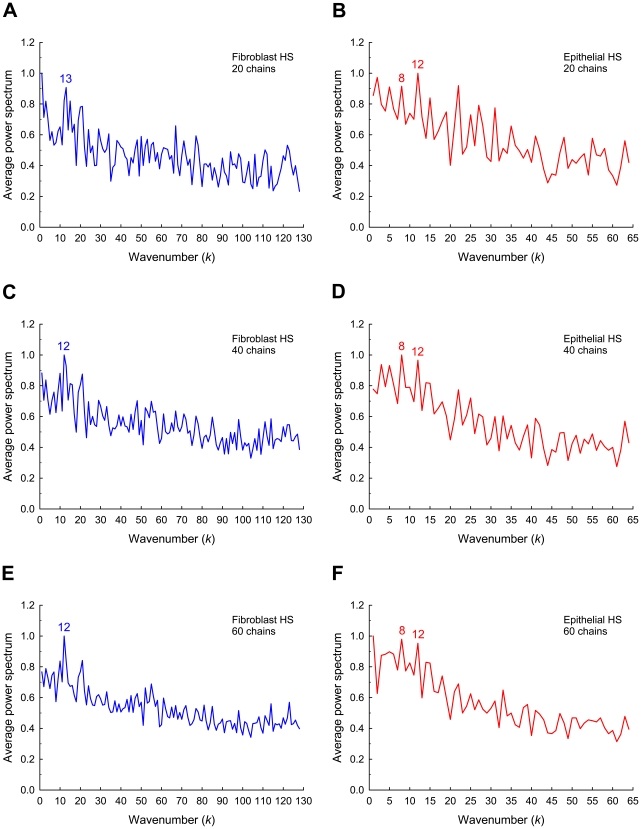
METHODOLOGY/PRINCIPAL FINDINGS: To address these challenges, we have devised a computational approach to predict fine structure and patterns of domain organization of the specific glycosaminoglycan, heparan sulfate (HS). Using chemical composition data obtained after complete and partial digestion of mixtures of HS chains with specific degradative enzymes, the computational analysis produces populations of theoretical HS chains with structures that meet both biosynthesis and enzyme degradation rules. The model performs these operations through a modular format consisting of input/output sections and three routines called chainmaker, chainbreaker, and chainsorter. We applied this methodology to analyze HS preparations isolated from pulmonary fibroblasts and epithelial cells. Significant differences in the general organization of these two HS preparations were observed, with HS from epithelial cells having a greater frequency of highly sulfated domains. Epithelial HS also showed a higher density of specific HS domains that have been associated with inhibition of neutrophil elastase. Experimental analysis of elastase inhibition was consistent with the model predictions and demonstrated that HS from epithelial cells had greater inhibitory activity than HS from fibroblasts.
CONCLUSIONS/SIGNIFICANCE: This model establishes the conceptual framework for a new class of computational tools to use to assess patterns of domain organization within glycosaminoglycans. These tools will provide a means to consider high-level chain organization in deciphering the structure-function relationships of polysaccharides in biology.
越来越多的证据表明,复杂糖作为正常和病理过程的介质具有重要作用。糖胺聚糖是一类聚糖,可结合并调节细胞-细胞外基质界面中广泛蛋白质的功能。这些聚合物的特定序列和化学组织可能定义了功能;然而,糖胺聚糖的结构-功能关系的鉴定遇到了与这些生物聚合物独特的复杂程度和非模板驱动的生物合成相关的挑战。
方法/主要发现:为了解决这些挑战,我们设计了一种计算方法来预测特定糖胺聚糖肝素硫酸(HS)的精细结构和结构域组织模式。使用特定降解酶完全和部分消化 HS 链混合物后获得的化学组成数据,计算分析产生了结构符合生物合成和酶降解规则的理论 HS 链的种群。该模型通过由输入/输出部分和三个称为链生成器、链分解器和链分类器的例程组成的模块化格式执行这些操作。我们将这种方法应用于分析从肺成纤维细胞和上皮细胞中分离的 HS 制剂。观察到这两种 HS 制剂的一般组织存在显著差异,上皮 HS 具有高度硫酸化结构域的频率更高。上皮 HS 还显示出与抑制中性粒细胞弹性蛋白酶相关的特定 HS 结构域的更高密度。弹性蛋白酶抑制的实验分析与模型预测一致,并表明上皮细胞的 HS 比成纤维细胞的 HS 具有更大的抑制活性。
结论/意义:该模型为一类新的计算工具建立了概念框架,用于评估糖胺聚糖中结构域组织的模式。这些工具将提供一种方法,用于在生物多糖的结构-功能关系中考虑高级链组织。