BMC Infect Dis. 2010 Mar 5;10:47. doi: 10.1186/1471-2334-10-47.
Several bibliometric studies have been published on AIDS. The findings obtained from these studies have provided a general picture of the history and growth of AIDS literature. However, factors related to variation in HIV research productivity in sub-Saharan Africa have not been examined. Therefore, this study aims to fill some of the gap in existing research to provide insights into factors associated with HIV research productivity in sub-Saharan Africa.
A bibliometric analysis regarding sub-Saharan Africa HIV/AIDS research was conducted in the PubMed database for the period of 1981 to 2009. The numbers of HIV research articles indexed in PubMed was used as surrogate for total HIV research productivity. Series of univariable and multivariable negative binomial regression models were used to explore factors associated with variation in HIV research productivity in sub-Saharan Africa.
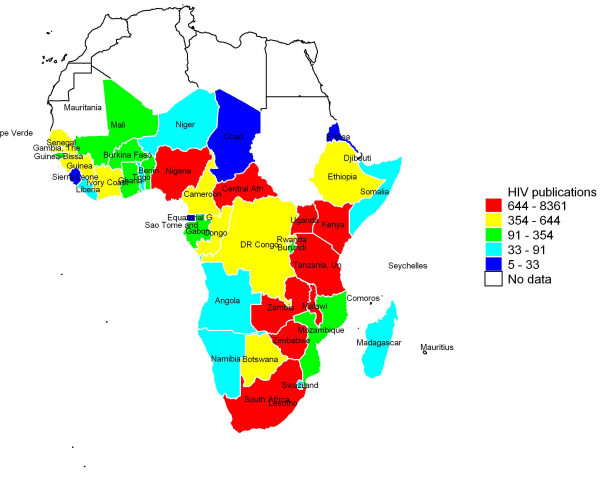
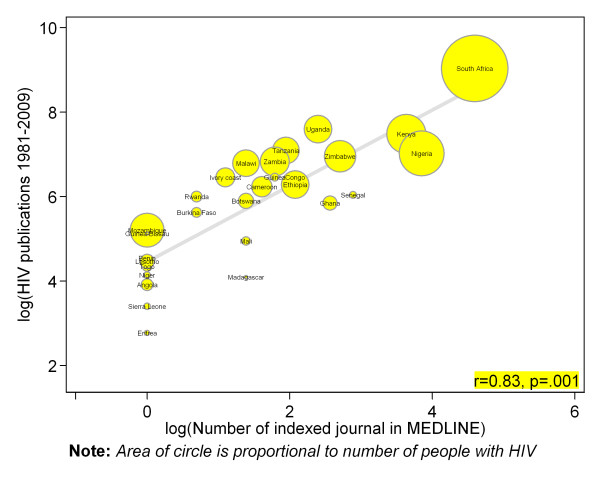
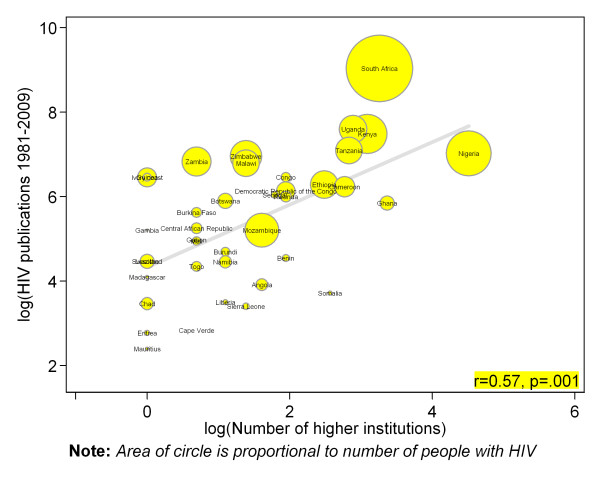
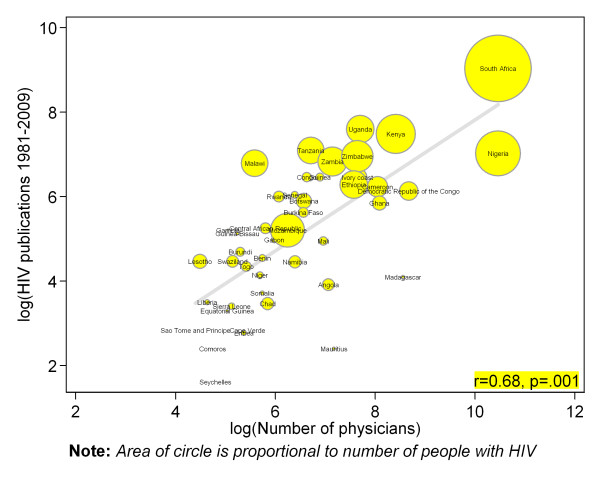
First authors from South Africa, Uganda and Kenya contributed almost half of the total number of HIV articles indexed in PubMed between 1981 and 2009. Uganda, Zimbabwe and Malawi had better records when the total production was adjusted for gross domestic product (GDP). Comoros, the Gambia and Guinea-Bissau were the most productive countries when the total products were normalized by number of people with HIV. There were strong positive and statistically significant correlation between countries number of indexed journal (Pearson correlation r = 0.77, p = .001), number of higher institutions (r = 0.60, p = .001), number of physicians (r = 0.83, p = .001) and absolute numbers of HIV articles.
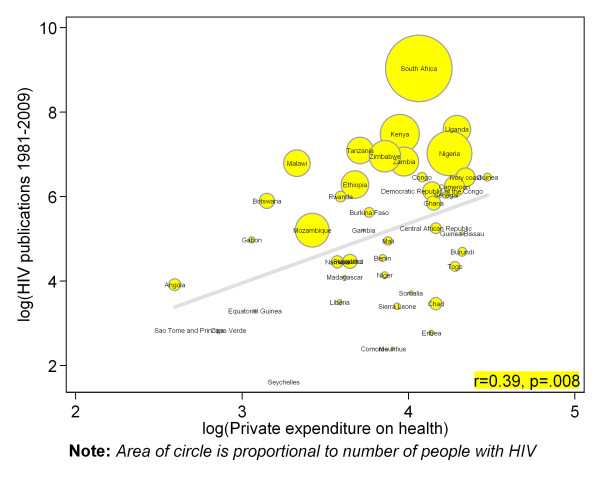
HIV research productivity in Africa is highly skewed. To increase HIV research output, total expenditure on health (% of GDP), private expenditure on health, and adult literacy rate may be important factors to address.
已有多项关于艾滋病的文献计量学研究发表。这些研究的结果提供了艾滋病文献历史和发展的总体情况。然而,尚未研究与撒哈拉以南非洲地区艾滋病毒研究生产力变化相关的因素。因此,本研究旨在填补现有研究中的一些空白,深入了解与撒哈拉以南非洲地区艾滋病毒研究生产力相关的因素。
在 1981 年至 2009 年期间,我们在 PubMed 数据库中对撒哈拉以南非洲艾滋病研究进行了文献计量学分析。使用在 PubMed 中索引的艾滋病毒研究文章数量作为艾滋病毒研究总生产力的替代指标。采用一系列单变量和多变量负二项回归模型来探讨与撒哈拉以南非洲地区艾滋病毒研究生产力变化相关的因素。
在 1981 年至 2009 年间,南非、乌干达和肯尼亚的第一作者发表的文章占 PubMed 索引的艾滋病毒文章总数的近一半。当根据国内生产总值(GDP)调整总产出时,乌干达、津巴布韦和马拉维的记录较好。当根据艾滋病毒人数使总产出标准化时,科摩罗、冈比亚和几内亚比绍是最有成效的国家。国家索引期刊数量(皮尔逊相关系数 r = 0.77,p =.001)、高等院校数量(r = 0.60,p =.001)、医生数量(r = 0.83,p =.001)与艾滋病毒文章绝对数量之间存在很强的正相关关系,且具有统计学意义。
非洲的艾滋病毒研究生产力高度偏倚。要增加艾滋病毒研究产出,卫生总支出(占 GDP 的百分比)、私人卫生支出和成人识字率可能是需要解决的重要因素。