Cardiac and Vascular Sciences, St George's, University of London, London, UK.
Mol Cancer. 2010 Mar 23;9:66. doi: 10.1186/1476-4598-9-66.
High-resolution magic angle spinning (HRMAS) NMR spectroscopy allows detailed metabolic analysis of whole biopsy samples for investigating tumour biology and tumour classification. Accurate biochemical assignment of small molecule metabolites that are "NMR visible" will improve our interpretation of HRMAS data and the translation of NMR tumour biomarkers to in-vivo studies.
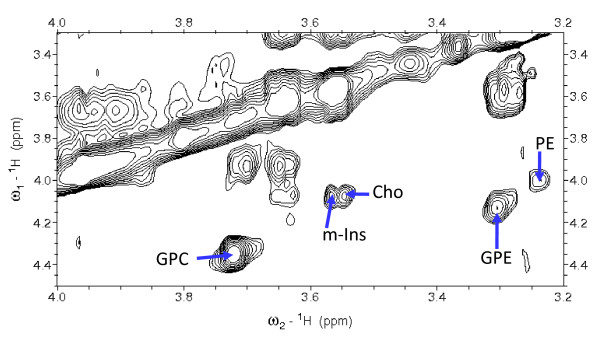
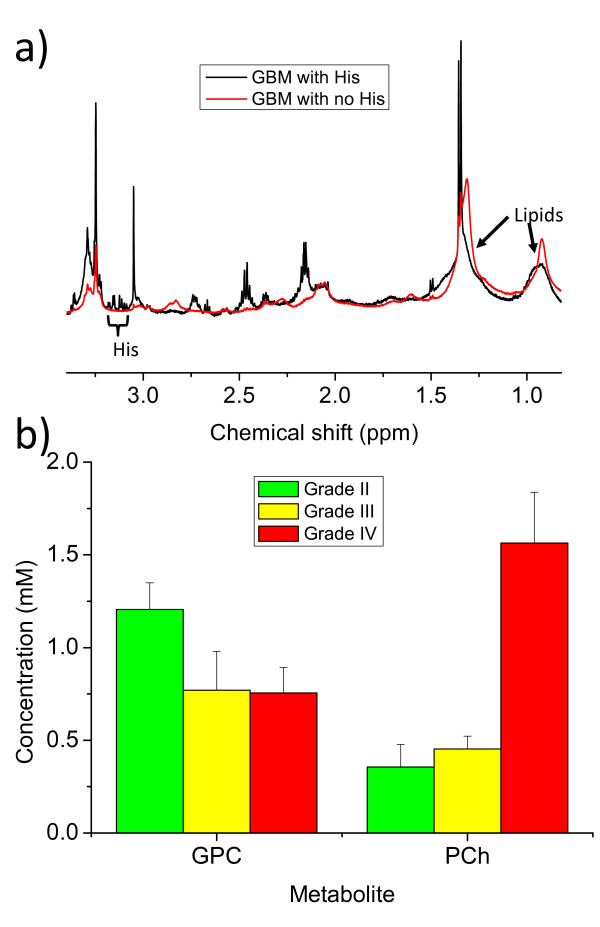
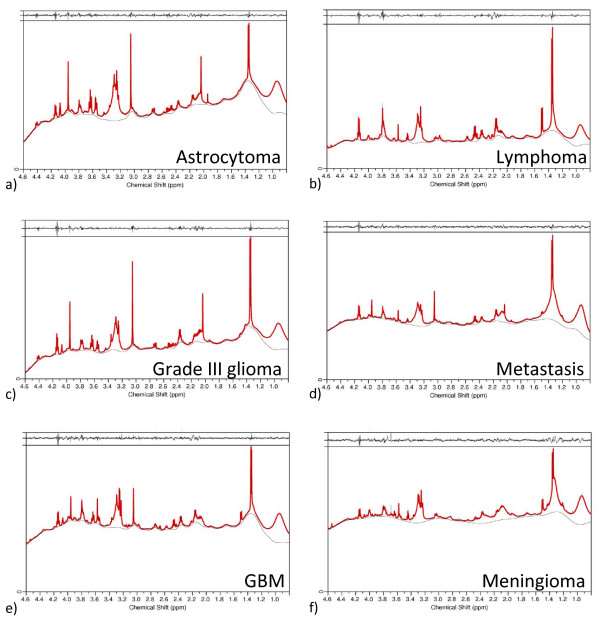
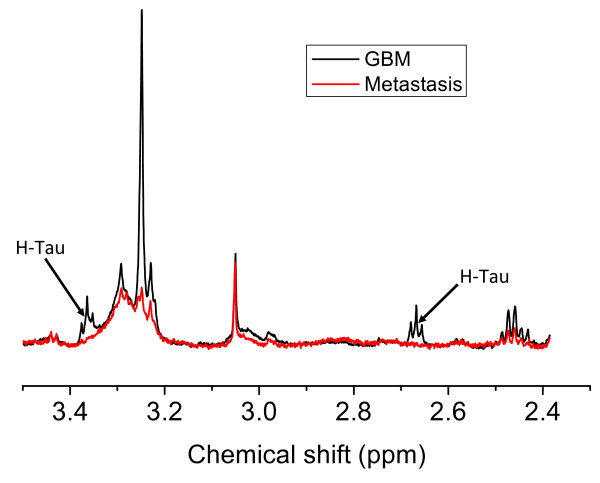
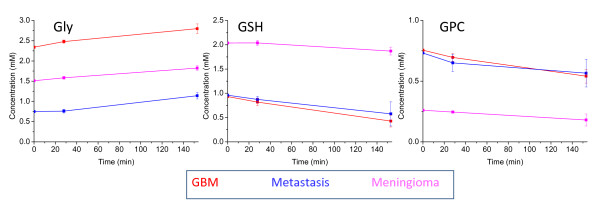
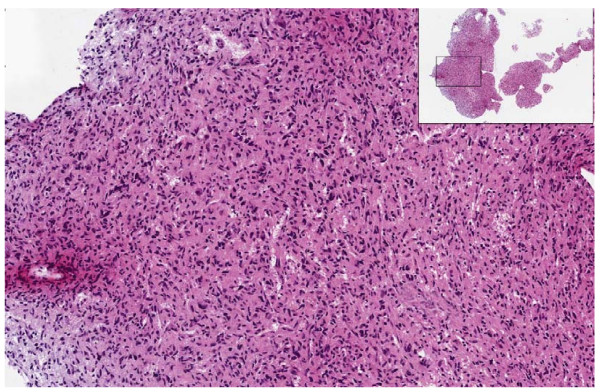
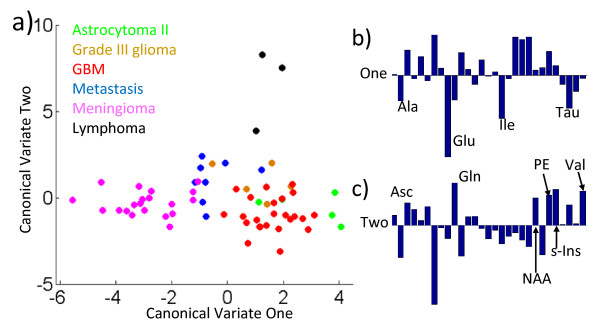
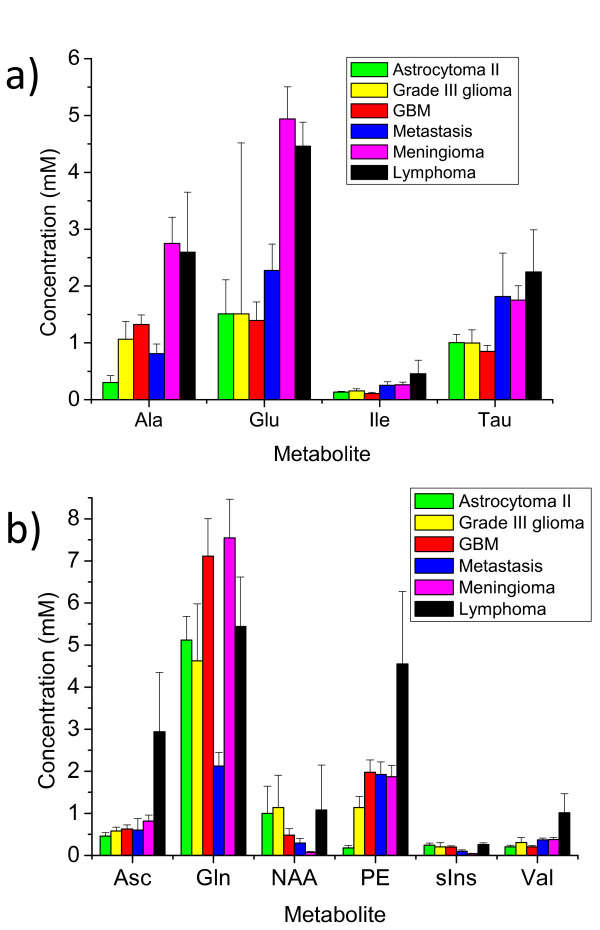
1D and 2D 1H HRMAS NMR was used to determine that 29 small molecule metabolites, along with 8 macromolecule signals, account for the majority of the HRMAS spectrum of the main types of brain tumour (astrocytoma grade II, grade III gliomas, glioblastomas, metastases, meningiomas and also lymphomas). Differences in concentration of 20 of these metabolites were statistically significant between these brain tumour types. During the course of an extended 2D data acquisition the HRMAS technique itself affects sample analysis: glycine, glutathione and glycerophosphocholine all showed small concentration changes; analysis of the sample after HRMAS indicated structural damage that may affect subsequent histopathological analysis.
A number of small molecule metabolites have been identified as potential biomarkers of tumour type that may enable development of more selective in-vivo 1H NMR acquisition methods for diagnosis and prognosis of brain tumours.
高分辨率魔角旋转(HRMAS)NMR 光谱允许对整个活检样本进行详细的代谢分析,以研究肿瘤生物学和肿瘤分类。对“NMR 可见”的小分子代谢物进行准确的生化赋值,将提高我们对 HRMAS 数据的解释能力,并将 NMR 肿瘤生物标志物转化为体内研究。
使用 1D 和 2D 1H HRMAS NMR 确定了 29 种小分子代谢物以及 8 种大分子信号,这些代谢物和信号占主要类型脑肿瘤(星形细胞瘤 II 级、III 级胶质瘤、胶质母细胞瘤、转移瘤、脑膜瘤和淋巴瘤)的 HRMAS 光谱的大部分。这些代谢物中 20 种的浓度差异在这些脑瘤类型之间具有统计学意义。在扩展的 2D 数据采集过程中,HRMAS 技术本身会影响样本分析:甘氨酸、谷胱甘肽和甘油磷酸胆碱的浓度均显示出较小的变化;HRMAS 分析后的样品表明可能会影响后续组织病理学分析的结构损伤。
已经确定了一些小分子代谢物作为肿瘤类型的潜在生物标志物,这可能使开发更具选择性的体内 1H NMR 采集方法用于诊断和预测脑肿瘤成为可能。