Rayburn Elizabeth R, Ezell Scharri J, Zhang Ruiwen
Department of Pharmacology and Toxicology, Division of Clinical Pharmacology, University of Alabama at Birmingham, Birmingham, Alabama.
Mol Cell Pharmacol. 2009;1(1):29-43. doi: 10.4255/mcpharmacol.09.05.
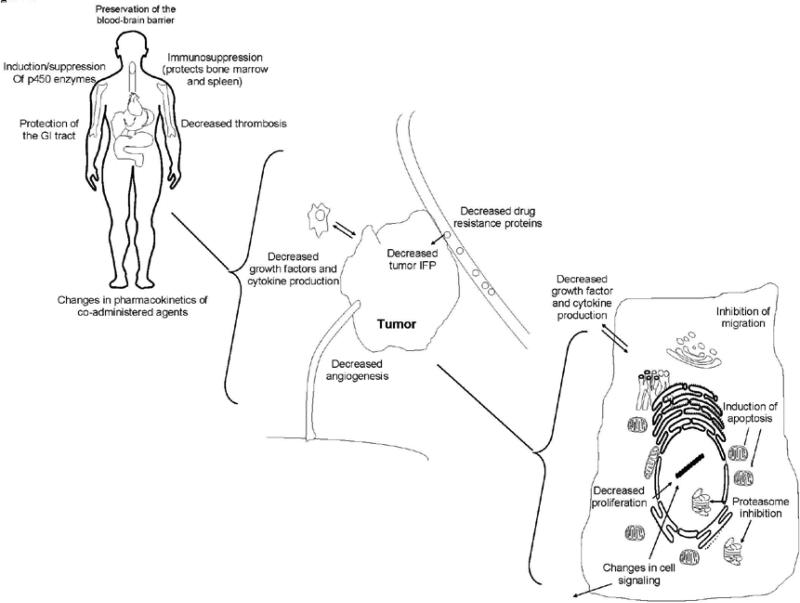
Inflammation is closely linked to cancer, and many anti-cancer agents are also used to treat inflammatory diseases, such as rheumatoid arthritis. Moreover, chronic inflammation increases the risk for various cancers, indicating that eliminating inflammation may represent a valid strategy for cancer prevention and therapy. This article explores the relationship between inflammation and cancer with an emphasis on epidemiological evidence, summarizes the current use of anti-inflammatory agents for cancer prevention and therapy, and describes the mechanisms underlying the anti-cancer effects of anti-inflammatory agents. Since monotherapy is generally insufficient for treating cancer, the combined use of anti-inflammatory agents and conventional cancer therapy is also a focal point in discussion. In addition, we also briefly describe future directions that should be explored for anti-cancer anti-inflammatory agents.
炎症与癌症密切相关,许多抗癌药物也用于治疗炎症性疾病,如类风湿性关节炎。此外,慢性炎症会增加患各种癌症的风险,这表明消除炎症可能是一种有效的癌症预防和治疗策略。本文探讨炎症与癌症之间的关系,重点关注流行病学证据,总结抗炎药物目前在癌症预防和治疗中的应用,并描述抗炎药物抗癌作用的潜在机制。由于单一疗法通常不足以治疗癌症,因此抗炎药物与传统癌症疗法的联合使用也是讨论的焦点。此外,我们还简要描述了抗癌抗炎药物未来应探索的方向。