Department of Pharmacology, R. C. Patel Institute of Pharmaceutical Education and Research, Shirpur 425405, Dist- Dhule, Maharashtra, India.
Pharmacology & Toxicology Division, ICMR-National Institute of Traditional Medicine, Nehru Nagar, Belagavi 590010, Karnataka, India.
Int J Mol Sci. 2019 Sep 5;20(18):4367. doi: 10.3390/ijms20184367.
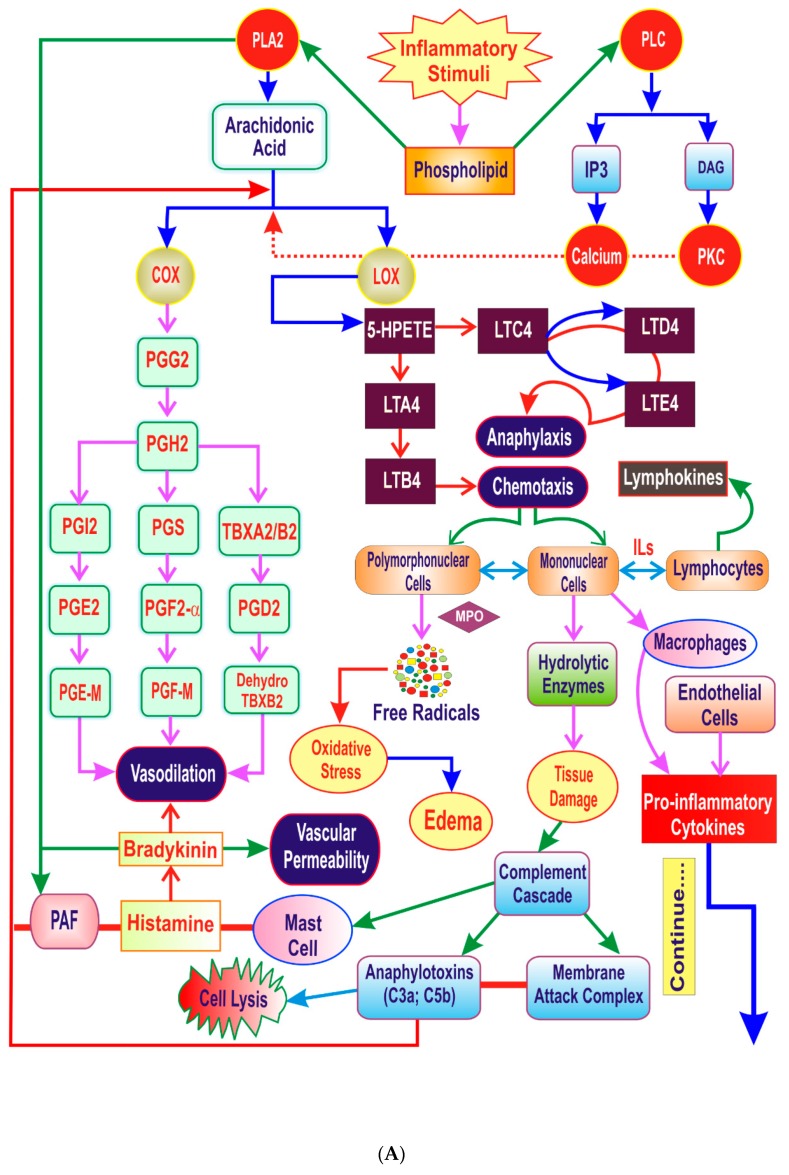
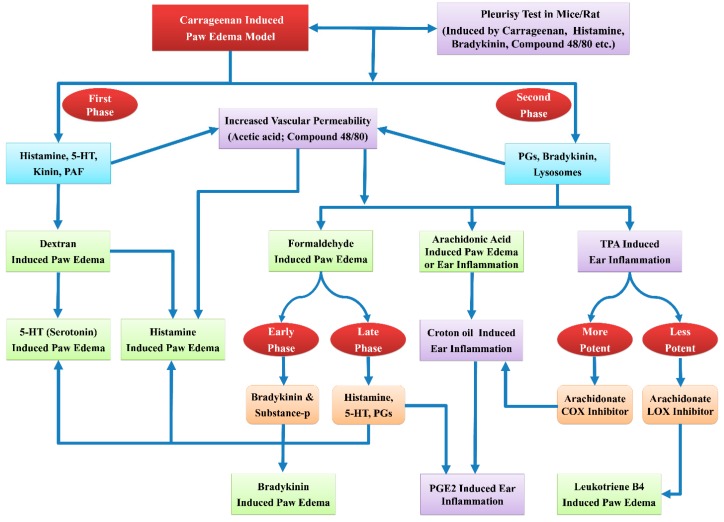
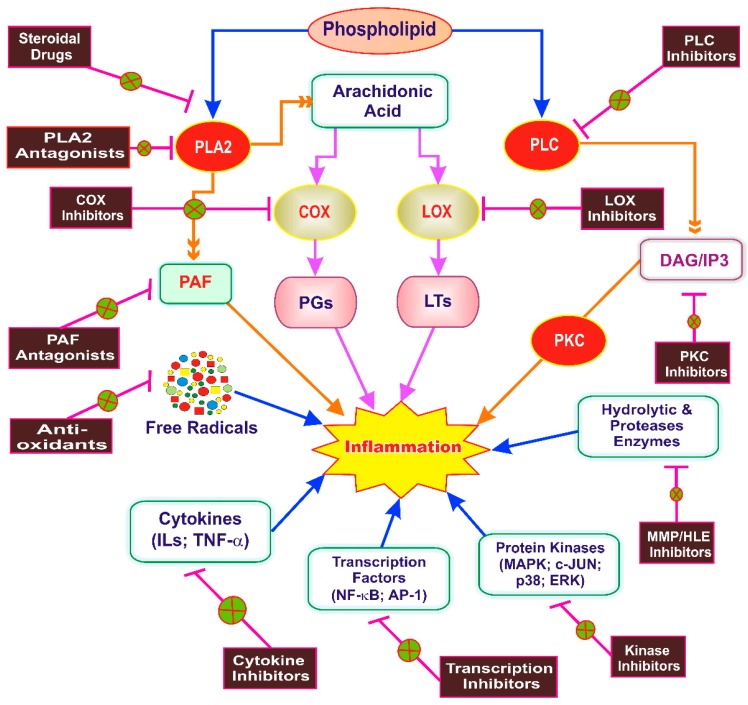
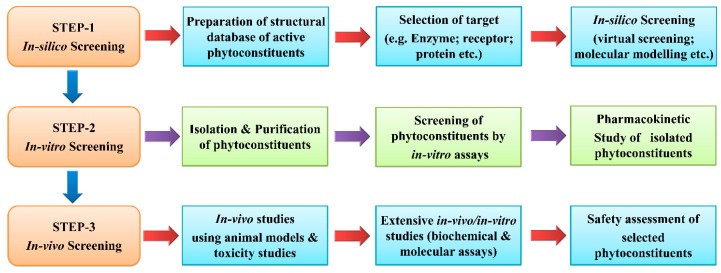
Inflammation is one of the common events in the majority of acute as well as chronic debilitating diseases and represent a chief cause of morbidity in today's era of modern lifestyle. If unchecked, inflammation leads to development of rheumatoid arthritis, diabetes, cancer, Alzheimer's disease, and atherosclerosis along with pulmonary, autoimmune and cardiovascular diseases. Inflammation involves a complex network of many mediators, a variety of cells, and execution of multiple pathways. Current therapy for inflammatory diseases is limited to the steroidal and non-steroidal anti-inflammatory agents. The chronic use of these drugs is reported to cause severe adverse effects like gastrointestinal, cardiovascular, and renal abnormalities. There is a massive need to explore new anti-inflammatory agents with selective action and lesser toxicity. Plants and isolated phytoconstituents are promising and interesting sources of new anti-inflammatories. However, drug development from natural sources has been linked with hurdles like the complex nature of extracts, difficulties in isolation of pure phytoconstituents, and the yield of isolated compounds in minute quantities that is insufficient for subsequent lead development. Although various in-vivo and in-vitro models for anti-inflammatory drug development are available, judicious selection of appropriate animal models is a vital step in the early phase of drug development. Systematic evaluation of phytoconstituents can facilitate the identification and development of potential anti-inflammatory leads from natural sources. The present review describes various techniques of anti-inflammatory drug screening with its advantages and limitations, elaboration on biological targets of phytoconstituents in inflammation and biomarkers for the prediction of adverse effects of anti-inflammatory drugs. The systematic approach proposed through present article for anti-inflammatory drug screening can rationalize the identification of novel phytoconstituents at the initial stage of drug screening programs.
炎症是大多数急性和慢性衰弱性疾病的常见事件之一,也是当今现代生活方式时代发病率的主要原因。如果不加控制,炎症会导致类风湿性关节炎、糖尿病、癌症、阿尔茨海默病和动脉粥样硬化以及肺部、自身免疫和心血管疾病的发展。炎症涉及许多介质、多种细胞和多种途径的复杂网络。目前治疗炎症性疾病的方法仅限于甾体和非甾体抗炎药。这些药物的慢性使用据报道会引起严重的不良反应,如胃肠道、心血管和肾脏异常。因此,迫切需要探索具有选择性作用和较少毒性的新型抗炎药。植物和分离的植物成分是具有前景和有趣的新型抗炎药的来源。然而,从天然来源开发药物一直存在一些障碍,例如提取物的复杂性质、分离纯植物成分的困难以及分离化合物的产量非常少,不足以进行后续的先导化合物开发。尽管有各种用于抗炎药物开发的体内和体外模型,但明智地选择适当的动物模型是药物开发早期阶段的关键步骤。系统地评估植物成分可以促进从天然来源中识别和开发潜在的抗炎先导化合物。本文描述了各种抗炎药物筛选技术及其优缺点,阐述了植物成分在炎症中的生物学靶点以及预测抗炎药物不良反应的生物标志物。本文提出的抗炎药物筛选系统方法可以在药物筛选计划的初始阶段合理地确定新型植物成分。