
眼眶假瘤:独特的诊断特征与治疗
Orbital pseudotumor: distinct diagnostic features and management.
作者信息
Chaudhry Imtiaz A, Shamsi Farrukh A, Arat Yonca O, Riley Fenwick C
机构信息
Oculoplastic and Orbit Division, King Khaled Eye Specialist Hospital, Riyadh, Kingdom of Saudi Arabia.
出版信息
Middle East Afr J Ophthalmol. 2008 Jan;15(1):17-27. doi: 10.4103/0974-9233.53370.
PURPOSE
To provide an overview of the spectrum of diseases known as 'idiopathic orbital inflammatory syndrome' also known as orbital pseudotumor, with emphasis on specific diagnostic challenges in the evaluation and management of patients with this disorder.
METHODS
Review of the relevant literature and summarize recent findings regarding the epidemiology, diagnosis, pathophysiology and treatment of orbital pseudotumor.
RESULTS
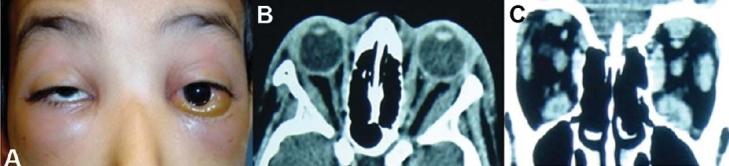
Orbital pseudotumor is a benign intraorbital process confined to the orbit but extra orbital involvement can occur. It is among the 3(rd) most common orbital diseases along with thyroid orbitopathy and lymphoproliferative disorder and accounts for 5-10% of orbital processes. Clinically, orbital pseudotumor has been categorized as myositis, dacryoadenitis, anterior, apical and diffuse process. Patients may present with diplopia, conjunctival chemosis, proptosis or abnormal computed tomography scan (CT-scan) findings. Patients may also have associated optic neuropathy. Diagnosis is based on careful history, ultrasonography (U/S), CT-scan and magnetic resonance imaging (MRI) studies which may also provide prognostic information. Treatment consists of systemic corticosteroids in the form of oral or intravenous administration. Confirmation is made by orbital biopsy. In addition to radiation, cytotoxic agents, immunosuppressant, IV immunoglobulin, biological therapy, TNF-alpha inhibitor monoclonal antibody and Mycophenolate Moftil have been found to be useful in the management of refractory orbital pseudotumor.
CONCLUSION
Understanding of the clinical features of patients with orbital pseudotumor, differentiating it from other orbital processes by use of imaging techniques and timely implementation of available treatment strategies may help prevent visual loss and associated morbidity from this condition.
目的
概述被称为“特发性眼眶炎性综合征”(也称为眼眶假瘤)的疾病谱,重点关注该疾病患者评估和管理中的特定诊断挑战。
方法
回顾相关文献并总结关于眼眶假瘤的流行病学、诊断、病理生理学和治疗的最新发现。
结果
眼眶假瘤是一种局限于眼眶的良性眶内病变,但可发生眶外累及。它是与甲状腺相关眼病和淋巴增殖性疾病并列的第三常见眼眶疾病,占眼眶病变的5% - 10%。临床上,眼眶假瘤已被分类为肌炎型、泪腺炎型、前部型、尖部型和弥漫型。患者可能出现复视、结膜水肿、眼球突出或计算机断层扫描(CT扫描)异常表现。患者也可能伴有视神经病变。诊断基于详细的病史、超声检查(U/S)、CT扫描和磁共振成像(MRI)研究,这些检查也可能提供预后信息。治疗包括口服或静脉注射全身用糖皮质激素。通过眼眶活检进行确诊。除放射治疗外,细胞毒性药物、免疫抑制剂、静脉注射免疫球蛋白、生物疗法、肿瘤坏死因子-α抑制剂单克隆抗体和霉酚酸酯已被发现对难治性眼眶假瘤的治疗有用。
结论
了解眼眶假瘤患者的临床特征,通过使用成像技术将其与其他眼眶病变区分开来,并及时实施可用的治疗策略,可能有助于预防该疾病导致的视力丧失和相关并发症。



 Zotero 插件