Department of Mathematics, University of Iowa, Iowa City, IA 52242, USA.
Biol Direct. 2010 Apr 20;5:28. doi: 10.1186/1745-6150-5-28.
Multiple myeloma is a hematologic malignancy associated with the development of a destructive osteolytic bone disease.
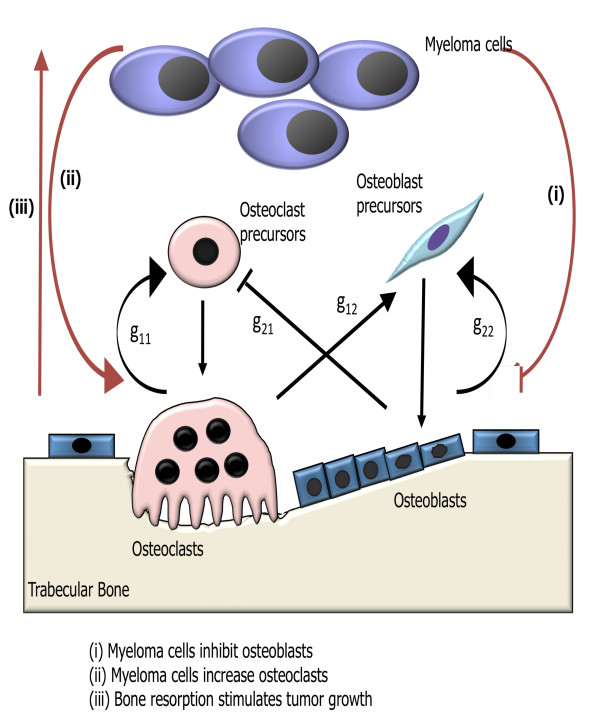
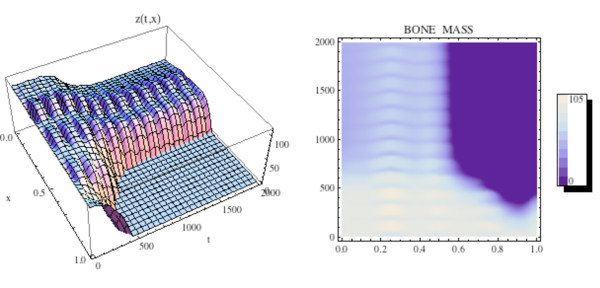
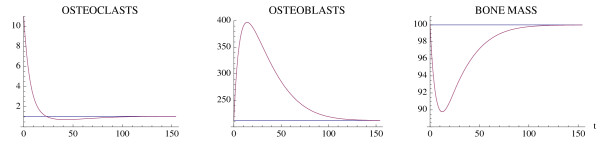
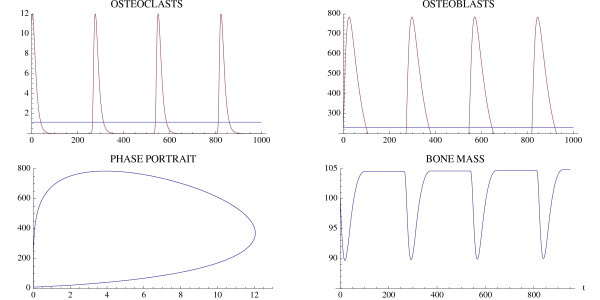
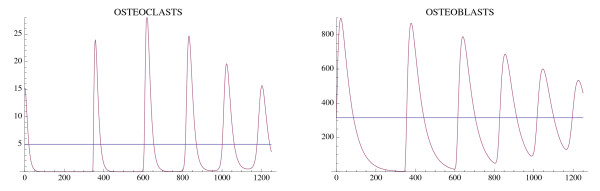
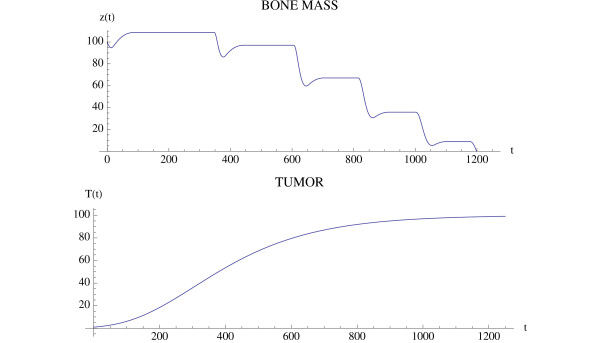
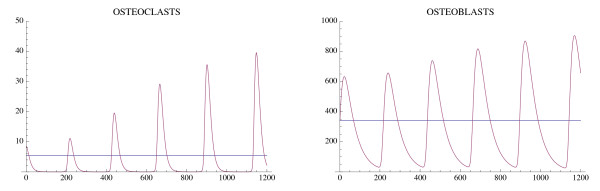
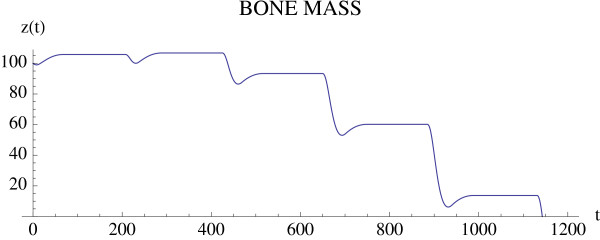
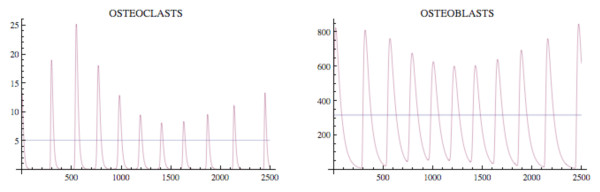
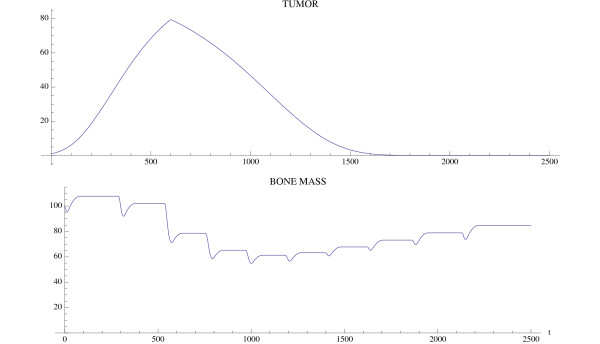
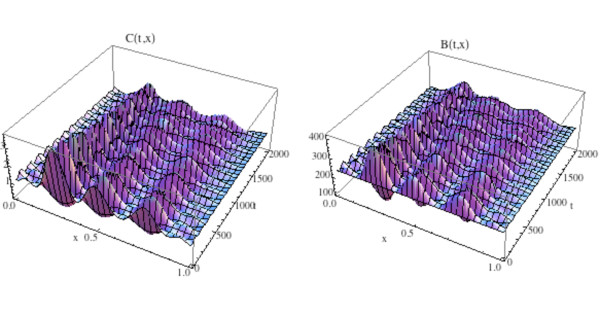
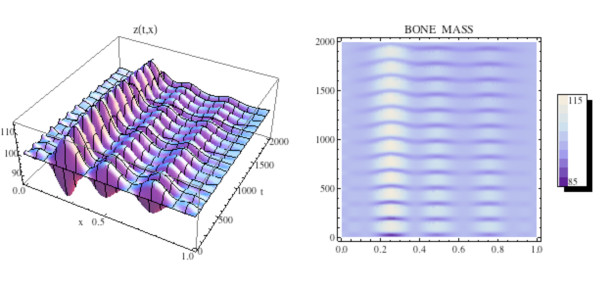
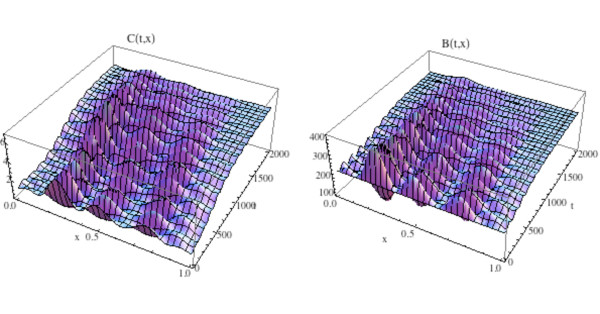
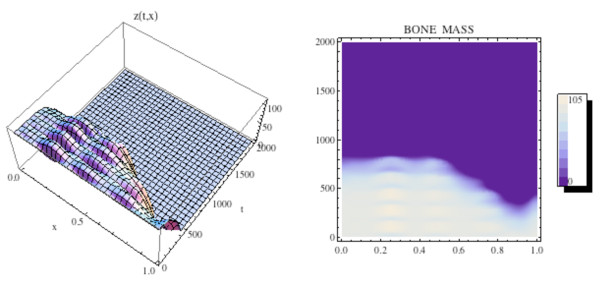
Mathematical models are developed for normal bone remodeling and for the dysregulated bone remodeling that occurs in myeloma bone disease. The models examine the critical signaling between osteoclasts (bone resorption) and osteoblasts (bone formation). The interactions of osteoclasts and osteoblasts are modeled as a system of differential equations for these cell populations, which exhibit stable oscillations in the normal case and unstable oscillations in the myeloma case. In the case of untreated myeloma, osteoclasts increase and osteoblasts decrease, with net bone loss as the tumor grows. The therapeutic effects of targeting both myeloma cells and cells of the bone marrow microenvironment on these dynamics are examined.
The current model accurately reflects myeloma bone disease and illustrates how treatment approaches may be investigated using such computational approaches.
This article was reviewed by Ariosto Silva and Mark P. Little.
多发性骨髓瘤是一种血液恶性肿瘤,与破坏性溶骨性骨病的发展有关。
为正常骨重塑和骨髓瘤骨病中发生的失调骨重塑开发了数学模型。这些模型检查了破骨细胞(骨吸收)和成骨细胞(骨形成)之间的关键信号。将破骨细胞和成骨细胞的相互作用建模为这些细胞群体的微分方程系统,在正常情况下表现出稳定的振荡,在骨髓瘤情况下表现出不稳定的振荡。在未经治疗的骨髓瘤的情况下,随着肿瘤的生长,破骨细胞增加而成骨细胞减少,导致净骨丢失。研究了针对骨髓瘤细胞和骨髓微环境细胞的治疗方法对这些动力学的影响。
目前的模型准确反映了骨髓瘤骨病,并说明了如何使用这种计算方法研究治疗方法。
本文由 Ariosto Silva 和 Mark P. Little 进行了评审。