Myer Gregory D, Ford Kevin R, Barber Foss Kim D, Goodman Arlene, Ceasar Adrick, Rauh Mitchell J, Divine Jon G, Hewett Timothy E
Cincinnati Children's Hospital Medical Center, Sports Medicine Biodynamics Center and Human Performance Laboratory, 3333 Burnet Avenue, Cincinnati, OH 45229, USA.
Clin Biomech (Bristol). 2010 Aug;25(7):700-7. doi: 10.1016/j.clinbiomech.2010.04.001. Epub 2010 May 14.
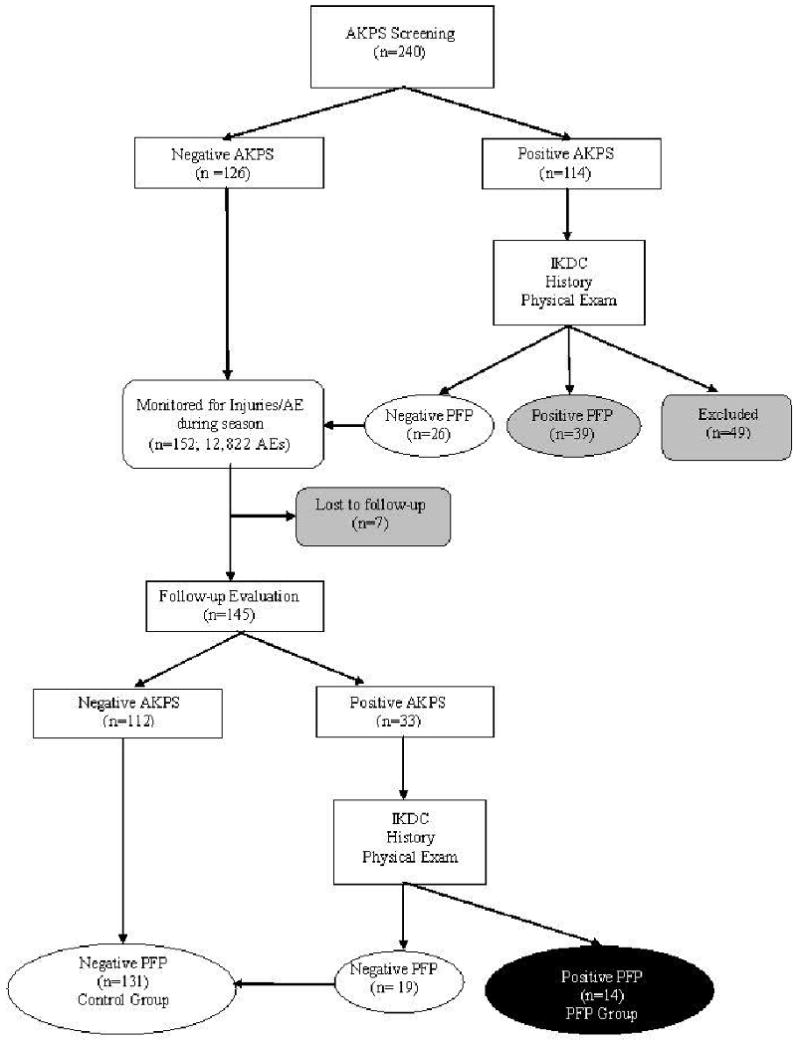
The aims of this study were to determine the prevalence and incidence of patellofemoral pain (PFP) in young female athletes and prospectively evaluate measures of frontal plane knee loading during landing to determine their relationship to development of PFP. We hypothesized that increased dynamic knee abduction measured during preseason biomechanical testing would be increased in those who developed PFP relative to teammates who did not develop PFP.
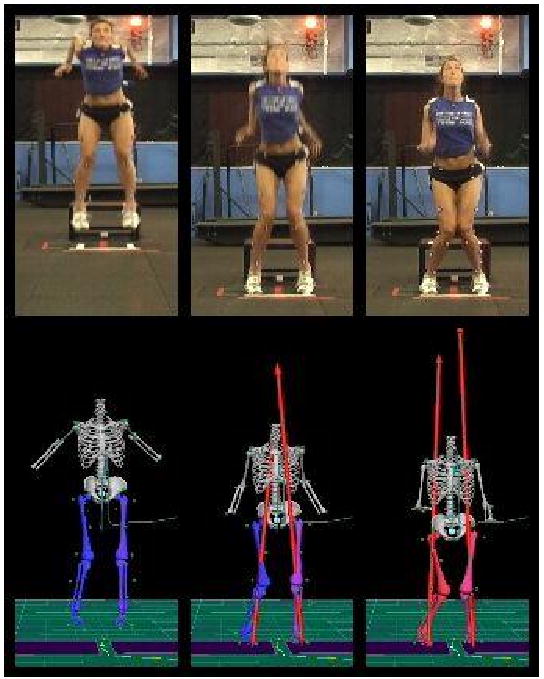
Middle and high school female athletes (n=240) were evaluated by a physician for PFP and for landing biomechanics prior to their basketball season. The athletes were monitored for athletic exposures and PFP injury during their competitive seasons.
At the beginning of the season, the point prevalence of PFP was 16.3 per 100 athletes. The cumulative incidence risk and rate for the development of new unilateral PFP was 9.66 per 100 athletes and 1.09 per 1000 athletic exposures, respectively. All new PFPs developed in middle school athletes who demonstrated mean International Knee Documentation Committee score of 85.6+/-7.7 at diagnosis. The new PFP group demonstrated increased knee abduction moments at initial contact (95% CI: 0.32 to 4.62Nm) on the most-symptomatic limb and maximum (95% CI: 1.3 to 10.1Nm; P=0.02) on the least-symptomatic (or no symptoms) limb relative to the matched control limbs. Knee abduction moments remained increased in the new PFP group when normalized to body mass (P<0.05).
The increased knee abduction landing mechanics in the new PFP group indicate that frontal plane loads contribute to increased incidence of PFP.
本研究的目的是确定年轻女性运动员髌股关节疼痛(PFP)的患病率和发病率,并前瞻性评估着陆过程中额状面膝关节负荷的测量指标,以确定它们与PFP发生发展的关系。我们假设,在季前生物力学测试中测得的动态膝关节外展增加,相对于未发生PFP的队友,发生PFP的运动员会更高。
在篮球赛季开始前,由医生对240名初中和高中女运动员进行PFP评估和着陆生物力学评估。在比赛赛季中,对运动员的运动暴露情况和PFP损伤进行监测。
在赛季开始时,PFP的点患病率为每100名运动员中有16.3例。新的单侧PFP发生的累积发病率风险和发生率分别为每100名运动员中有9.66例和每1000次运动暴露中有1.09例。所有新发生的PFP均出现在初中运动员中,这些运动员在诊断时国际膝关节文献委员会(IKDC)评分平均为85.6±7.7。与匹配的对照肢体相比,新的PFP组在症状最明显的肢体上初始接触时膝关节外展力矩增加(95%CI:0.32至4.62Nm),在症状最轻(或无症状)的肢体上最大(95%CI:1.3至10.1Nm;P=0.02)。当按体重标准化时,新的PFP组膝关节外展力矩仍然增加(P<0.05)。
新的PFP组着陆时膝关节外展力学增加表明,额状面负荷导致PFP发病率增加。