State Key Laboratory of Oral Diseases, Sichuan University, Chengdu, PR China.
Int J Nanomedicine. 2010 May 13;5:337-42. doi: 10.2147/ijn.s9518.
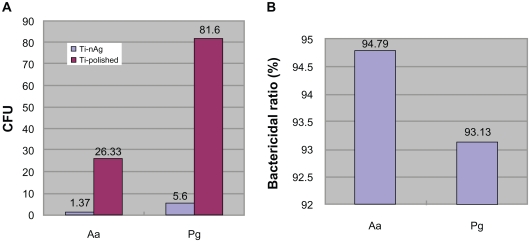
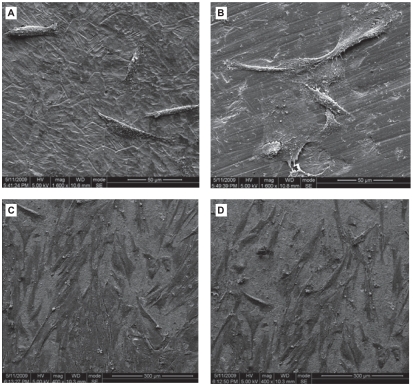
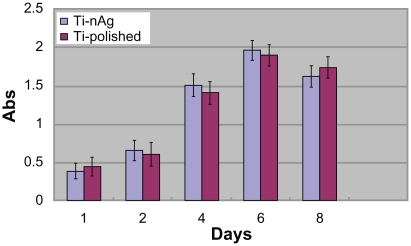
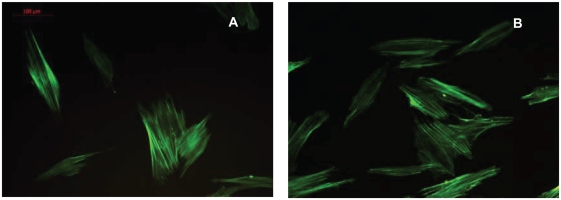
Microbial colonization and biofilm formation on the surface of implant devices may cause peri-implantitis and lead to bone loss. The aim of this study was to develop a novel antibacterial titanium implant surface and to test its biological performance. In a previous study, we demonstrated that titanium plates deposited by nanosilver acquired antibacterial activity to Staphylococcus aureus and Escherichia coli. While antibacterial activity is important, biomaterial surfaces should be modified to achieve excellent cell compatibility as well. In the present study, using the MTT assay, fluorescence microscopy, and scanning electron microscopy, we assessed cell viability, cytoskeletal architecture and cell attachment, respectively, on our silver nanoparticle-modified titanium (Ti-nAg) plate. The results demonstrate that the Ti-nAg do not show any cytotoxicity to the human gingival fibroblasts. Our data indicate that Ti-nAg is a novel material with both good antibacterial properties and uncompromised cytocompatibility, which can be used as an implanted biomaterial.
微生物在植入设备表面的定植和生物膜形成可能导致种植体周围炎,并导致骨丢失。本研究旨在开发一种新型抗菌钛植入物表面,并测试其生物学性能。在之前的研究中,我们证明了纳米银沉积的钛板对金黄色葡萄球菌和大肠杆菌具有抗菌活性。虽然抗菌活性很重要,但生物材料表面也应进行修饰以达到优异的细胞相容性。在本研究中,我们使用 MTT 检测、荧光显微镜和扫描电子显微镜分别评估了我们的银纳米颗粒修饰的钛(Ti-nAg)板上的细胞活力、细胞骨架结构和细胞附着。结果表明,Ti-nAg 对人牙龈成纤维细胞没有任何细胞毒性。我们的数据表明,Ti-nAg 是一种具有良好抗菌性能和不降低细胞相容性的新型材料,可作为植入生物材料使用。