Friedrich Miescher Institute for Biomedical Research, Basel, Switzerland.
PLoS Biol. 2010 May 25;8(5):e1000376. doi: 10.1371/journal.pbio.1000376.
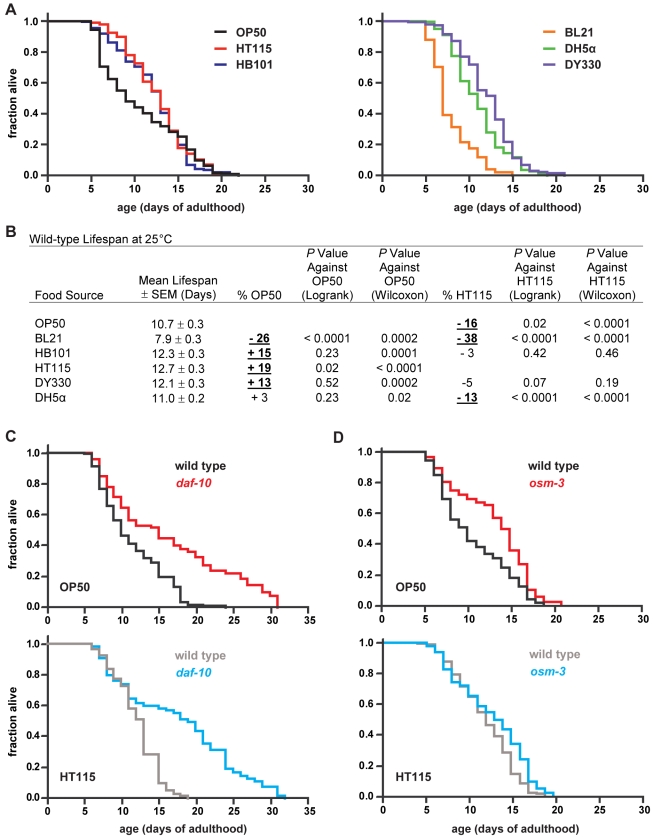
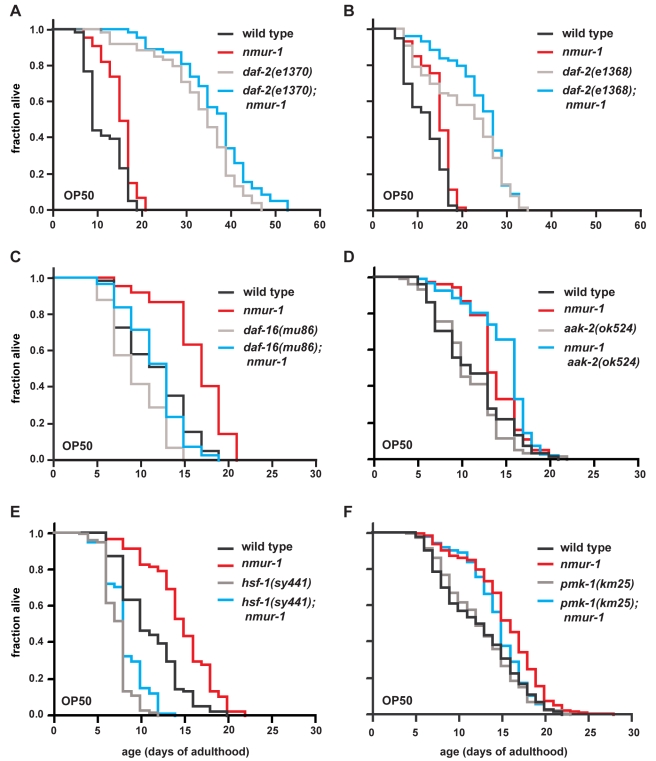
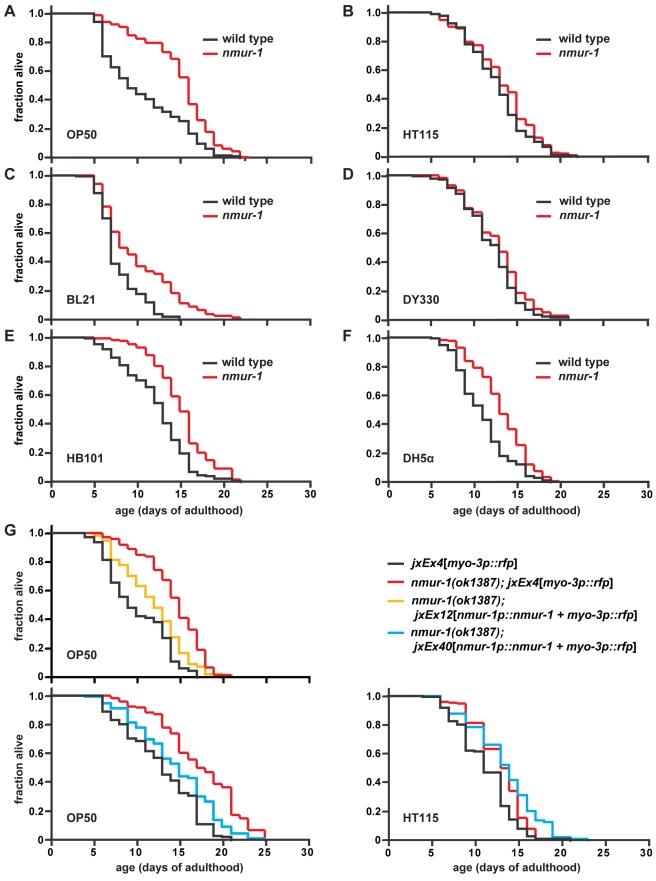
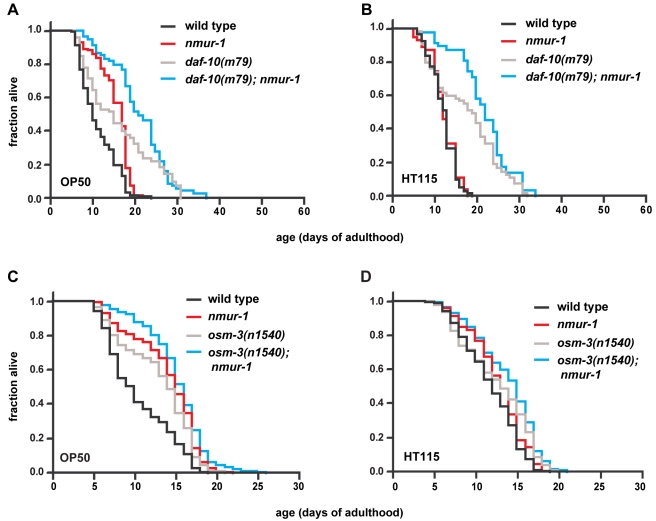
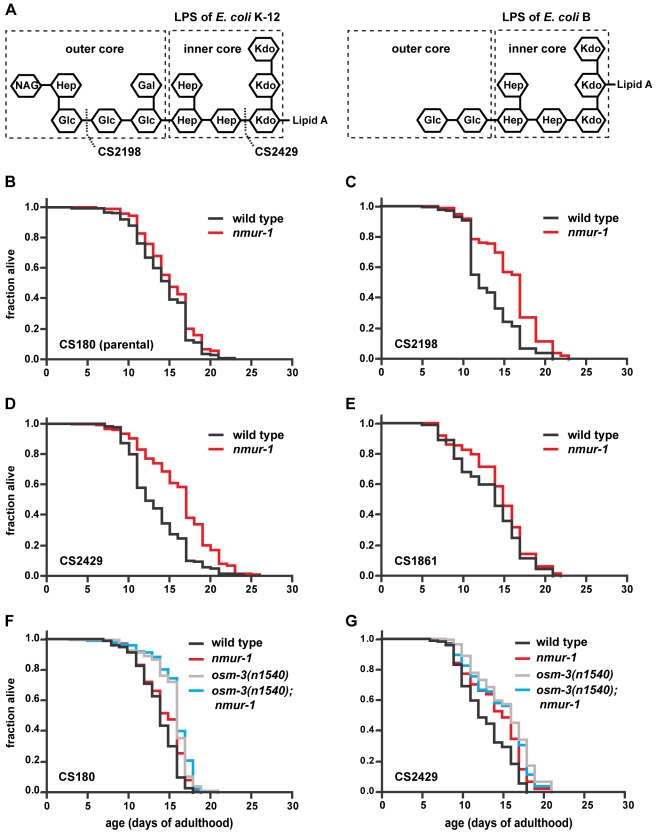
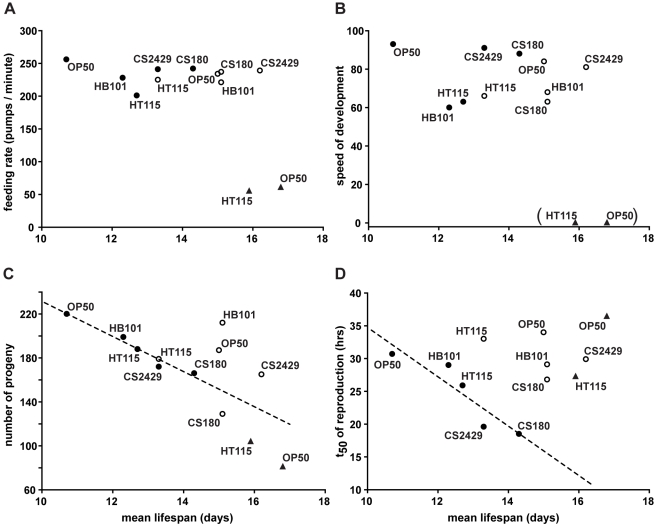
The type of food source has previously been shown to be as important as the level of food intake in influencing lifespan. Here we report that different Escherichia coli food sources alter Caenorhabditis elegans lifespan. These effects are modulated by different subsets of sensory neurons, which act with nmur-1, a homolog of mammalian neuromedin U receptors. Wild-type nmur-1, which is expressed in the somatic gonad, sensory neurons, and interneurons, shortens lifespan only on specific E. coli food sources-an effect that is dependent on the type of E. coli lipopolysaccharide structure. Moreover, the food type-dependent effect of nmur-1 on lifespan is different from that of food-level restriction. Together our data suggest that nmur-1 processes information from specific food cues to influence lifespan and other aspects of physiology.
食物来源的类型以前被证明与食物摄入水平一样重要,会影响寿命。在这里,我们报告称不同的大肠杆菌食物来源会改变秀丽隐杆线虫的寿命。这些影响是由不同的感觉神经元亚群调节的,这些神经元与哺乳动物神经肽 U 受体的同源物 nmur-1 一起作用。野生型 nmur-1 表达于体性腺、感觉神经元和中间神经元,仅在特定的大肠杆菌食物来源上缩短寿命——这种效应依赖于大肠杆菌脂多糖结构的类型。此外,nmur-1 对寿命的食物类型依赖性影响与食物水平限制不同。我们的数据表明,nmur-1 处理特定食物线索的信息以影响寿命和其他生理方面。