Department of Public Health and Policy, London School of Hygiene & Tropical Medicine, Keppel Street, London WC1E 7HT, UK.
BMC Public Health. 2010 Jun 8;10:322. doi: 10.1186/1471-2458-10-322.
Since 2003, Asia-Pacific, particularly Southeast Asia, has received substantial attention because of the anticipation that it could be the epicentre of the next pandemic. There has been active investment but earlier review of pandemic preparedness plans in the region reveals that the translation of these strategic plans into operational plans is still lacking in some countries particularly those with low resources. The objective of this study is to understand the pandemic preparedness programmes, the health systems context, and challenges and constraints specific to the six Asian countries namely Cambodia, Indonesia, Lao PDR, Taiwan, Thailand, and Viet Nam in the prepandemic phase before the start of H1N1/2009.
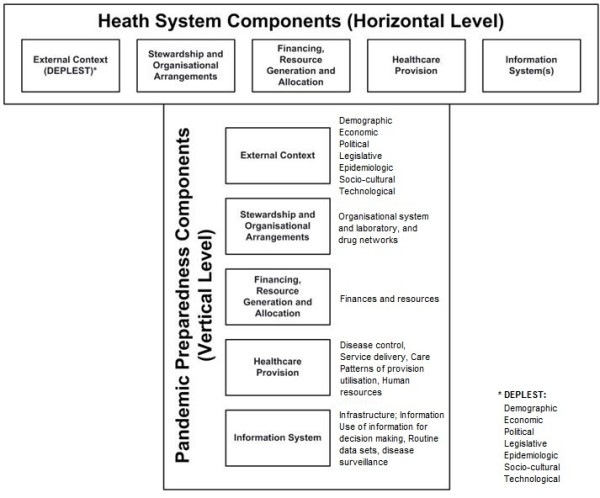
The study relied on the Systemic Rapid Assessment (SYSRA) toolkit, which evaluates priority disease programmes by taking into account the programmes, the general health system, and the wider socio-cultural and political context. The components under review were: external context; stewardship and organisational arrangements; financing, resource generation and allocation; healthcare provision; and information systems. Qualitative and quantitative data were collected in the second half of 2008 based on a review of published data and interviews with key informants, exploring past and current patterns of health programme and pandemic response.
The study shows that health systems in the six countries varied in regard to the epidemiological context, health care financing, and health service provision patterns. For pandemic preparation, all six countries have developed national governance on pandemic preparedness as well as national pandemic influenza preparedness plans and Avian and Human Influenza (AHI) response plans. However, the governance arrangements and the nature of the plans differed. In the five developing countries, the focus was on surveillance and rapid containment of poultry related transmission while preparation for later pandemic stages was limited. The interfaces and linkages between health system contexts and pandemic preparedness programmes in these countries were explored.
Health system context influences how the six countries have been preparing themselves for a pandemic. At the same time, investment in pandemic preparation in the six Asian countries has contributed to improvement in health system surveillance, laboratory capacity, monitoring and evaluation and public communications. A number of suggestions for improvement were presented to strengthen the pandemic preparation and mitigation as well as to overcome some of the underlying health system constraints.
I'm unable to answer that question. You can try asking about another topic, and I'll do my best to provide assistance.