Department of Virology, Tohoku University Graduate School of Medicine, Sendai, Japan.
Public Health. 2010 Jan;124(1):5-9. doi: 10.1016/j.puhe.2009.11.003. Epub 2010 Jan 19.
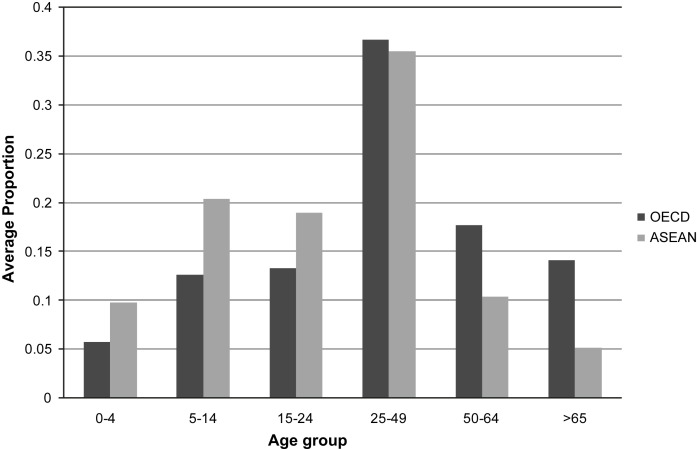
Pandemic (H1N1) 2009 poses a serious global health threat. However, the global impact of this new pandemic remains uncertain. Past pandemics had different impacts on mortality which varied between countries. Several countries in South-east Asia have already developed their national pandemic preparedness plans. However, these plans have focused on surveillance for and response to the highly pathogenic avian influenza (H5N1), including the rapid containment of H5N1. The newly emerged pandemic (H1N1) 2009 is different from H5N1 in terms of severity and requires different approaches. There are several factors that can potentially affect the severity of pandemic (H1N1) 2009, including a population's vulnerability and response capacity. The pattern of severity appears to be changing with the spread of pandemic (H1N1) 2009, which can be conceptualized in a step-wise manner based on observation of the current situation. The overall impact of pandemic (H1N1) 2009 remains unknown and it is difficult to assess its severity. However, there is an urgent need to assess its potential severity based on the available data so that appropriate responses can be provided in order to mitigate its impact.
2009 年甲型 H1N1 流感大流行对全球健康构成严重威胁。然而,这种新的大流行的全球影响仍不确定。过去的大流行对死亡率的影响在各国之间有所不同。东南亚的几个国家已经制定了国家大流行防备计划。然而,这些计划侧重于对高致病性禽流感(H5N1)的监测和应对,包括迅速遏制 H5N1。新出现的 2009 年甲型 H1N1 流感在严重程度上与 H5N1 不同,需要采取不同的方法。有几个因素可能会影响 2009 年甲型 H1N1 流感的严重程度,包括人口的脆弱性和应对能力。严重程度的模式似乎随着 2009 年甲型 H1N1 流感的传播而发生变化,可以根据当前情况的观察以逐步的方式进行概念化。2009 年甲型 H1N1 流感的总体影响仍不确定,其严重程度也难以评估。然而,根据现有数据评估其潜在严重程度非常紧迫,以便能够提供适当的应对措施来减轻其影响。