Courant Research Centre Geobiology, University of Göttingen, 37077 Göttingen, Germany.
BMC Evol Biol. 2010 Jun 9;10:171. doi: 10.1186/1471-2148-10-171.
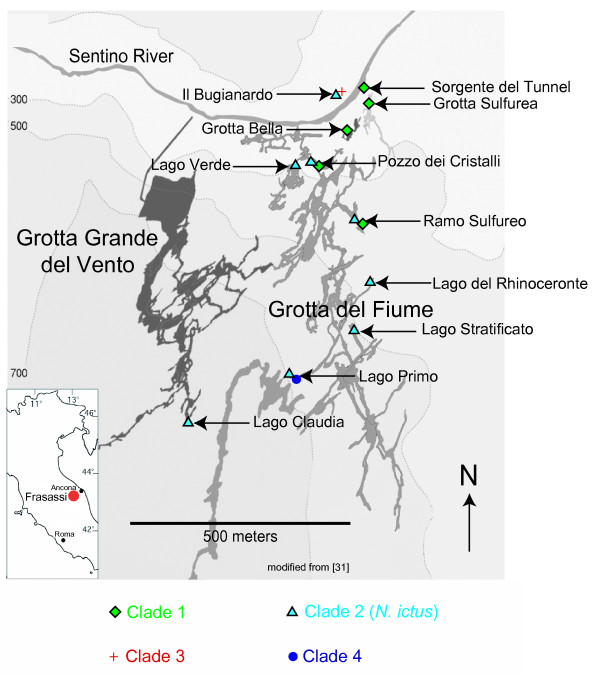
The sulfide-rich Frasassi caves in central Italy contain a rare example of a freshwater ecosystem supported entirely by chemoautotrophy. Niphargus ictus, the sole amphipod species previously reported from this locality, was recently shown to host the first known case of a freshwater chemoautotrophic symbiosis. Since the habitat of N. ictus is highly fragmented and is comprised of streams and lakes with various sulfide concentrations, we conducted a detailed study to examine the potential genetic diversity of this species within Frasassi.
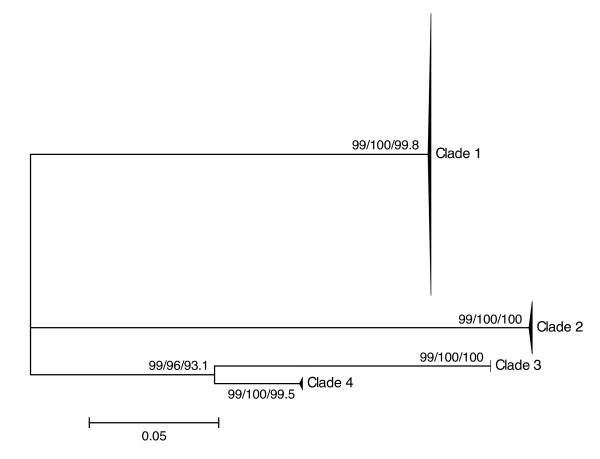
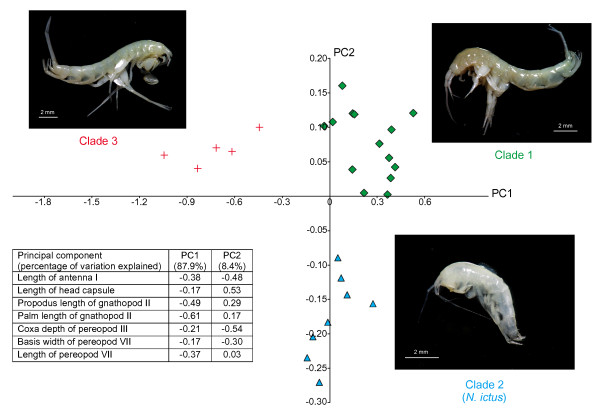
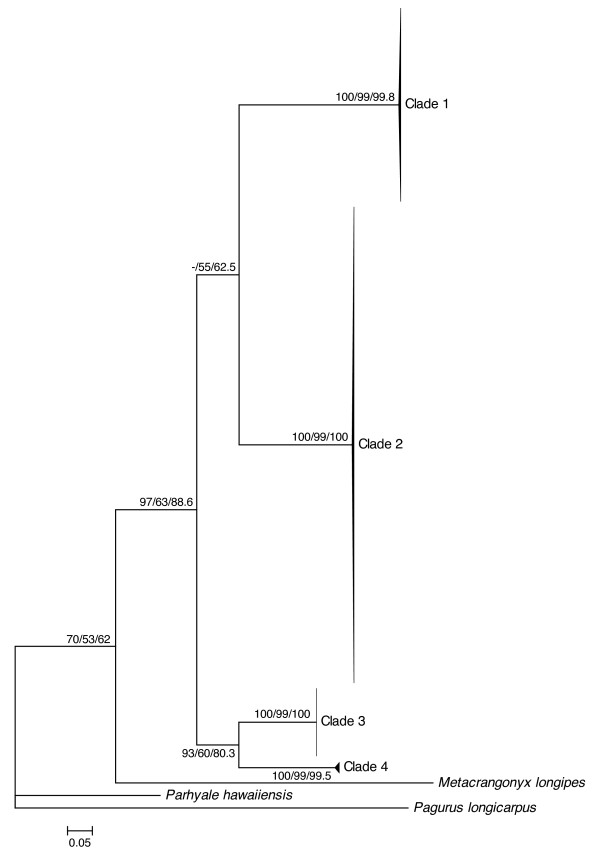
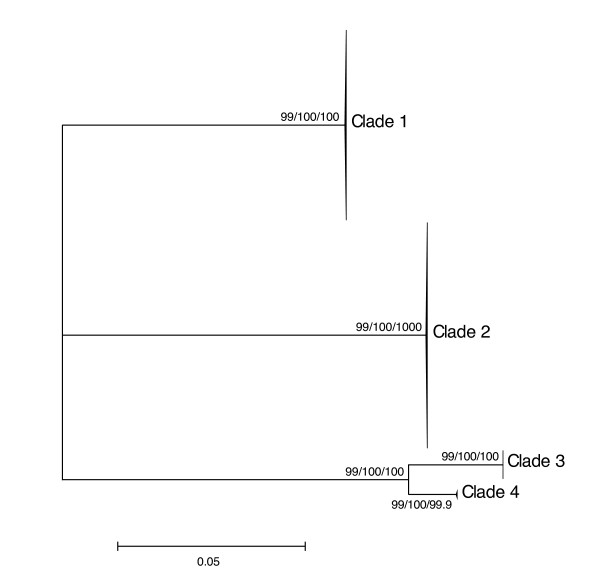
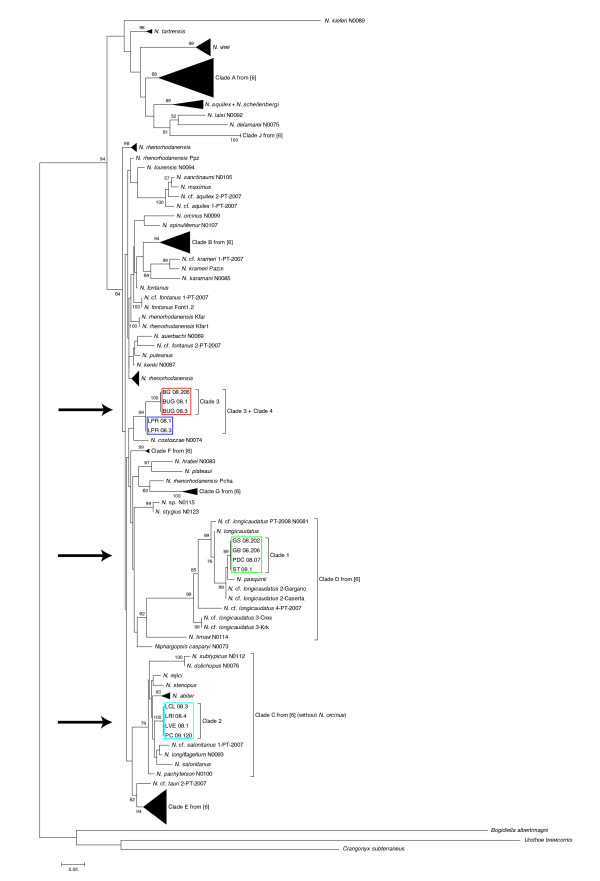
By sequencing one nuclear (ITS) and two mitochondrial (COI and 12S) regions, we show that four partially sympatric Niphargus clades are present in Frasassi. Morphological and behavioral data obtained for three of these clades are perfectly congruent with this molecular delineation and make it possible to distinguish them in the field. Phylogenetic analyses of 28S ribosomal DNA sequences reveal that, among the four clades, only two are closely related to each other. Moreover, these four clades occupy distinct niches that seem to be related to the chemical properties and flow regimes of the various water bodies within Frasassi.
Our results suggest that four distinct Niphargus species are present in Frasassi and that they originated from three or four independent invasions of the cave system. At least two among the four species harbor Thiothrix epibionts, which paves the way for further studies of the specificity and evolutionary history of this symbiosis.
意大利中部富硫的弗拉斯洞穴中存在着一个罕见的完全依靠化能自养支持的淡水生态系统。以前曾在该地点报道过唯一的一种片脚类动物 Niphargus ictus,最近发现它是首例已知的淡水化能共生现象。由于 N. ictus 的栖息地高度分散,由具有不同硫化物浓度的溪流和湖泊组成,因此我们进行了详细的研究,以检查该物种在 Frasassi 中的潜在遗传多样性。
通过对一个核(ITS)和两个线粒体(COI 和 12S)区域进行测序,我们显示在 Frasassi 中有四个部分共生的 Niphargus 进化枝存在。对其中三个进化枝的形态学和行为学数据与这种分子划分完全一致,并且可以在野外对其进行区分。28S 核糖体 DNA 序列的系统发育分析表明,在这四个进化枝中,只有两个彼此密切相关。此外,这四个进化枝占据了不同的生态位,这些生态位似乎与 Frasassi 内各种水体的化学性质和流动模式有关。
我们的结果表明,在 Frasassi 中有四个不同的 Niphargus 物种,它们起源于洞穴系统的三到四次独立入侵。在这四个物种中至少有两个种携带 Thiothrix 共生体,这为进一步研究这种共生关系的特异性和进化历史铺平了道路。