Department of Gene and Cell Medicine, Black Family Stem Cell Institute, Mount Sinai School of Medicine, New York, New York 10029, USA.
Nature. 2010 Jun 10;465(7299):808-12. doi: 10.1038/nature09005.
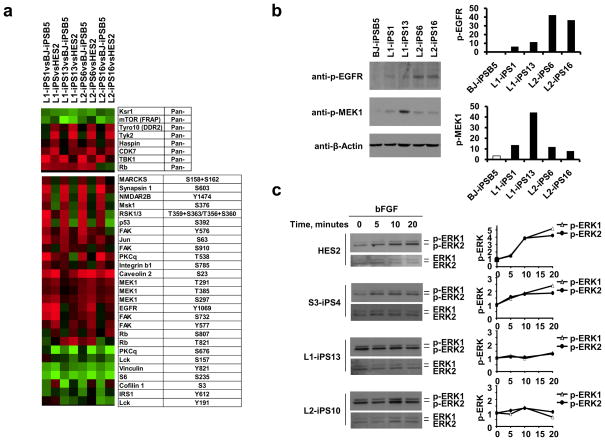
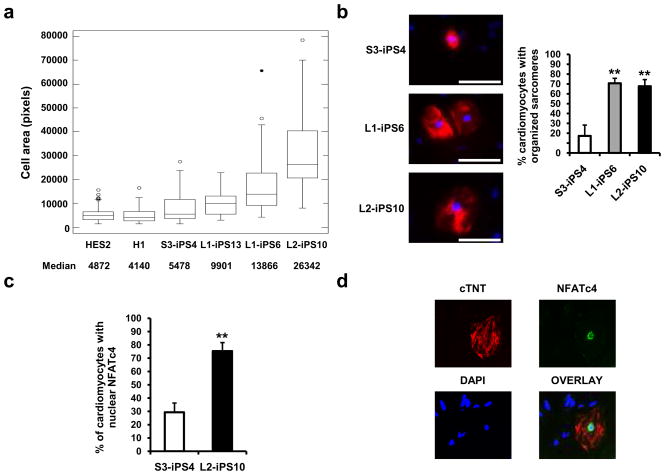
The generation of reprogrammed induced pluripotent stem cells (iPSCs) from patients with defined genetic disorders holds the promise of increased understanding of the aetiologies of complex diseases and may also facilitate the development of novel therapeutic interventions. We have generated iPSCs from patients with LEOPARD syndrome (an acronym formed from its main features; that is, lentigines, electrocardiographic abnormalities, ocular hypertelorism, pulmonary valve stenosis, abnormal genitalia, retardation of growth and deafness), an autosomal-dominant developmental disorder belonging to a relatively prevalent class of inherited RAS-mitogen-activated protein kinase signalling diseases, which also includes Noonan syndrome, with pleomorphic effects on several tissues and organ systems. The patient-derived cells have a mutation in the PTPN11 gene, which encodes the SHP2 phosphatase. The iPSCs have been extensively characterized and produce multiple differentiated cell lineages. A major disease phenotype in patients with LEOPARD syndrome is hypertrophic cardiomyopathy. We show that in vitro-derived cardiomyocytes from LEOPARD syndrome iPSCs are larger, have a higher degree of sarcomeric organization and preferential localization of NFATC4 in the nucleus when compared with cardiomyocytes derived from human embryonic stem cells or wild-type iPSCs derived from a healthy brother of one of the LEOPARD syndrome patients. These features correlate with a potential hypertrophic state. We also provide molecular insights into signalling pathways that may promote the disease phenotype.
从患有明确遗传疾病的患者中生成重编程的诱导多能干细胞(iPSCs)有望增进对复杂疾病病因的理解,并且还可能促进新型治疗干预措施的发展。我们已经从莱-奥波特综合征(一种由其主要特征组成的首字母缩写,即痣、心电图异常、眼球高度远视、肺动脉瓣狭窄、生殖器异常、生长发育迟缓以及耳聋)患者中生成了 iPSCs,莱-奥波特综合征是一种常染色体显性发育障碍,属于相对常见的遗传性 RAS-丝裂原活化蛋白激酶信号疾病类别,还包括诺南综合征,其对多个组织和器官系统有多种形态效应。患者来源的细胞在编码 SHP2 磷酸酶的 PTPN11 基因中有一个突变。这些 iPSCs 已经得到了广泛的表征,并产生了多种分化的细胞谱系。莱-奥波特综合征患者的主要疾病表型是肥厚型心肌病。我们表明,与源自人类胚胎干细胞或源自莱-奥波特综合征患者的健康兄弟的野生型 iPSCs 的心肌细胞相比,源自莱-奥波特综合征 iPSCs 的体外衍生的心肌细胞更大,具有更高程度的肌节组织,并且 NFATC4 优先定位于细胞核。这些特征与潜在的肥厚状态相关。我们还提供了有关可能促进疾病表型的信号通路的分子见解。