Nebraska Center for Virology, School of Biological Sciences, University of Nebraska Lincoln, Lincoln, NE 68583-0900, USA.
Virol J. 2010 Jun 10;7:123. doi: 10.1186/1743-422X-7-123.
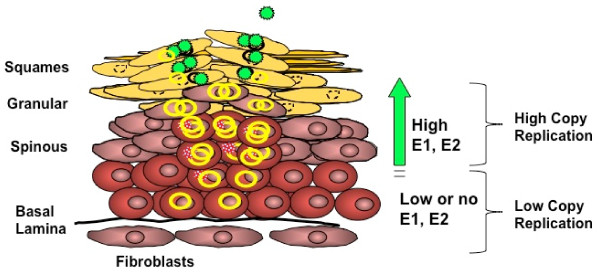
Papillomaviruses (PVs) establish a persistent infection in the proliferating basal cells of the epithelium. The viral genome is replicated and maintained as a low-copy nuclear plasmid in basal keratinocytes. Bovine and human papillomaviruses (BPV and HPV) are known to utilize two viral proteins; E1, a DNA helicase, and E2, a transcription factor, which have been considered essential for viral DNA replication. However, growing evidence suggests that E1 and E2 are not entirely essential for stable replication of HPV.
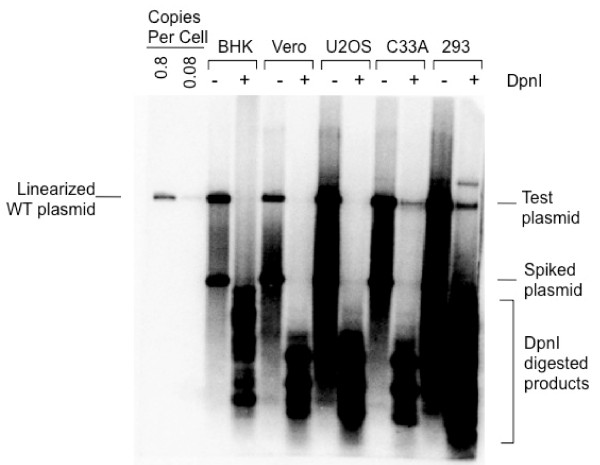
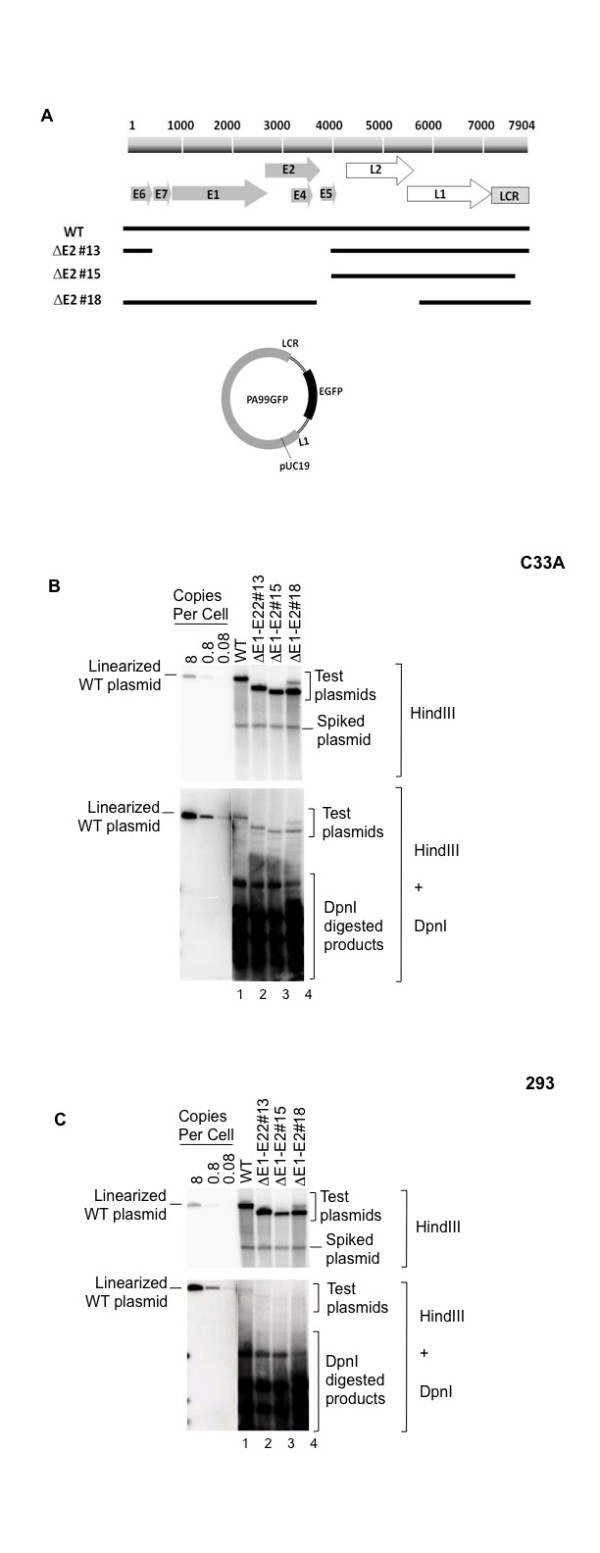
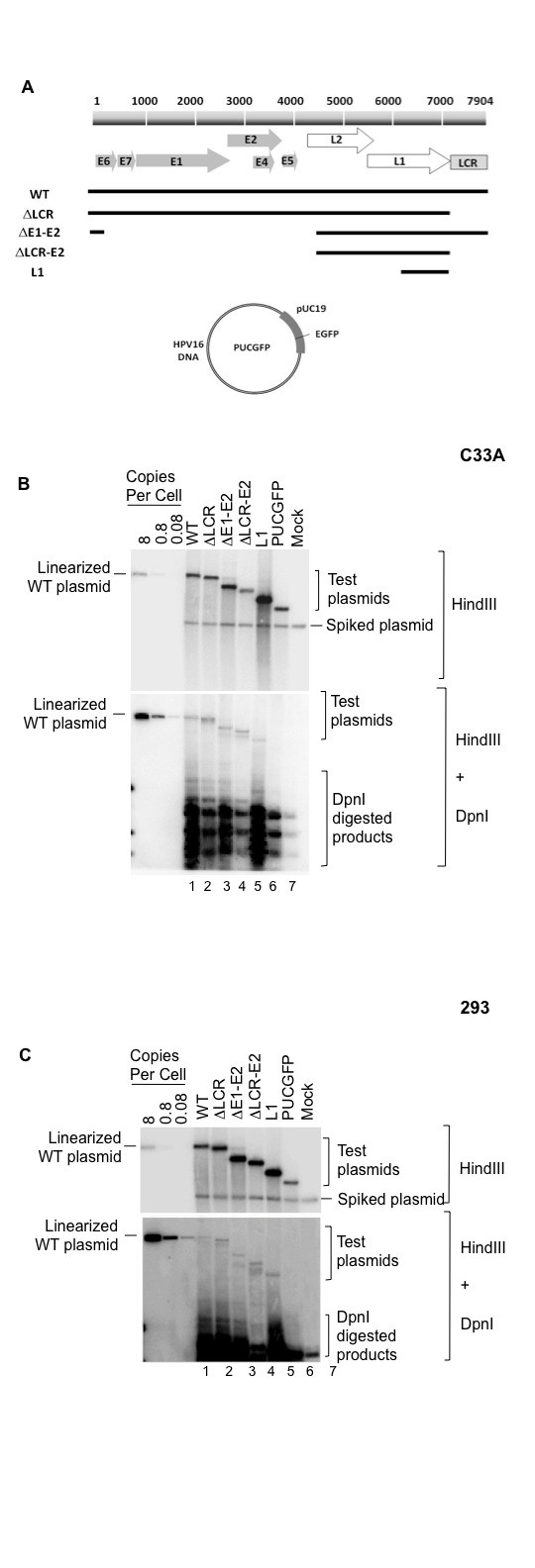
Here we report that multiple HPV16 mutants, lacking either or both E1 and E2 open reading frame (ORFs) and the long control region (LCR), still support extrachromosomal replication. Our data clearly indicate that HPV16 has a mode of replication, independent of viral trans-factors, E1 and E2, which is achieved by origin activity located outside of the LCR.
乳头瘤病毒(PV)在上皮细胞的增殖基层细胞中建立持续感染。病毒基因组作为低拷贝数核质体在基层角质形成细胞中复制和维持。已知牛乳头瘤病毒(BPV)和人乳头瘤病毒(HPV)利用两种病毒蛋白;E1,一种 DNA 解旋酶,和 E2,一种转录因子,它们被认为对病毒 DNA 复制是必需的。然而,越来越多的证据表明,E1 和 E2 对于 HPV 的稳定复制并非完全必需。
在这里,我们报告多个 HPV16 突变体,缺失 E1 和 E2 开放阅读框(ORF)和长控制区(LCR),仍然支持染色体外复制。我们的数据清楚地表明,HPV16 具有一种复制模式,独立于病毒转因子 E1 和 E2,这是通过位于 LCR 之外的原点活性实现的。