Pathogen Genomics Center, National Institute of Infectious Diseases, 4-7-1 Gakuen, Musashi-murayama, Tokyo 208-0011, Japan.
Virol J. 2014 Jan 24;11:11. doi: 10.1186/1743-422X-11-11.
Co-infection of multiple genotypes of human papillomavirus (HPV) is commonly observed among women with abnormal cervical cytology, but how different HPVs interact with each other in the same cell is not clearly understood. A previous study using cultured keratinocytes revealed that genome replication of one HPV type is inhibited by co-existence of the genome of another HPV type, suggesting that replication interference occurs between different HPV types when co-infected; however, molecular mechanisms underlying inter-type replication interference have not been fully explored.
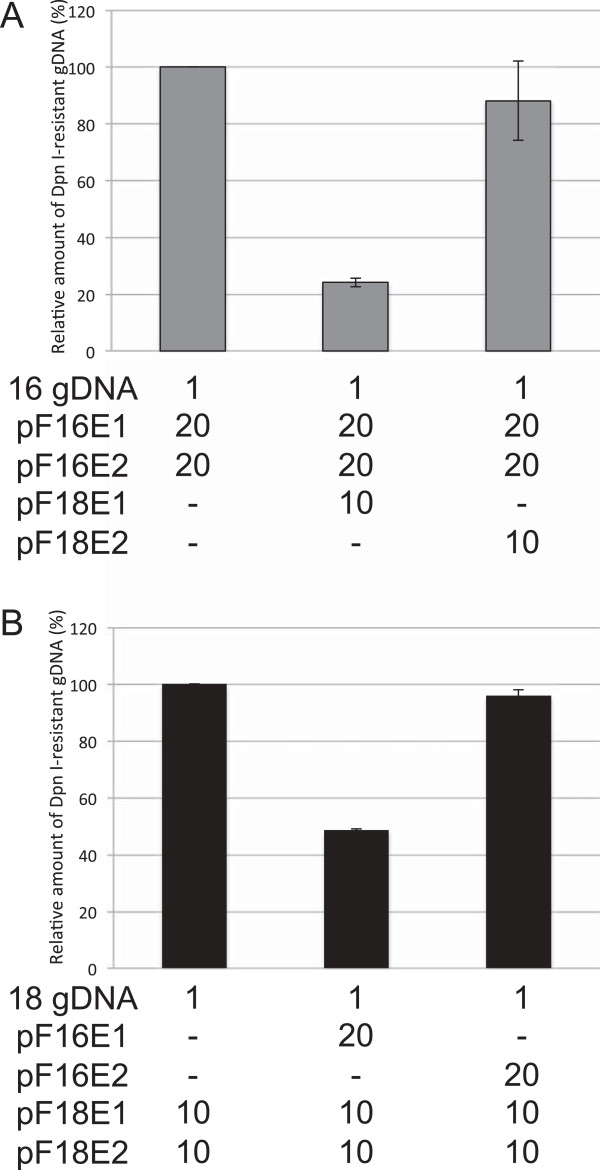
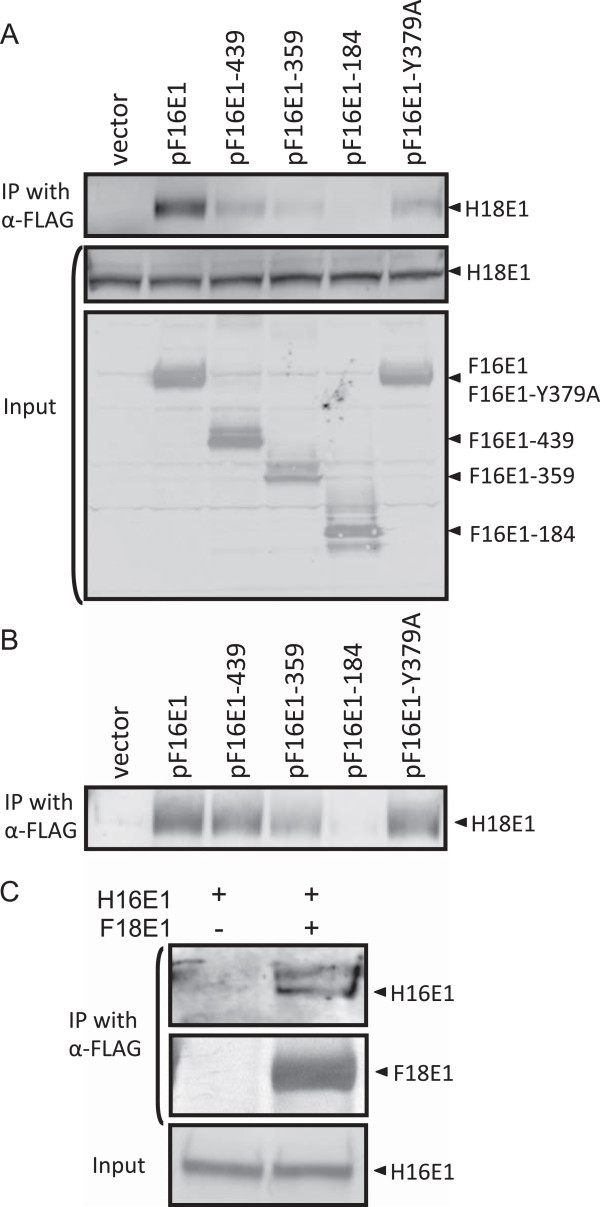
Replication interference between two most prevalent HPV types, HPV16 and HPV18, was examined in HPV-negative C33A cervical carcinoma cells co-transfected with genomes of HPV16 and HPV18 together with expression plasmids for E1/E2 of both types. Levels of HPV16/18 genome replication were measured by quantitative real-time PCR. Physical interaction between HPV16/18 E1s was assessed by co-immunoprecipitation assays in the cell lysates.
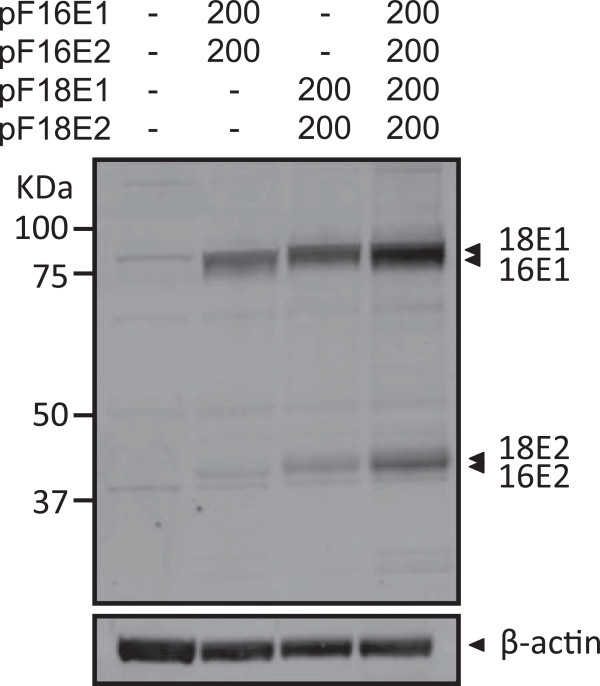
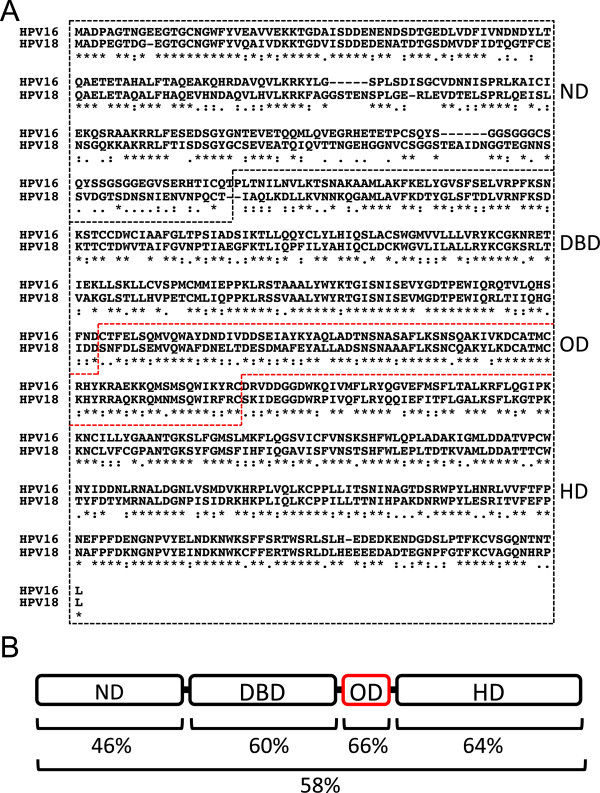
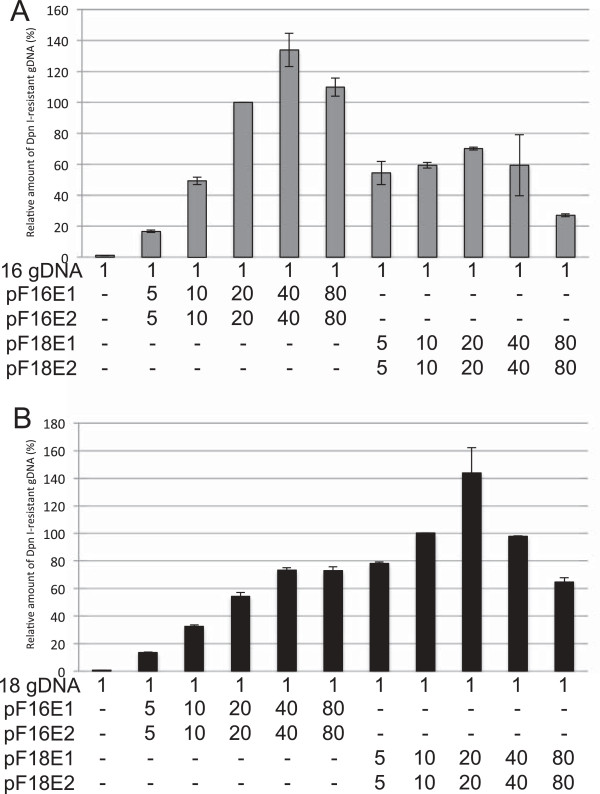
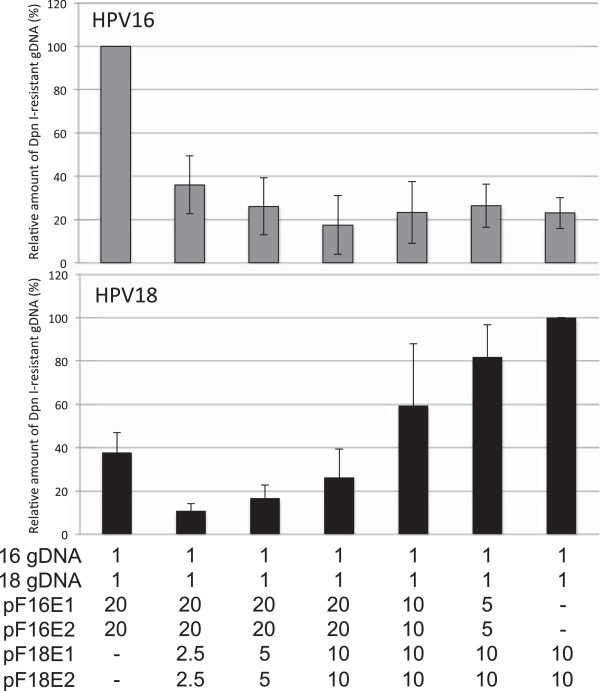
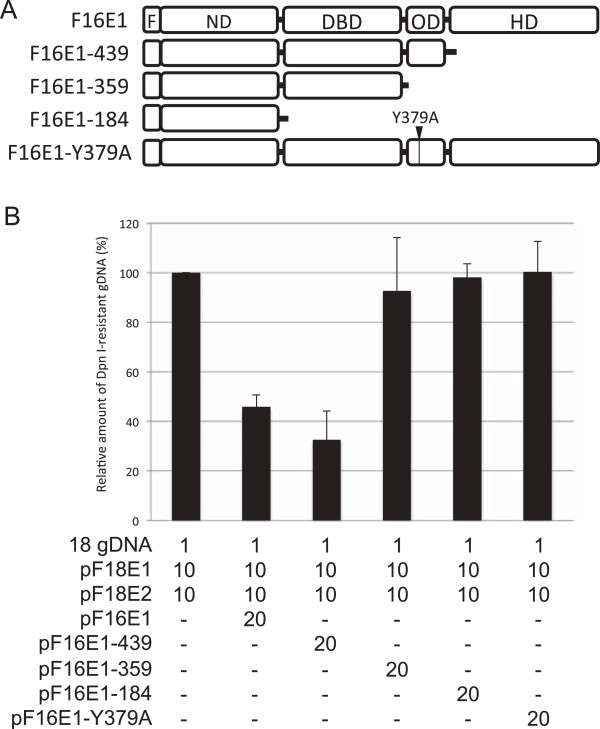
The replication of HPV16 and HPV18 genomes was suppressed by co-expression of E1/E2 of heterologous types. The interference was mediated by the heterologous E1, but not E2. The oligomerization domain of HPV16 E1 was essential for HPV18 replication inhibition, whereas the helicase domain was dispensable. HPV16 E1 co-precipitated with HPV18 E1 in the cell lysates, and an HPV16 E1 mutant Y379A, which bound to HPV18 E1 less efficiently, failed to inhibit HPV18 replication.
Co-infection of a single cell with both HPV16 and HPV18 results in replication interference between them, and physical interaction between the heterologous E1s is responsible for the interference. Heterooligomers composed of HPV16/18 E1s may lack the ability to support HPV genome replication.
在宫颈细胞学异常的女性中,常观察到人乳头瘤病毒(HPV)的多种基因型共同感染,但不同 HPV 如何在同一细胞内相互作用尚不清楚。先前的研究使用培养的角质形成细胞表明,一种 HPV 类型的基因组复制被另一种 HPV 类型的基因组共存所抑制,这表明在共同感染时不同 HPV 类型之间会发生复制干扰;然而,不同 HPV 类型之间复制干扰的分子机制尚未得到充分探索。
在共同转染 HPV16 和 HPV18 基因组以及两种类型的 E1/E2 表达质粒的 HPV 阴性 C33A 宫颈癌细胞中,检测两种最常见的 HPV 类型 HPV16 和 HPV18 之间的复制干扰。通过实时定量 PCR 测量 HPV16/18 基因组的复制水平。通过细胞裂解物中的共免疫沉淀测定评估 HPV16/18 E1 之间的物理相互作用。
共表达异源类型的 E1/E2 抑制了 HPV16 和 HPV18 基因组的复制。这种干扰是由异源 E1 介导的,而不是 E2。HPV16 E1 的寡聚结构域对于抑制 HPV18 复制是必需的,而解旋酶结构域是可有可无的。HPV16 E1 在细胞裂解物中与 HPV18 E1 共沉淀,并且与 HPV18 E1 结合效率较低的 HPV16 E1 Y379A 突变体不能抑制 HPV18 复制。
单个细胞同时感染 HPV16 和 HPV18 会导致它们之间的复制干扰,并且异源 E1s 之间的物理相互作用是干扰的原因。由 HPV16/18 E1 组成的异源寡聚体可能缺乏支持 HPV 基因组复制的能力。