Division of Geriatrics, University of California at San Francisco, San Francisco, CA 94121, USA.
J Gen Intern Med. 2010 Nov;25(11):1244-7. doi: 10.1007/s11606-010-1422-x. Epub 2010 Jun 12.
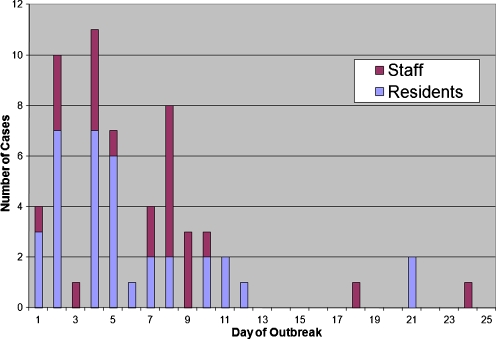
"Presenteeism" occurs when an employee goes to work despite a medical illness that will prevent him or her from fully functioning at work. This problem has been well studied in the business and social science literature, and carries increased importance in the health care setting due to the risk of infectious disease transmission in vulnerable patient populations. In this manuscript, we discuss an outbreak of viral gastroenteritis in a long-term care facility and the role presenteeism played in disease transmission and extension of the outbreak. We use existing literature to point out the hazards of presenteeism in the health care sector. We will also discuss factors that may be involved in the decision to work while ill and propose policy changes that may reduce the incidence of presenteeism in health care organizations.
“出勤主义”是指员工在患有疾病的情况下坚持上班,导致其无法在工作中充分发挥作用。这个问题在商业和社会科学文献中已经得到了充分的研究,并且由于在脆弱的患者群体中传染病传播的风险,在医疗保健环境中变得更加重要。在本文中,我们讨论了长期护理机构中病毒性肠胃炎的爆发,以及出勤主义在疾病传播和爆发蔓延中所起的作用。我们利用现有文献指出了出勤主义在医疗保健领域的危害。我们还将讨论可能涉及带病工作决策的因素,并提出可能减少医疗保健组织中出勤主义发生率的政策变化。