Craniofacial and Skeletal Diseases Branch, National Institute of Dental and Craniofacial Research, National Institutes of Health, Bethesda, Maryland, United States of America.
PLoS One. 2010 Jul 7;5(7):e11462. doi: 10.1371/journal.pone.0011462.
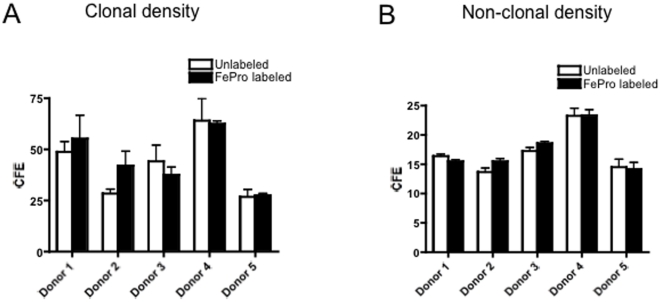
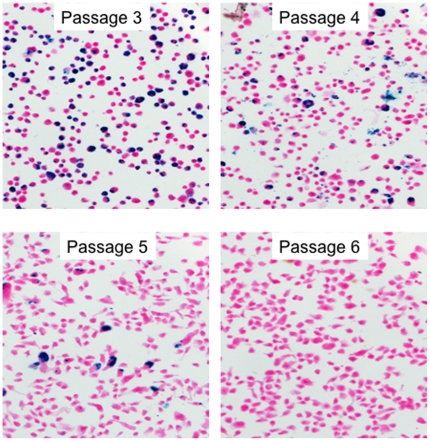
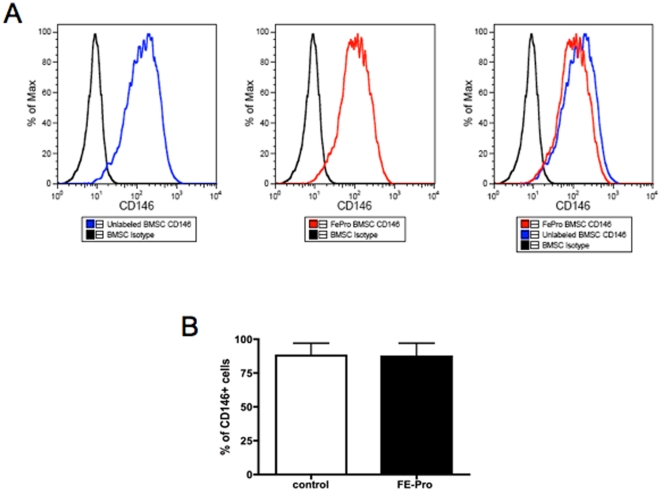
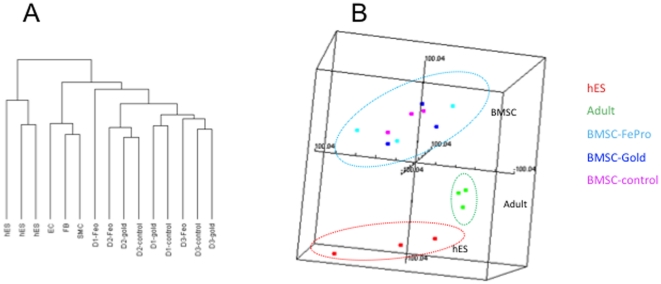
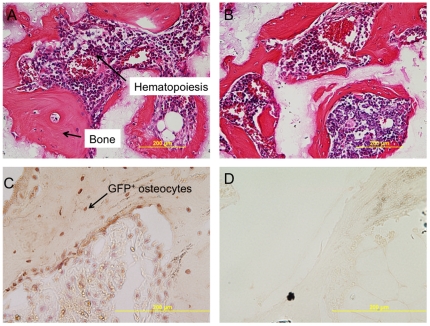
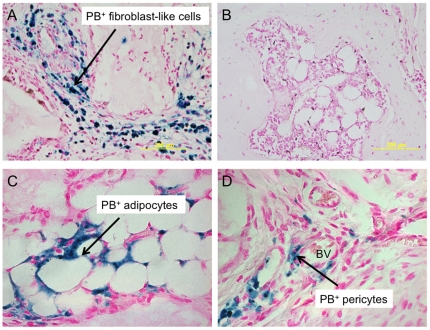
Superparamagnetic iron oxide nanoparticles (SPION) are increasingly used to label human bone marrow stromal cells (BMSCs, also called "mesenchymal stem cells") to monitor their fate by in vivo MRI, and by histology after Prussian blue (PB) staining. SPION-labeling appears to be safe as assessed by in vitro differentiation of BMSCs, however, we chose to resolve the question of the effect of labeling on maintaining the "stemness" of cells within the BMSC population in vivo. Assays performed include colony forming efficiency, CD146 expression, gene expression profiling, and the "gold standard" of evaluating bone and myelosupportive stroma formation in vivo in immuncompromised recipients. SPION-labeling did not alter these assays. Comparable abundant bone with adjoining host hematopoietic cells were seen in cohorts of mice that were implanted with SPION-labeled or unlabeled BMSCs. PB+ adipocytes were noted, demonstrating their donor origin, as well as PB+ pericytes, indicative of self-renewal of the stem cell in the BMSC population. This study confirms that SPION labeling does not alter the differentiation potential of the subset of stem cells within BMSCs.
超顺磁氧化铁纳米颗粒(SPION)越来越多地被用于标记人骨髓基质细胞(BMSCs,也称为“间充质干细胞”),通过体内 MRI 以及普鲁士蓝(PB)染色后的组织学来监测其命运。通过体外 BMSCs 分化评估,SPION 标记似乎是安全的,然而,我们选择解决标记对维持 BMSC 群体中细胞“干性”的体内影响的问题。进行的测定包括集落形成效率、CD146 表达、基因表达谱分析,以及在免疫缺陷受者体内评估骨和骨髓支持基质形成的“金标准”。SPION 标记并未改变这些测定。在植入 SPION 标记或未标记的 BMSCs 的小鼠队列中,观察到具有毗邻宿主造血细胞的可比丰富的骨。注意到 PB+脂肪细胞,表明其供体来源,以及 PB+周细胞,提示 BMSC 群体中的干细胞自我更新。这项研究证实,SPION 标记不会改变 BMSCs 中干细胞亚群的分化潜能。