Saad Laura, Silva Luiz Fal, Banzato Claudio Em, Dantas Clarissa R, Garcia Celso
Department of Psychiatry, Faculty of Medical Sciences, University of Campinas (Unicamp), PO Box 6111, Campinas, SP - Brazil, ZIP code: 13081-970.
J Med Case Rep. 2010 Jul 20;4:217. doi: 10.1186/1752-1947-4-217.
Wernicke's encephalopathy is an acute, potentially fatal, neuropsychiatric syndrome resulting from thiamine deficiency. The disorder is still greatly under-diagnosed, and failure to promptly identify and adequately treat the condition can lead to death or to the chronic form of the encephalopathy - Korsakoff's syndrome. Wernicke's encephalopathy has traditionally been associated with alcoholism but, in recent years, there has been an increase in the number of clinical settings in which the disorder is observed.
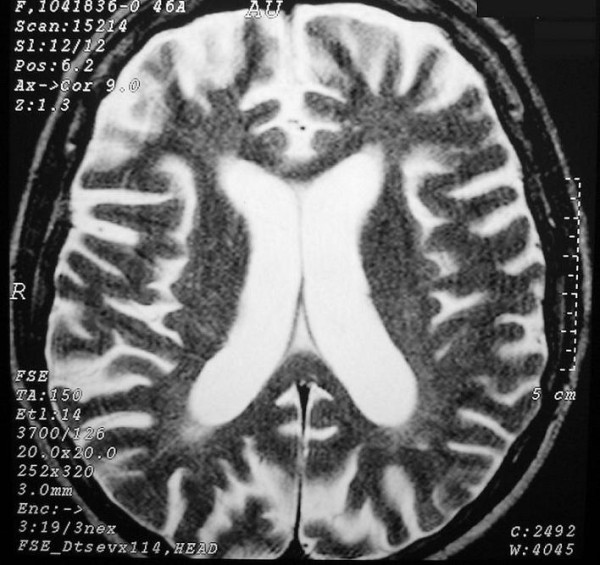
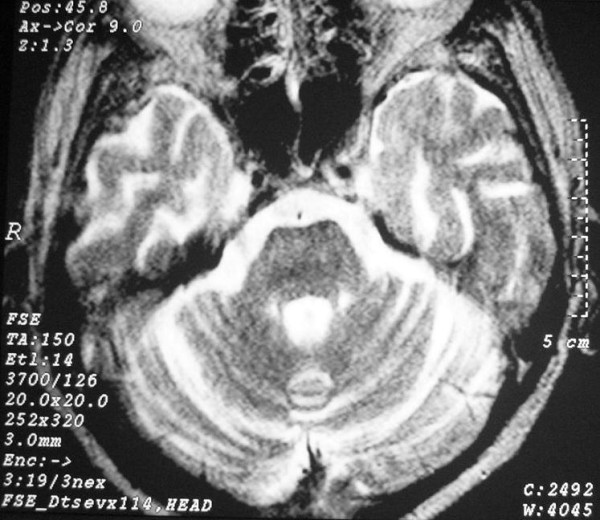
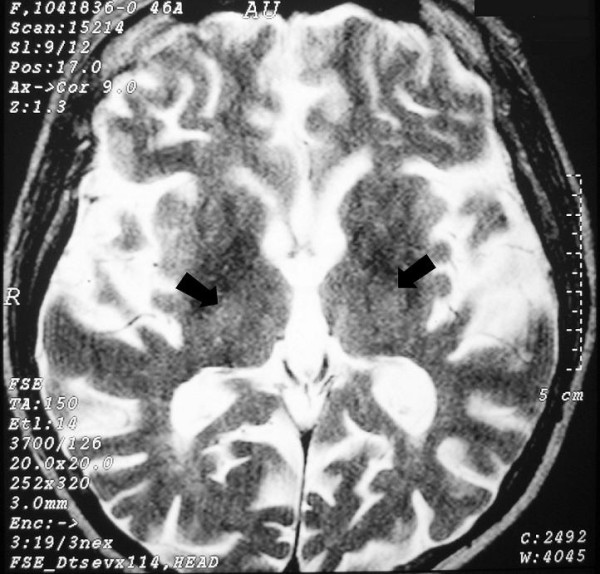
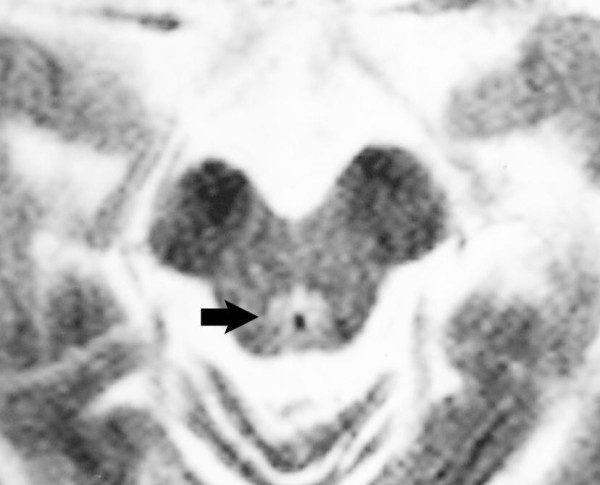
We report the case of a 45-year-old Caucasian woman who arrived at the emergency room presenting signs of marked malnutrition and mental confusion, ataxic gait and ophthalmoplegia. Main laboratory test findings included low serum magnesium and megaloblastic anemia. Brain magnetic resonance imaging revealed increased T2 signal in the supratentorial paraventricular region, the medial regions of the thalamus and the central and periaqueductal midbrain. The diagnosis of Wernicke's encephalopathy was made at once and immediate reposition of thiamine and magnesium was started. The patient had a long history of recurrent thoughts of being overweight, severe self-imposed diet restrictions and self-induced vomiting. She had also been drinking gin on a daily basis for the last eight years. One day after admittance the acute global confusional state resolved, but she presented severe memory deficits and confabulation. After six months of outpatient follow-up, memory deficits remained unaltered.
In this case, self-imposed long-lasting nutritional deprivation is thought to be the main cause of thiamine deficiency and subsequent encephalopathy, but adjunct factors, such as magnesium depletion and chronic alcohol misuse, might have played an important role, especially in the development of Korsakoff's syndrome. The co-morbidity between eating disorders and substance abuse disorders has emerged as a significant health issue for women, and the subgroup of patients with anorexia nervosa who also misuse alcohol is probably at a particular risk of developing Wernicke-Korsakoff syndrome. The present case report highlights this relevant issue.
韦尼克脑病是一种因硫胺素缺乏引起的急性、潜在致命的神经精神综合征。该病症仍远未得到充分诊断,未能及时识别并充分治疗可能导致死亡或发展为慢性脑病形式——科萨科夫综合征。传统上,韦尼克脑病与酒精中毒有关,但近年来,在更多临床环境中观察到了这种病症。
我们报告了一名45岁白种女性的病例,她因明显营养不良、精神错乱、共济失调步态和眼肌麻痹症状被送至急诊室。主要实验室检查结果包括血清镁水平低和巨幼细胞贫血。脑部磁共振成像显示幕上脑室旁区域、丘脑内侧区域以及中脑中央和导水管周围区域的T2信号增强。当即诊断为韦尼克脑病,并立即开始补充硫胺素和镁。该患者长期反复认为自己超重,长期严格自我节食并自我催吐。在过去八年里,她还每天饮用杜松子酒。入院一天后,急性全面混乱状态得到缓解,但出现了严重的记忆缺陷和虚构症。经过六个月的门诊随访,记忆缺陷仍未改变。
在本病例中,长期自我施加的营养缺乏被认为是硫胺素缺乏及后续脑病的主要原因,但诸如镁缺乏和长期滥用酒精等辅助因素可能也起到了重要作用,尤其是在科萨科夫综合征的发展过程中。饮食失调和物质滥用障碍之间的共病已成为女性的一个重要健康问题,神经性厌食症且同时滥用酒精的患者亚组可能特别容易患上韦尼克 - 科萨科夫综合征。本病例报告凸显了这一相关问题。