Department of Biochemistry, University of Washington, Seattle, WA 98195, USA.
Science. 2010 Jul 16;329(5989):309-13. doi: 10.1126/science.1190239.
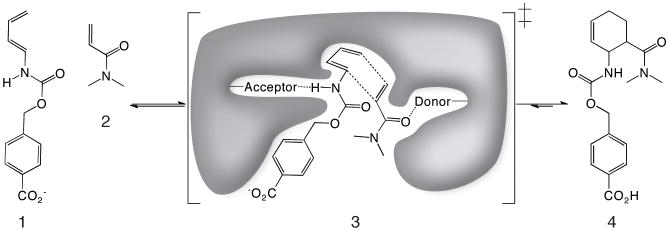
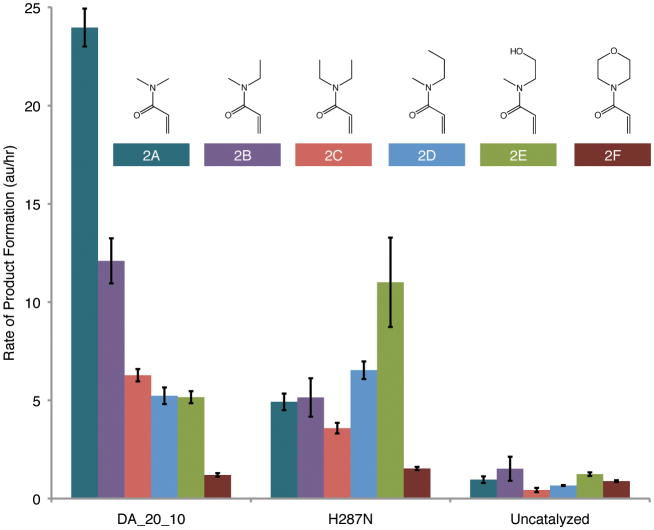
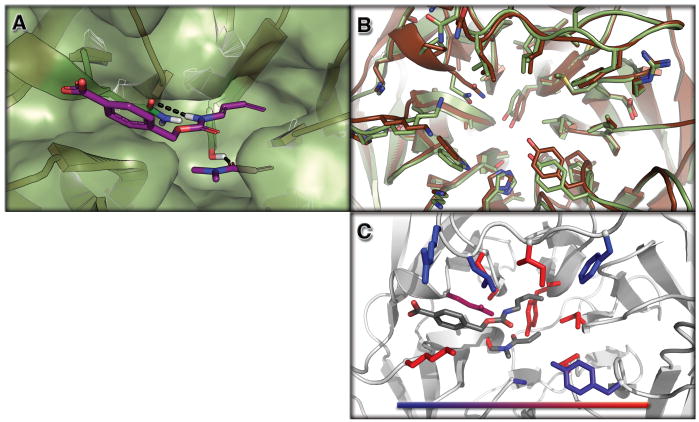
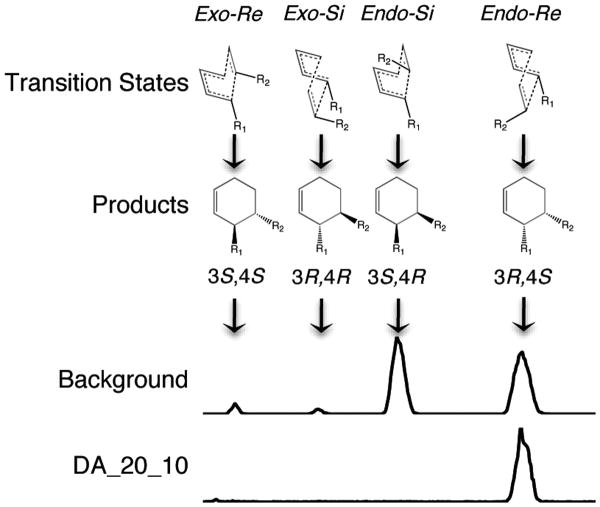
The Diels-Alder reaction is a cornerstone in organic synthesis, forming two carbon-carbon bonds and up to four new stereogenic centers in one step. No naturally occurring enzymes have been shown to catalyze bimolecular Diels-Alder reactions. We describe the de novo computational design and experimental characterization of enzymes catalyzing a bimolecular Diels-Alder reaction with high stereoselectivity and substrate specificity. X-ray crystallography confirms that the structure matches the design for the most active of the enzymes, and binding site substitutions reprogram the substrate specificity. Designed stereoselective catalysts for carbon-carbon bond-forming reactions should be broadly useful in synthetic chemistry.
Diels-Alder 反应是有机合成中的基石,可在一步中形成两个碳-碳键和多达四个新的手性中心。尚未有天然存在的酶被证明能催化双分子 Diels-Alder 反应。我们描述了具有高立体选择性和底物特异性的双分子 Diels-Alder 反应的酶的从头计算设计和实验表征。X 射线晶体学证实,该结构与最活跃的酶的设计相符,并且结合位点取代可重新编程底物特异性。用于形成碳-碳键的设计的立体选择性催化剂在合成化学中应该具有广泛的用途。