Department of Public Health and Clinical Medicine, Umeå University, Sweden.
Part Fibre Toxicol. 2010 Jul 23;7:19. doi: 10.1186/1743-8977-7-19.
Traffic emissions including diesel engine exhaust are associated with increased respiratory and cardiovascular morbidity and mortality. Controlled human exposure studies have demonstrated impaired vascular function after inhalation of exhaust generated by a diesel engine under idling conditions.
To assess the vascular and fibrinolytic effects of exposure to diesel exhaust generated during urban-cycle running conditions that mimic ambient 'real-world' exposures.
In a randomised double-blind crossover study, eighteen healthy male volunteers were exposed to diesel exhaust (approximately 250 microg/m3) or filtered air for one hour during intermittent exercise. Diesel exhaust was generated during the urban part of the standardized European Transient Cycle. Six hours post-exposure, vascular vasomotor and fibrinolytic function was assessed during venous occlusion plethysmography with intra-arterial agonist infusions.
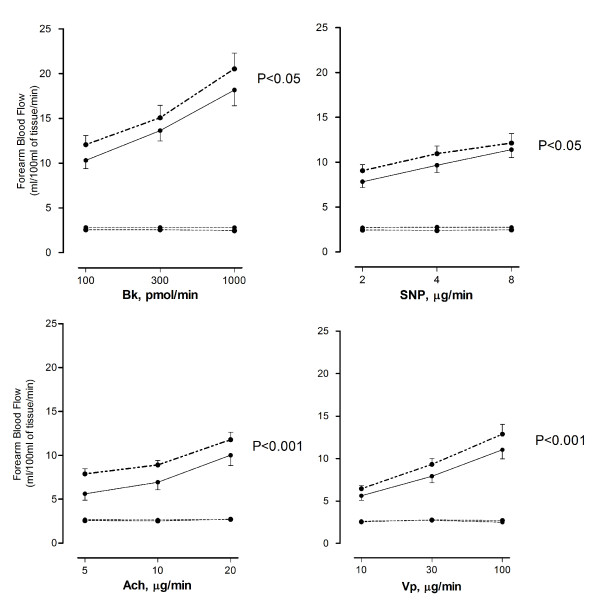
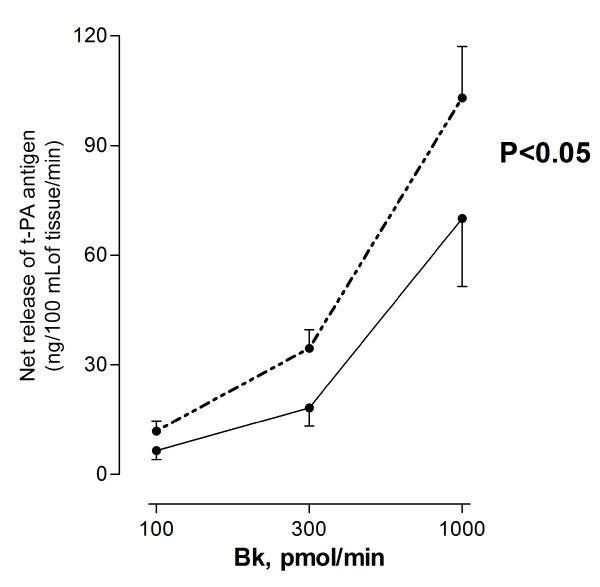
Forearm blood flow increased in a dose-dependent manner with both endothelial-dependent (acetylcholine and bradykinin) and endothelial-independent (sodium nitroprusside and verapamil) vasodilators. Diesel exhaust exposure attenuated the vasodilatation to acetylcholine (P < 0.001), bradykinin (P < 0.05), sodium nitroprusside (P < 0.05) and verapamil (P < 0.001). In addition, the net release of tissue plasminogen activator during bradykinin infusion was impaired following diesel exhaust exposure (P < 0.05).
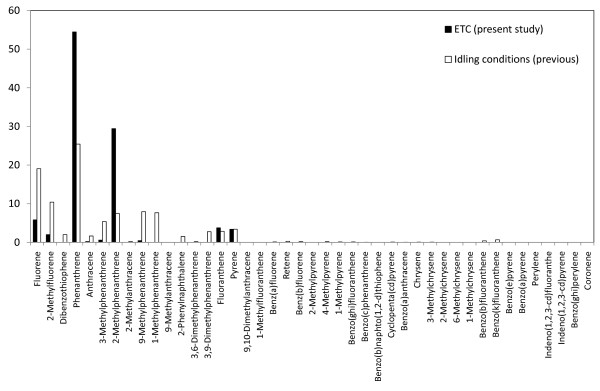
Exposure to diesel exhaust generated under transient running conditions, as a relevant model of urban air pollution, impairs vasomotor function and endogenous fibrinolysis in a similar way as exposure to diesel exhaust generated at idling. This indicates that adverse vascular effects of diesel exhaust inhalation occur over different running conditions with varying exhaust composition and concentrations as well as physicochemical particle properties. Importantly, exposure to diesel exhaust under ETC conditions was also associated with a novel finding of impaired of calcium channel-dependent vasomotor function. This implies that certain cardiovascular endpoints seem to be related to general diesel exhaust properties, whereas the novel calcium flux-related effect may be associated with exhaust properties more specific for the ETC condition, for example a higher content of diesel soot particles along with their adsorbed organic compounds.
交通排放物,包括柴油机尾气,与呼吸系统和心血管疾病发病率和死亡率的增加有关。受控人体暴露研究表明,在怠速条件下吸入柴油机产生的尾气后,血管功能受损。
评估在模拟环境“真实世界”暴露的城市循环运行条件下,接触柴油废气对血管和纤维蛋白溶解的影响。
在一项随机、双盲交叉研究中,18 名健康男性志愿者在间歇性运动期间,分别暴露于柴油废气(约 250μg/m3)或过滤空气中 1 小时。柴油废气是在标准化欧洲瞬态循环的城市部分产生的。暴露后 6 小时,通过动脉内激动剂输注进行静脉闭塞体积描记术,评估血管舒缩和纤维蛋白溶解功能。
前臂血流随着内皮依赖性(乙酰胆碱和缓激肽)和内皮非依赖性(硝普钠和维拉帕米)血管扩张剂的剂量依赖性增加。柴油废气暴露减弱了乙酰胆碱(P < 0.001)、缓激肽(P < 0.05)、硝普钠(P < 0.05)和维拉帕米(P < 0.001)的血管舒张作用。此外,在暴露于柴油废气后,缓激肽输注期间组织型纤溶酶原激活物的净释放也受到损害(P < 0.05)。
在瞬态运行条件下产生的柴油废气暴露,作为城市空气污染的一个相关模型,以类似于怠速时产生的柴油废气暴露的方式损害血管舒缩功能和内源性纤维蛋白溶解。这表明,柴油机废气吸入的不良血管影响发生在不同的运行条件下,其废气成分和浓度以及物理化学颗粒特性不同。重要的是,在 ETC 条件下暴露于柴油废气也与一种新的发现有关,即钙通道依赖性血管舒缩功能受损。这意味着某些心血管终点似乎与一般的柴油废气特性有关,而新型钙通量相关的影响可能与更具体的 ETC 条件下的废气特性有关,例如含有更多的柴油烟尘颗粒及其吸附的有机化合物。