Department of Microbiology, Center for Cell Signaling, University of Virginia School of Medicine, Charlottesville, Virginia 22908, USA.
Nature. 2010 Aug 26;466(7310):1125-8. doi: 10.1038/nature09343.
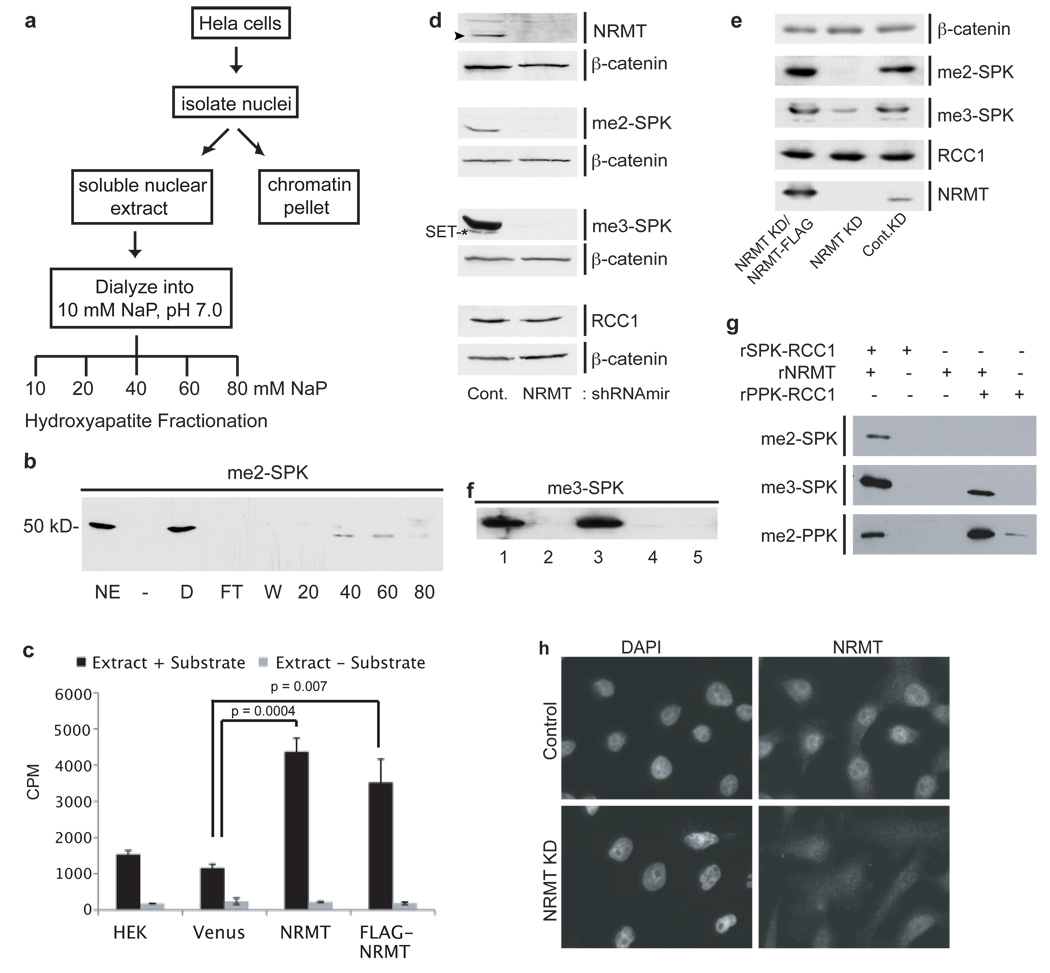
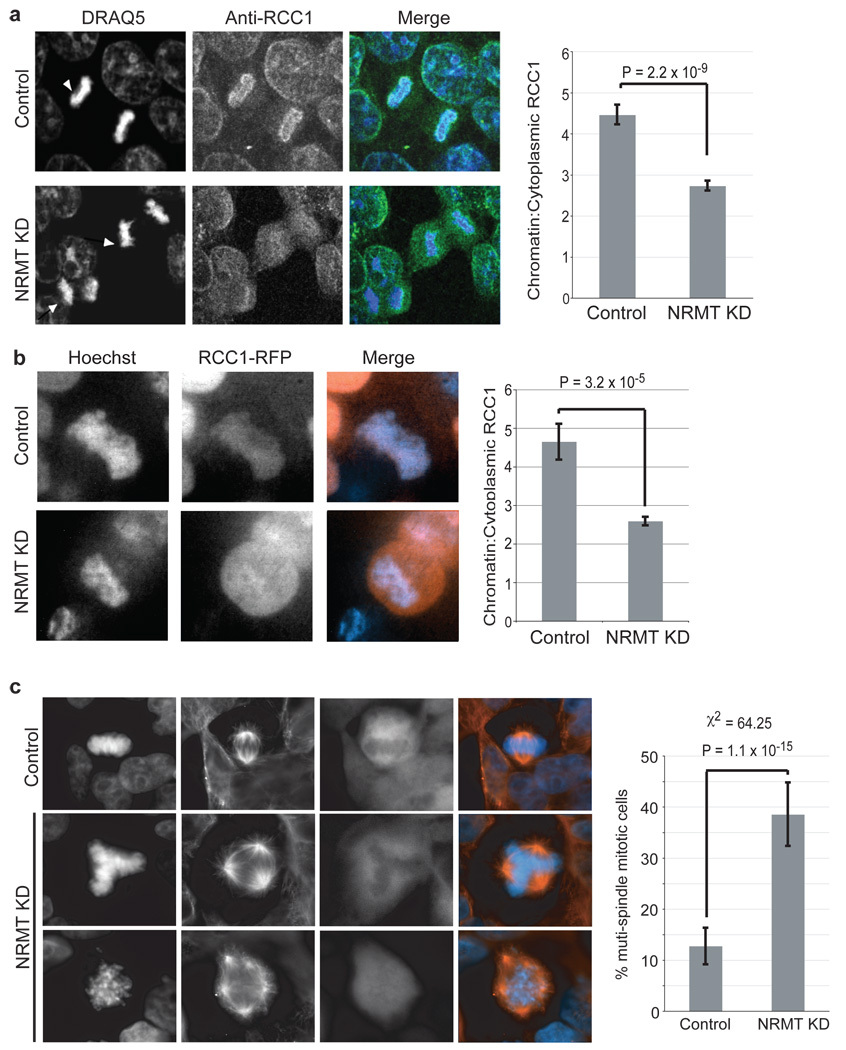
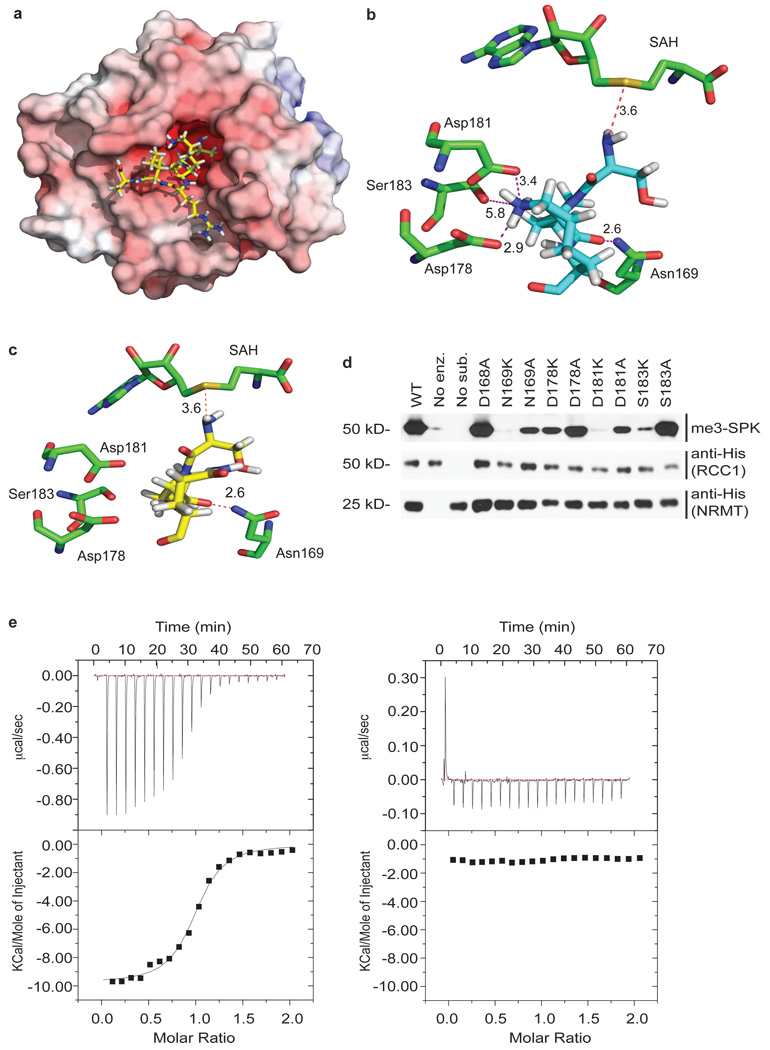
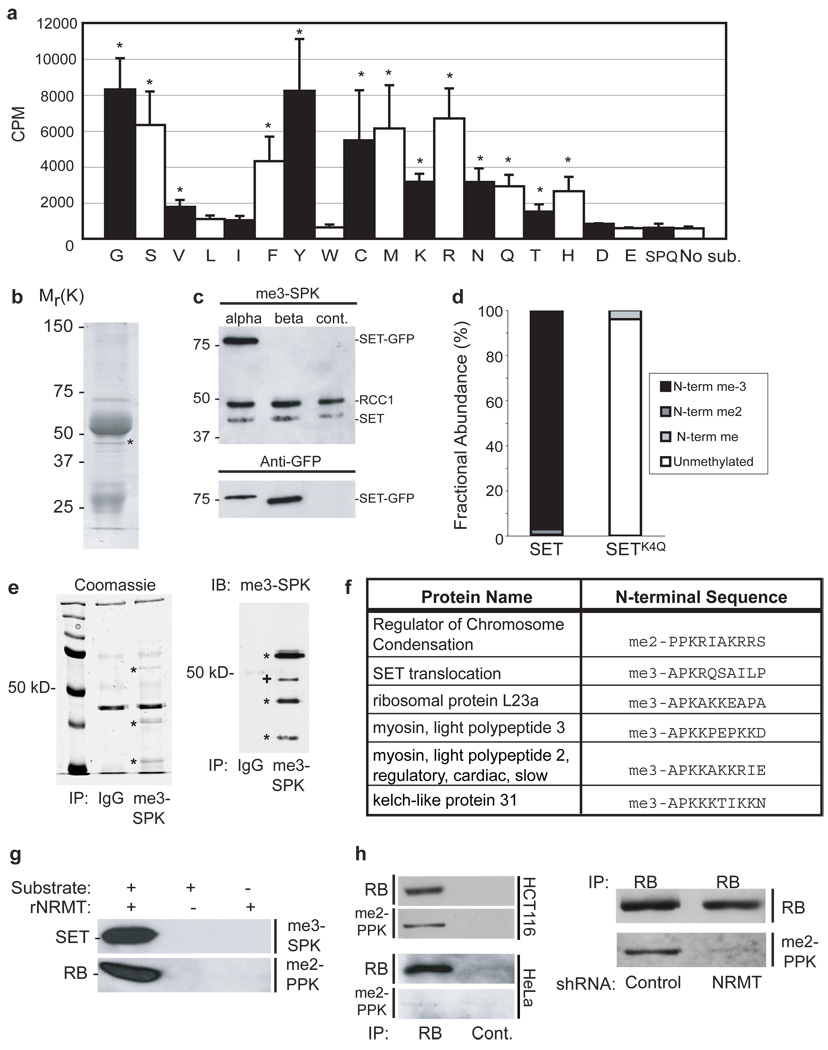
The post-translational methylation of alpha-amino groups was first discovered over 30 years ago on the bacterial ribosomal proteins L16 and L33 (refs 1, 2), but almost nothing is known about the function or enzymology of this modification. Several other bacterial and eukaryotic proteins have since been shown to be alpha-N-methylated. However, the Ran guanine nucleotide-exchange factor, RCC1, is the only protein for which any biological function of alpha-N-methylation has been identified. Methylation-defective mutants of RCC1 have reduced affinity for DNA and cause mitotic defects, but further characterization of this modification has been hindered by ignorance of the responsible methyltransferase. All fungal and animal N-terminally methylated proteins contain a unique N-terminal motif, Met-(Ala/Pro/Ser)-Pro-Lys, indicating that they may be targets of the same, unknown enzyme. The initiating Met is cleaved, and the exposed alpha-amino group is mono-, di- or trimethylated. Here we report the discovery of the first alpha-N-methyltransferase, which we named N-terminal RCC1 methyltransferase (NRMT). Substrate docking and mutational analysis of RCC1 defined the NRMT recognition sequence and enabled the identification of numerous new methylation targets, including SET (also known as TAF-I or PHAPII) and the retinoblastoma protein, RB. Knockdown of NRMT recapitulates the multi-spindle phenotype seen with methylation-defective RCC1 mutants, demonstrating the importance of alpha-N-methylation for normal bipolar spindle formation and chromosome segregation.
α-氨基的翻译后甲基化最早是在 30 多年前在细菌核糖体蛋白 L16 和 L33 上发现的(参考文献 1,2),但几乎不知道这种修饰的功能或酶学。此后,已经发现了其他几种细菌和真核蛋白质被α-N-甲基化。然而,Ran 鸟嘌呤核苷酸交换因子 RCC1 是唯一一种其α-N-甲基化具有任何生物学功能的蛋白质。RCC1 的甲基化缺陷突变体对 DNA 的亲和力降低,并导致有丝分裂缺陷,但由于负责的甲基转移酶未知,对这种修饰的进一步表征受到了阻碍。所有真菌和动物 N-端甲基化的蛋白质都含有一个独特的 N-端基序,Met-(Ala/Pro/Ser)-Pro-Lys,表明它们可能是相同的未知酶的靶标。起始 Met 被切割,暴露的α-氨基被单、二或三甲基化。在这里,我们报告了第一个α-N-甲基转移酶的发现,我们将其命名为 N-端 RCC1 甲基转移酶(NRMT)。RCC1 的底物对接和突变分析定义了 NRMT 的识别序列,并能够鉴定出许多新的甲基化靶标,包括 SET(也称为 TAF-I 或 PHAPII)和视网膜母细胞瘤蛋白 RB。NRMT 的敲低重现了与甲基化缺陷的 RCC1 突变体相同的多纺锤体表型,证明了α-N-甲基化对于正常的双极纺锤体形成和染色体分离的重要性。