Wihuri Research Institute, Helsinki, Finland.
PLoS One. 2010 Jul 23;5(7):e11765. doi: 10.1371/journal.pone.0011765.
Chronic inflammation of the arterial wall is a key element in the pathogenesis of atherosclerosis, yet the factors that trigger and sustain the inflammation remain elusive. Inflammasomes are cytoplasmic caspase-1-activating protein complexes that promote maturation and secretion of the proinflammatory cytokines interleukin(IL)-1beta and IL-18. The most intensively studied inflammasome, NLRP3 inflammasome, is activated by diverse substances, including crystalline and particulate materials. As cholesterol crystals are abundant in atherosclerotic lesions, and IL-1beta has been linked to atherogenesis, we explored the possibility that cholesterol crystals promote inflammation by activating the inflammasome pathway.
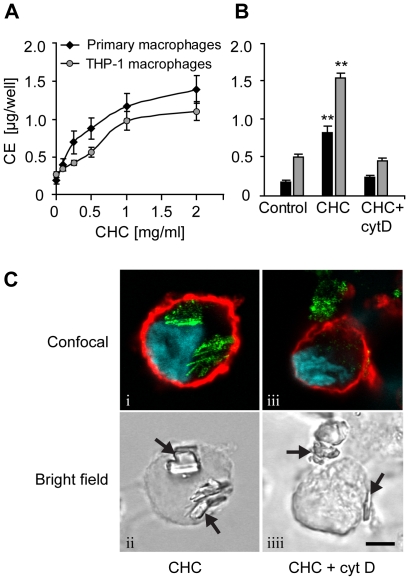
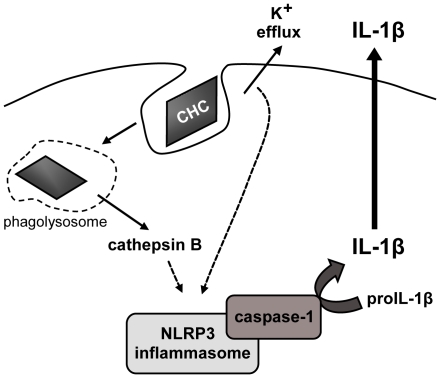
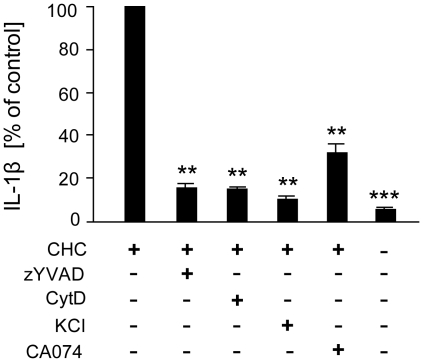
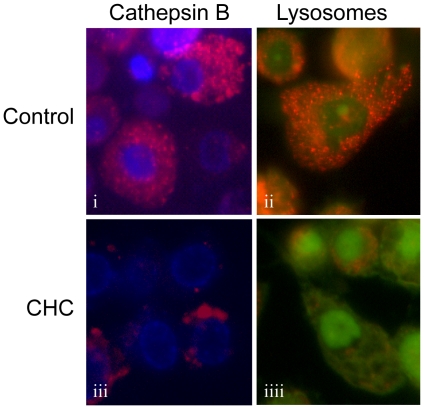
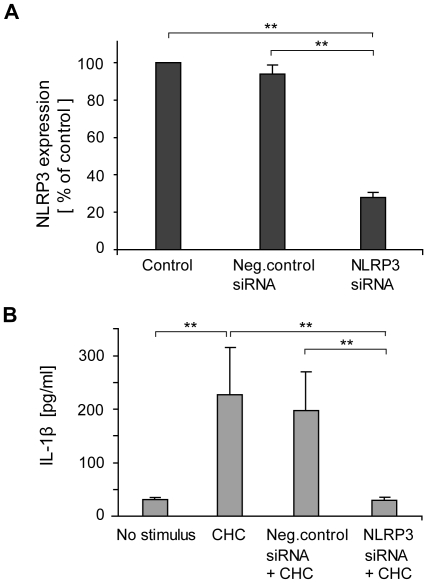
Here we show that human macrophages avidly phagocytose cholesterol crystals and store the ingested cholesterol as cholesteryl esters. Importantly, cholesterol crystals induced dose-dependent secretion of mature IL-1beta from human monocytes and macrophages. The cholesterol crystal-induced secretion of IL-1beta was caspase-1-dependent, suggesting the involvement of an inflammasome-mediated pathway. Silencing of the NLRP3 receptor, the crucial component in NLRP3 inflammasome, completely abolished crystal-induced IL-1beta secretion, thus identifying NLRP3 inflammasome as the cholesterol crystal-responsive element in macrophages. The crystals were shown to induce leakage of the lysosomal protease cathepsin B into the cytoplasm and inhibition of this enzyme reduced cholesterol crystal-induced IL-1beta secretion, suggesting that NLRP3 inflammasome activation occurred via lysosomal destabilization.
The cholesterol crystal-induced inflammasome activation in macrophages may represent an important link between cholesterol metabolism and inflammation in atherosclerotic lesions.
动脉壁的慢性炎症是动脉粥样硬化发病机制的一个关键因素,但触发和维持炎症的因素仍难以捉摸。炎性小体是细胞质中 caspase-1 激活的蛋白复合物,可促进前炎性细胞因子白细胞介素(IL)-1β和 IL-18 的成熟和分泌。研究最多的炎性小体 NLRP3 炎性小体被多种物质激活,包括晶体和颗粒物质。由于胆固醇晶体在动脉粥样硬化病变中丰富,并且 IL-1β与动脉粥样形成有关,因此我们探讨了胆固醇晶体通过激活炎性小体途径促进炎症的可能性。
在这里,我们表明人巨噬细胞吞噬胆固醇晶体,并将摄取的胆固醇储存为胆固醇酯。重要的是,胆固醇晶体诱导人单核细胞和巨噬细胞中成熟的 IL-1β的剂量依赖性分泌。胆固醇晶体诱导的 IL-1β分泌依赖于半胱天冬酶-1,表明涉及炎性小体介导的途径。NLRP3 受体(NLRP3 炎性小体的关键组成部分)的沉默完全消除了晶体诱导的 IL-1β分泌,从而确定 NLRP3 炎性小体是巨噬细胞中胆固醇晶体反应元件。这些晶体被证明会诱导溶酶体蛋白酶组织蛋白酶 B 漏入细胞质,并且抑制该酶会减少胆固醇晶体诱导的 IL-1β分泌,表明 NLRP3 炎性小体的激活通过溶酶体不稳定发生。
巨噬细胞中胆固醇晶体诱导的炎性小体激活可能代表胆固醇代谢与动脉粥样硬化病变中炎症之间的重要联系。