Department of Zoology, University of Cambridge, UK.
Dev Cell. 2010 Aug 17;19(2):296-306. doi: 10.1016/j.devcel.2010.07.019.
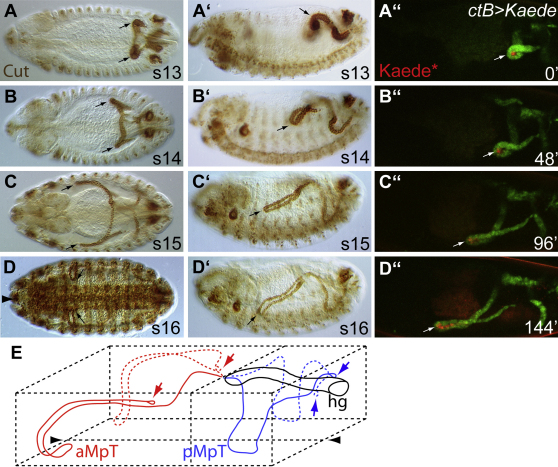
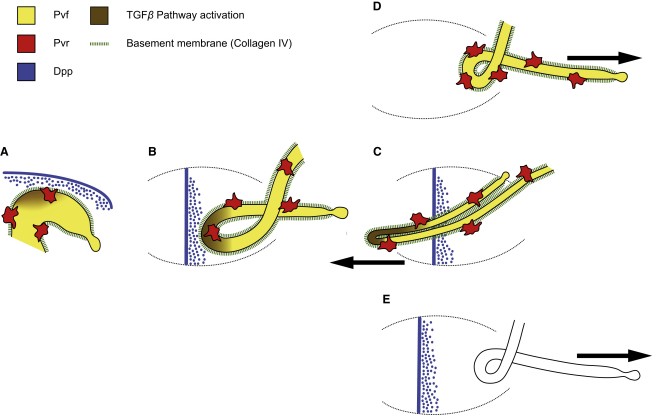
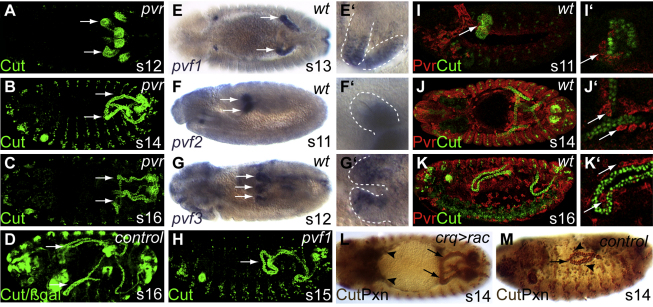
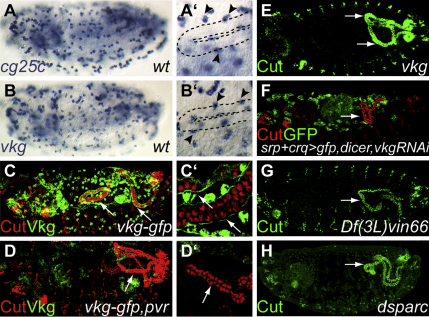
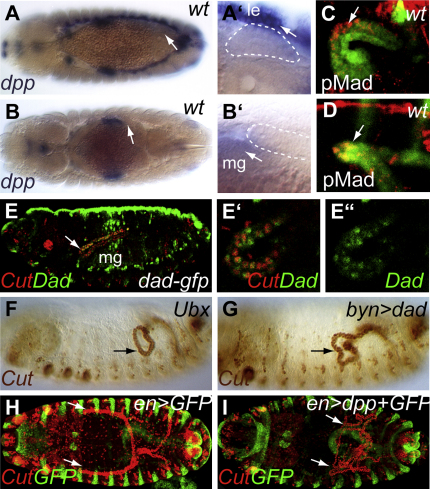
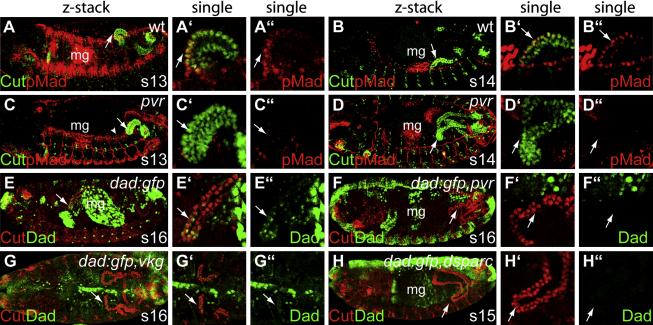
Details of the mechanisms that determine the shape and positioning of organs in the body cavity remain largely obscure. We show that stereotypic positioning of outgrowing Drosophila renal tubules depends on signaling in a subset of tubule cells and results from enhanced sensitivity to guidance signals by targeted matrix deposition. VEGF/PDGF ligands from the tubules attract hemocytes, which secrete components of the basement membrane to ensheath them. Collagen IV sensitizes tubule cells to localized BMP guidance cues. Signaling results in pathway activation in a subset of tubule cells that lead outgrowth through the body cavity. Failure of hemocyte migration, loss of collagen IV, or abrogation of BMP signaling results in tubule misrouting and defective organ shape and positioning. Such regulated interplay between cell-cell and cell-matrix interactions is likely to have wide relevance in organogenesis and congenital disease.
器官在体腔中形成和定位的机制细节在很大程度上仍然不清楚。我们表明,果蝇肾管的定型定位取决于管细胞亚群中的信号转导,并且是由于对靶向基质沉积的引导信号的敏感性增强所致。来自小管的 VEGF/PDGF 配体吸引血球细胞,后者分泌基底膜的成分来包裹它们。胶原蛋白 IV 使小管细胞对局部 BMP 导向线索敏感。信号转导导致一小部分小管细胞中的通路激活,从而使它们通过体腔向外生长。如果血球细胞迁移失败、胶原蛋白 IV 缺失或 BMP 信号转导被阻断,则会导致小管错位以及器官形状和定位缺陷。这种细胞-细胞和细胞-基质相互作用的调控相互作用可能在器官发生和先天性疾病中具有广泛的相关性。