Adult and Elderly Medicine, Nevill Hall Hospital, Abergavenny, Wales, UK.
Clin Interv Aging. 2010 Aug 9;5:207-16. doi: 10.2147/cia.s9664.
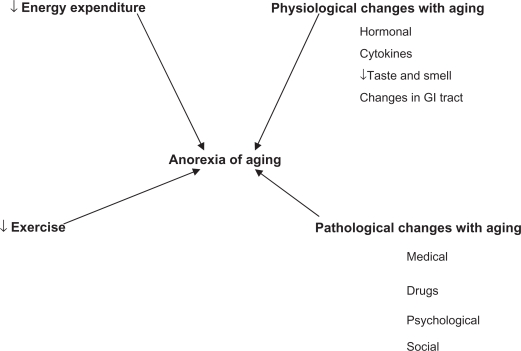
Nutrition is an important element of health in the older population and affects the aging process. The prevalence of malnutrition is increasing in this population and is associated with a decline in: functional status, impaired muscle function, decreased bone mass, immune dysfunction, anemia, reduced cognitive function, poor wound healing, delayed recovery from surgery, higher hospital readmission rates, and mortality. Older people often have reduced appetite and energy expenditure, which, coupled with a decline in biological and physiological functions such as reduced lean body mass, changes in cytokine and hormonal level, and changes in fluid electrolyte regulation, delay gastric emptying and diminish senses of smell and taste. In addition pathologic changes of aging such as chronic diseases and psychological illness all play a role in the complex etiology of malnutrition in older people. Nutritional assessment is important to identify and treat patients at risk, the Malnutrition Universal Screening Tool being commonly used in clinical practice. Management requires a holistic approach, and underlying causes such as chronic illness, depression, medication and social isolation must be treated. Patients with physical or cognitive impairment require special care and attention. Oral supplements or enteral feeding should be considered in patients at high risk or in patients unable to meet daily requirements.
营养是老年人群体健康的重要因素,影响着衰老过程。在这个人群中,营养不良的患病率正在增加,与以下方面的下降有关:功能状态、肌肉功能受损、骨量减少、免疫功能障碍、贫血、认知功能下降、伤口愈合不良、手术恢复延迟、更高的住院再入院率和死亡率。老年人常常食欲和能量消耗减少,再加上生物和生理功能下降,如瘦体重减少、细胞因子和激素水平变化以及体液电解质调节变化,导致胃排空延迟,嗅觉和味觉减退。此外,衰老的病理性改变,如慢性病和心理疾病,都在老年人营养不良的复杂病因中发挥作用。营养评估对于识别和治疗有风险的患者很重要,营养不良普遍筛查工具在临床实践中被广泛使用。管理需要采取整体方法,必须治疗慢性病、抑郁、药物和社会隔离等潜在原因。身体或认知功能障碍的患者需要特殊护理和关注。对于高风险患者或无法满足日常需求的患者,应考虑口服补充剂或肠内喂养。