Facultad de Ciencias Químicas, Universidad de Colima, kilómetro 9 carretera Colima, Coquimatlán, Col. Mexico, Mexico.
Molecules. 2010 Aug 9;15(8):5445-59. doi: 10.3390/molecules15085445.
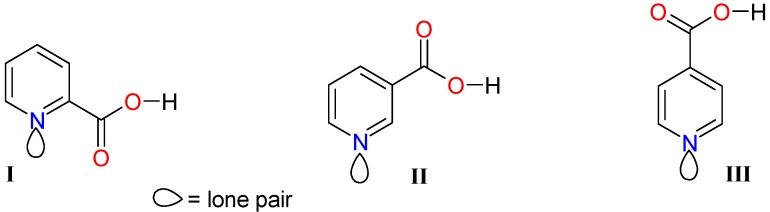
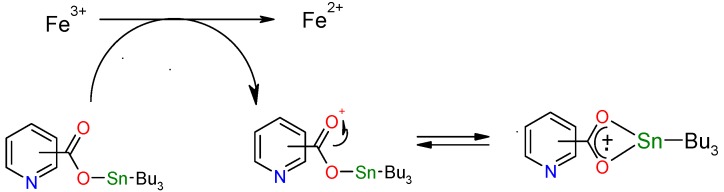
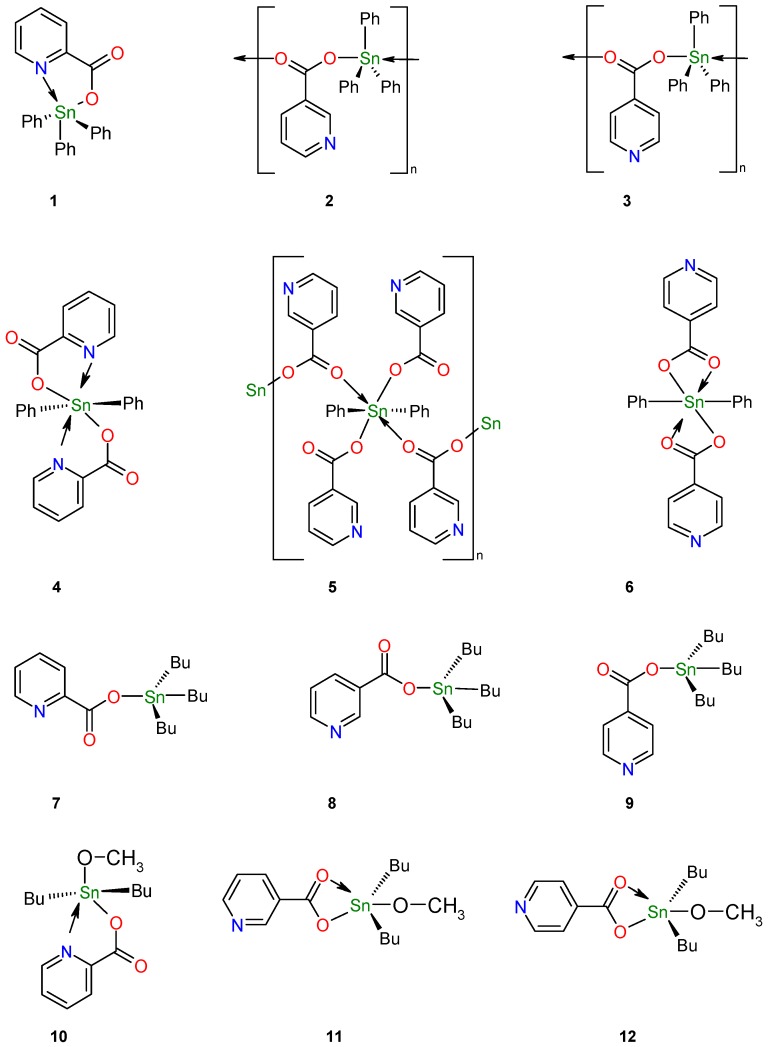
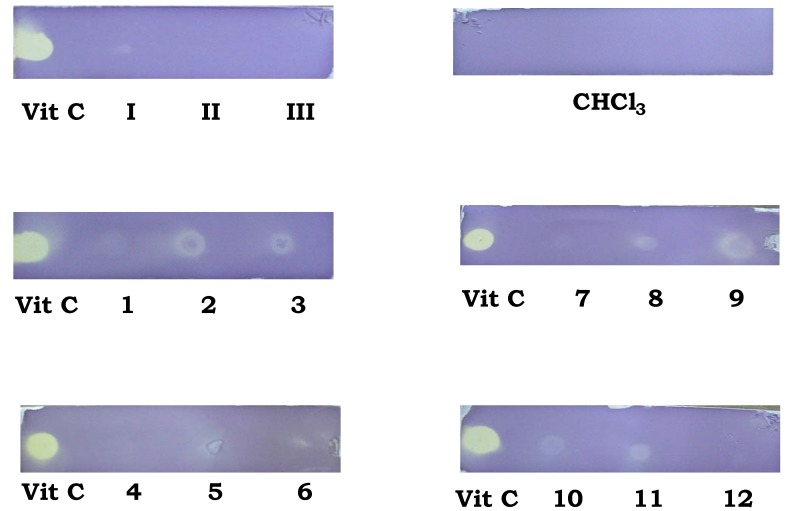
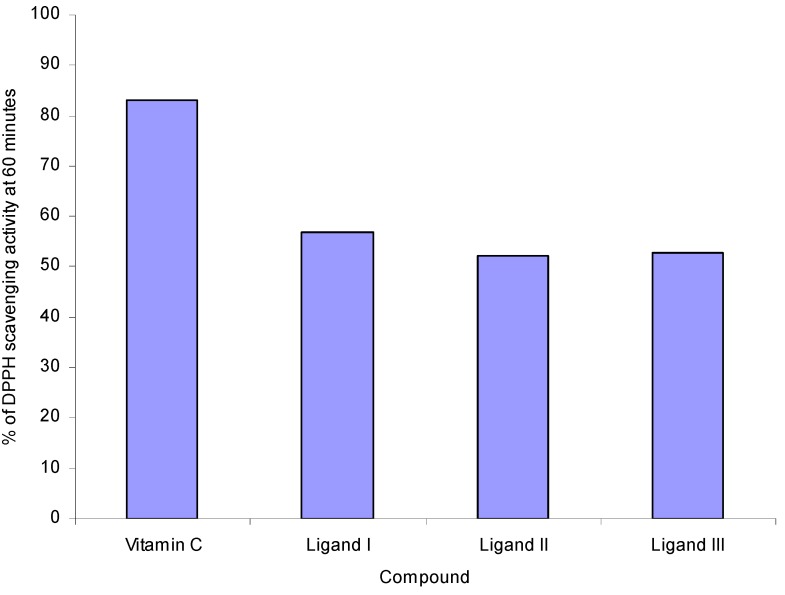
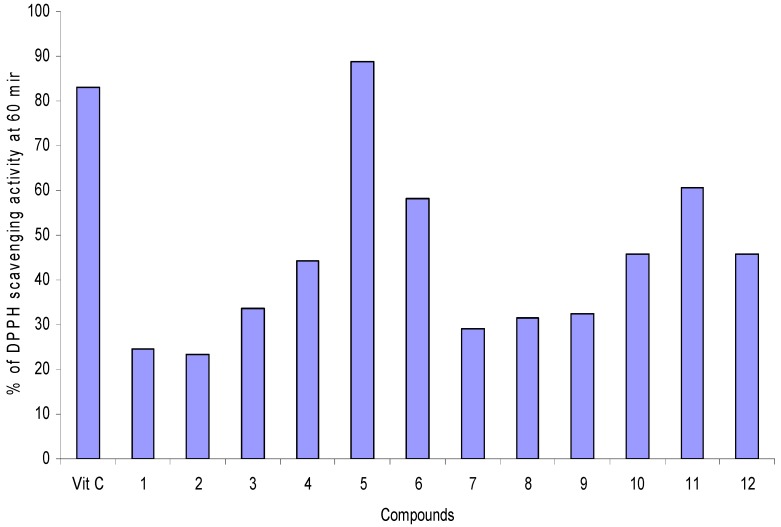
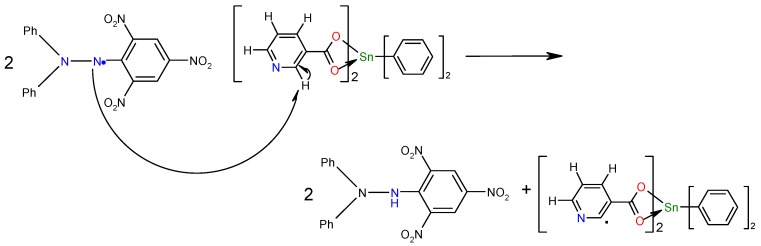
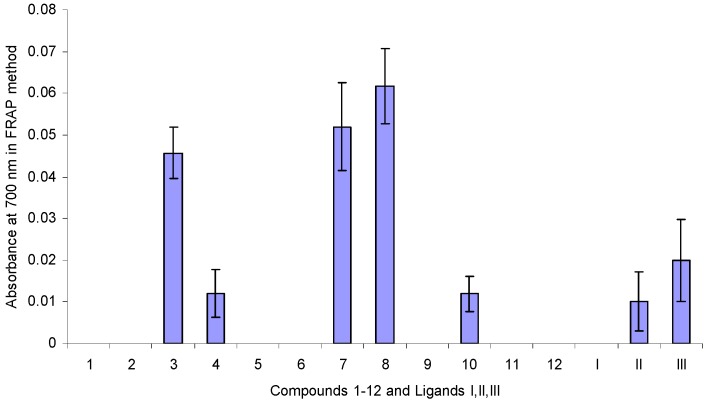
In vitro antioxidant activity for 12 stannoxanes derived from Ph(3)SnCl (compounds 1-3), Ph(2)SnCl(2) (compounds 4-6), Bu(3)SnCl (compounds 7-9), and Bu(2)SnCl(2) (compounds 10-12), was assayed qualitatively by the chromatographic profile with 1,1-diphenyl-2-picrylhydrazil (DPPH) method and by two quantitative methods: the DPPH radical scavenging activity and Ferric-Reducing Antioxidant Power (FRAP) assays. The results were compared with those obtained with the starting materials 2-pyridine- carboxylic acid (I), 3-pyridinecarboxylic acid (II) and 4-pyridinecarboxylic acid (III), as well as with standard compounds, such as vitamin C and vitamin E, respectively. The in vitro antiradical activity with DPPH of diphenyltin derivative 5 showed a very similar behavior to vitamin C at a 20 microg/mL concentration, whereas according to the FRAP method, compound 8 was better. This difference is due to the mechanism of the antioxidant process. The Structure-Activity Relationships (SAR) for both methods is also reported.
用 1,1-二苯基-2-苦基肼基(DPPH)法和两种定量方法:DPPH 自由基清除活性和铁还原抗氧化能力(FRAP)测定法,对 12 种基于 Ph(3)SnCl(化合物 1-3)、Ph(2)SnCl(2)(化合物 4-6)、Bu(3)SnCl(化合物 7-9)和 Bu(2)SnCl(2)(化合物 10-12)的锡氧烷的体外抗氧化活性进行了定性检测。结果与起始材料 2-吡啶甲酸(I)、3-吡啶甲酸(II)和 4-吡啶甲酸(III)以及维生素 C 和维生素 E 等标准化合物进行了比较。在 20 μg/mL 浓度下,二苯锡衍生物 5 的 DPPH 体外抗自由基活性与维生素 C 非常相似,而根据 FRAP 法,化合物 8 更好。这种差异归因于抗氧化过程的机制。还报告了两种方法的结构-活性关系(SAR)。