INRA, UR407 Pathologie Végétale, Montfavet, France.
mBio. 2010 Jun 29;1(3):e00107-10. doi: 10.1128/mBio.00107-10.
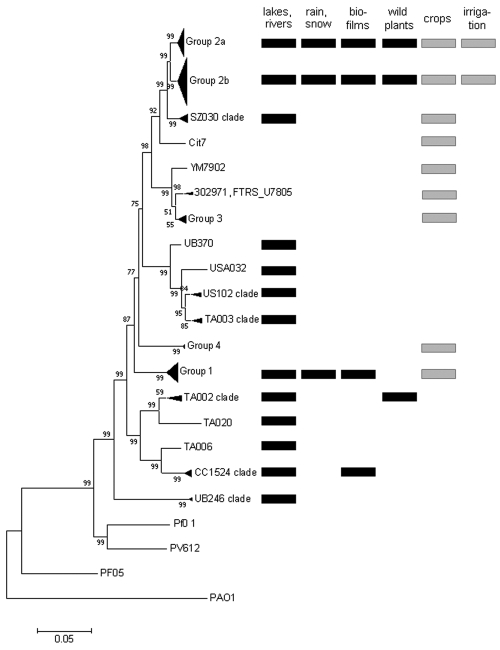
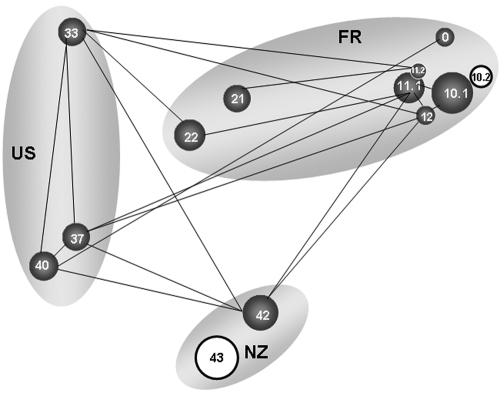
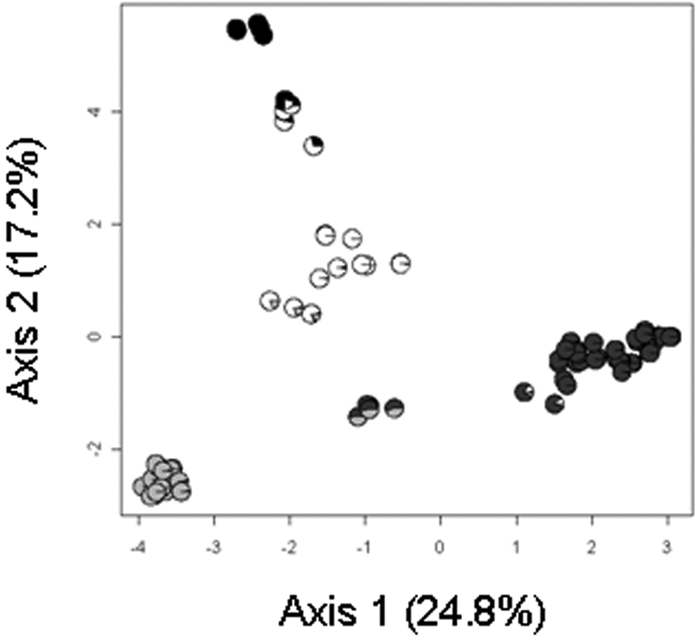
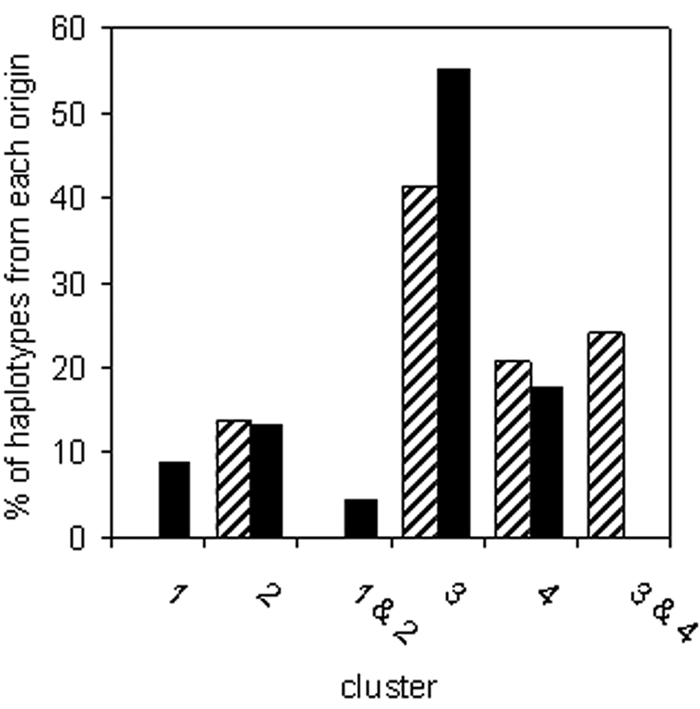
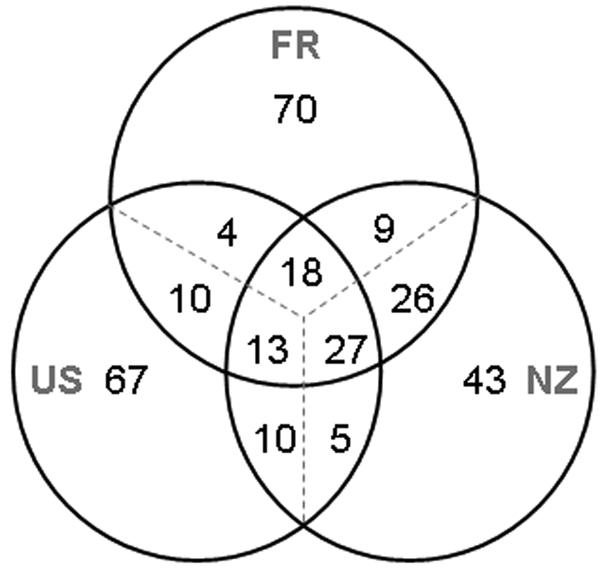
Nonhost environmental reservoirs of pathogens play key roles in their evolutionary ecology and in particular in the evolution of pathogenicity. In light of recent reports of the plant pathogen Pseudomonas syringae in pristine waters outside agricultural regions and its dissemination via the water cycle, we have examined the genetic and phenotypic diversity, population structure, and biogeography of P. syringae from headwaters of rivers on three continents and their phylogenetic relationship to strains from crops. A collection of 236 strains from 11 sites in the United States, in France, and in New Zealand was characterized for genetic diversity based on housekeeping gene sequences and for phenotypic diversity based on measures of pathogenicity and ice nucleation activity. Phylogenetic analyses revealed several new genetic clades from water. The genetic structure of P. syringae populations was not influenced by geographic location or water chemistry, whereas the phenotypic structure was affected by these parameters. Comparison with strains from crops revealed that the metapopulation of P. syringae is structured into three genetic ecotypes: a crop-specific type, a water-specific type, and an abundant ecotype found in both habitats. Aggressiveness of strains was significantly and positively correlated with ice nucleation activity. Furthermore, the ubiquitous genotypes were the most aggressive, on average. The abundance and diversity in water relative to crops suggest that adaptation to the freshwater habitat has played a nonnegligible role in the evolutionary history of P. syringae. We discuss how adaptation to the water cycle is linked to the epidemiological success of this plant pathogen.
非宿主环境中的病原体库在其进化生态学中起着关键作用,特别是在致病性的进化方面。鉴于最近有报道称,植物病原体丁香假单胞菌存在于农业区以外的原始水域,并且可以通过水循环传播,我们研究了来自三大洲河流源头的丁香假单胞菌的遗传和表型多样性、种群结构和生物地理学,以及它们与作物菌株的系统发育关系。从美国、法国和新西兰的 11 个地点收集了 236 株菌株,根据管家基因序列对其遗传多样性进行了特征描述,并根据致病性和冰核活性测量对其表型多样性进行了特征描述。系统发育分析显示,从水中分离出了几个新的遗传分支。丁香假单胞菌种群的遗传结构不受地理位置或水化学的影响,而表型结构则受到这些参数的影响。与作物菌株的比较表明,丁香假单胞菌的复合种群分为三种遗传生态型:一种是作物特异性的,一种是水特异性的,另一种是在两种生境中都存在的丰富生态型。菌株的侵袭性与冰核活性呈显著正相关。此外,普遍存在的基因型平均来说最为侵袭性强。与作物相比,水中的丰度和多样性表明,适应淡水生境在丁香假单胞菌的进化历史中发挥了不可忽视的作用。我们讨论了适应水循环如何与这种植物病原体的流行病学成功相关联。