Department of Pathology, University of Alabama at Birmingham, 35294, USA.
Biochem J. 2010 Nov 15;432(1):9-19. doi: 10.1042/BJ20100308.
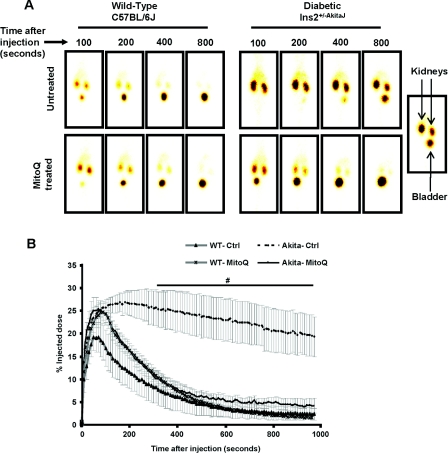
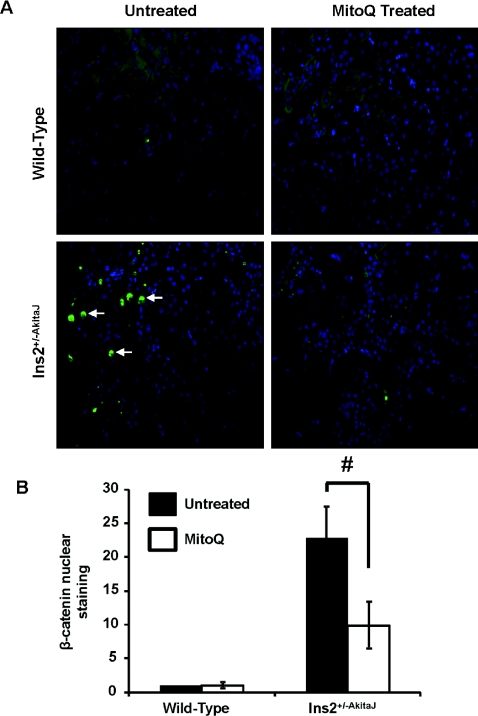
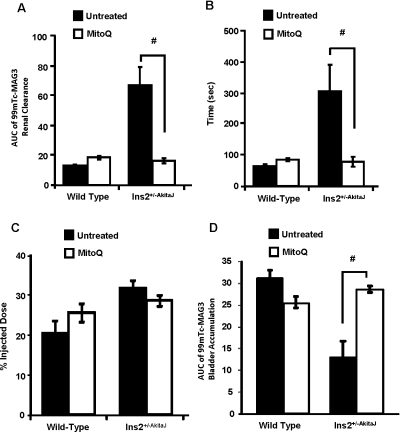
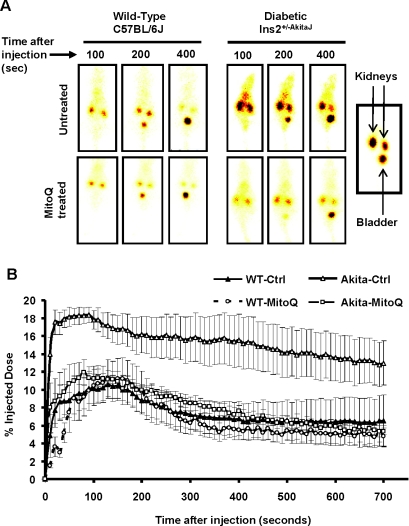
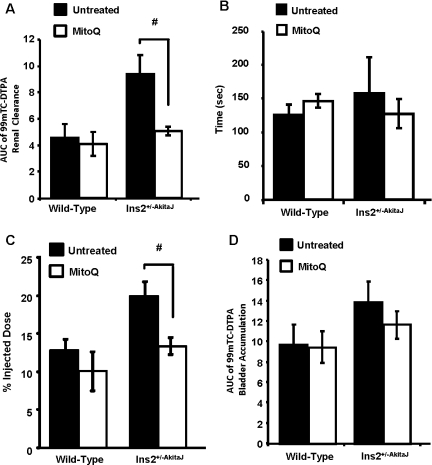
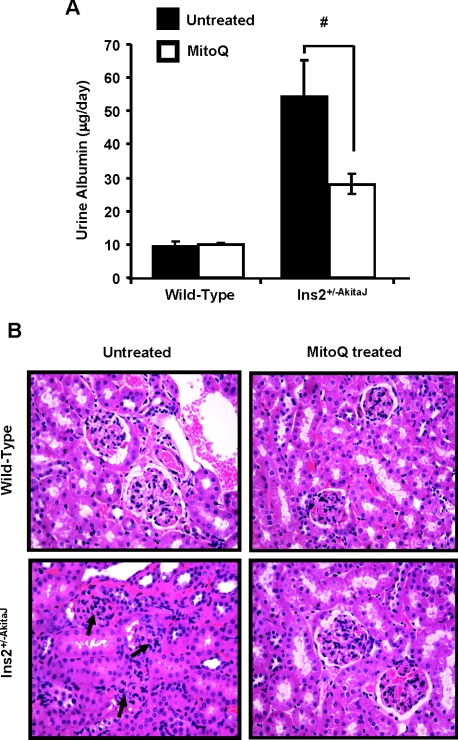
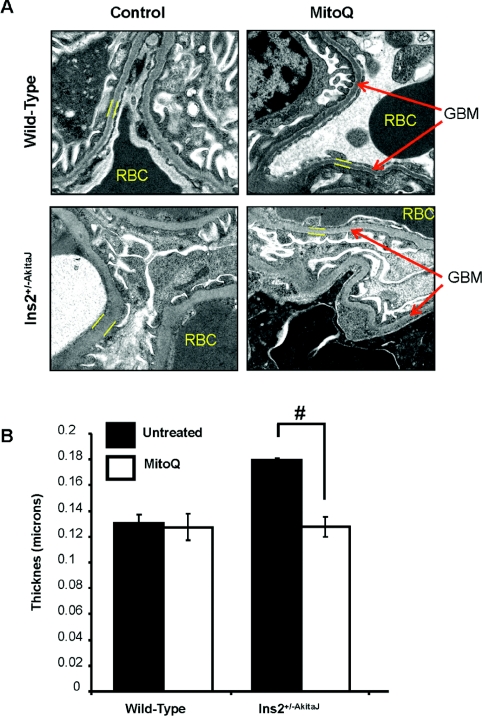
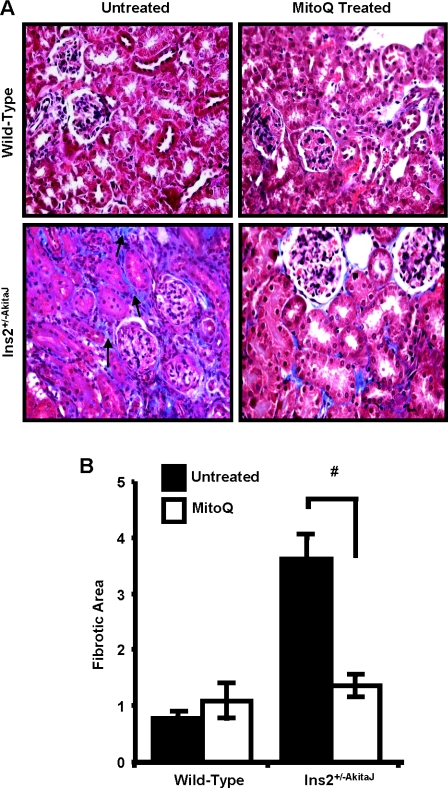
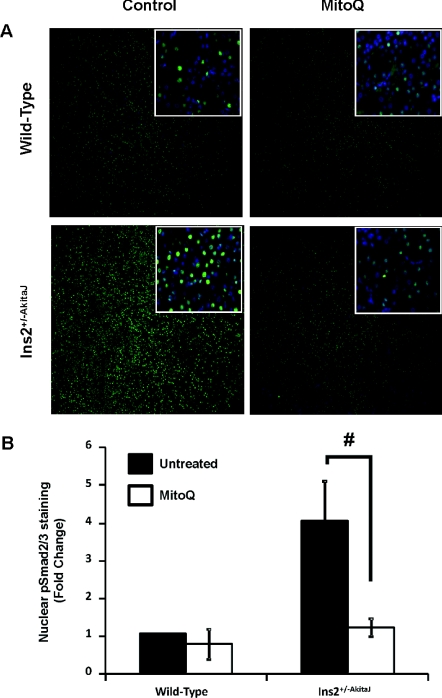
Mitochondrial production of ROS (reactive oxygen species) is thought to be associated with the cellular damage resulting from chronic exposure to high glucose in long-term diabetic patients. We hypothesized that a mitochondria-targeted antioxidant would prevent kidney damage in the Ins2(+/)⁻(AkitaJ) mouse model (Akita mice) of Type 1 diabetes. To test this we orally administered a mitochondria-targeted ubiquinone (MitoQ) over a 12-week period and assessed tubular and glomerular function. Fibrosis and pro-fibrotic signalling pathways were determined by immunohistochemical analysis, and mitochondria were isolated from the kidney for functional assessment. MitoQ treatment improved tubular and glomerular function in the Ins2(+/)⁻(AkitaJ) mice. MitoQ did not have a significant effect on plasma creatinine levels, but decreased urinary albumin levels to the same level as non-diabetic controls. Consistent with previous studies, renal mitochondrial function showed no significant change between any of the diabetic or wild-type groups. Importantly, interstitial fibrosis and glomerular damage were significantly reduced in the treated animals. The pro-fibrotic transcription factors phospho-Smad2/3 and β-catenin showed a nuclear accumulation in the Ins2(+/)⁻(AkitaJ) mice, which was prevented by MitoQ treatment. These results support the hypothesis that mitochondrially targeted therapies may be beneficial in the treatment of diabetic nephropathy. They also highlight a relatively unexplored aspect of mitochondrial ROS signalling in the control of fibrosis.
线粒体产生的 ROS(活性氧)被认为与长期糖尿病患者慢性暴露于高葡萄糖导致的细胞损伤有关。我们假设一种靶向线粒体的抗氧化剂可以预防 1 型糖尿病 Ins2(+/)⁻(AkitaJ) 小鼠模型(Akita 小鼠)的肾脏损伤。为了验证这一点,我们在 12 周的时间内口服给予一种靶向线粒体的泛醌(MitoQ),并评估肾小管和肾小球功能。通过免疫组织化学分析确定纤维化和促纤维化信号通路,从肾脏中分离出线粒体进行功能评估。MitoQ 治疗改善了 Ins2(+/)⁻(AkitaJ) 小鼠的肾小管和肾小球功能。MitoQ 对血浆肌酐水平没有显著影响,但将尿白蛋白水平降低到与非糖尿病对照组相同的水平。与先前的研究一致,肾脏线粒体功能在任何糖尿病或野生型组之间均无明显变化。重要的是,治疗动物的间质纤维化和肾小球损伤明显减少。磷酸化 Smad2/3 和 β-连环蛋白等促纤维化转录因子在 Ins2(+/)⁻(AkitaJ) 小鼠中出现核内积累,MitoQ 治疗可预防这种积累。这些结果支持了靶向线粒体治疗可能有益于治疗糖尿病肾病的假设。它们还突出了线粒体 ROS 信号在纤维化控制中相对未被探索的方面。