Division of Sleep Medicine, Brigham and Women's Hospital, Harvard Medical School, Boston, MA 02115, USA.
Respir Physiol Neurobiol. 2011 Jan 31;175(1):29-36. doi: 10.1016/j.resp.2010.09.003. Epub 2010 Sep 15.
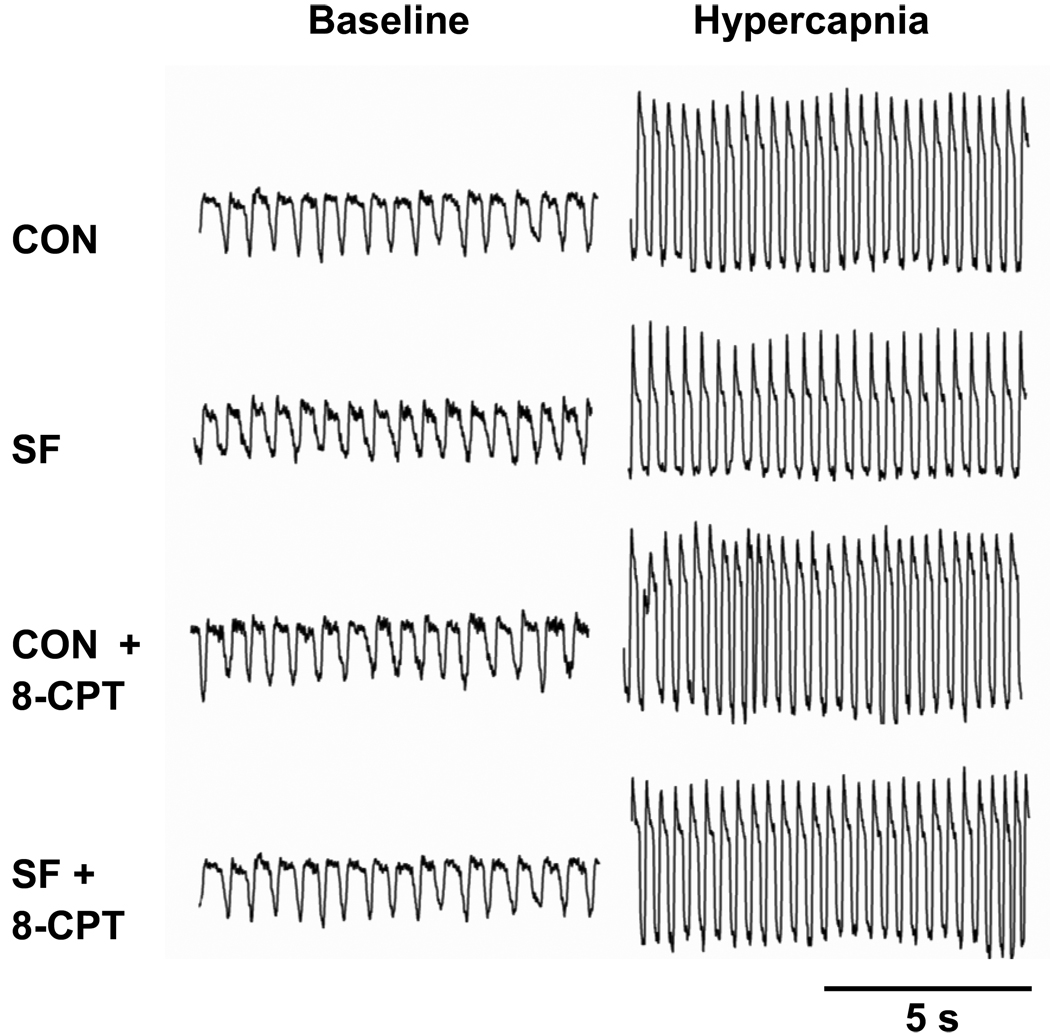
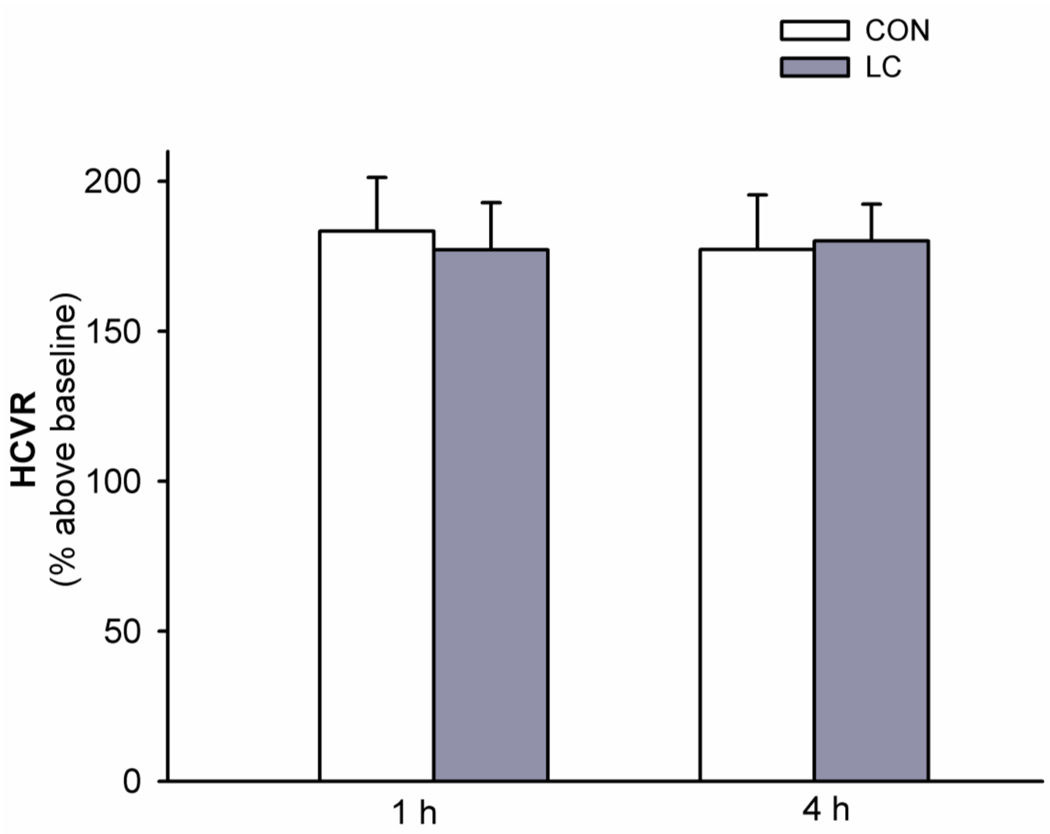
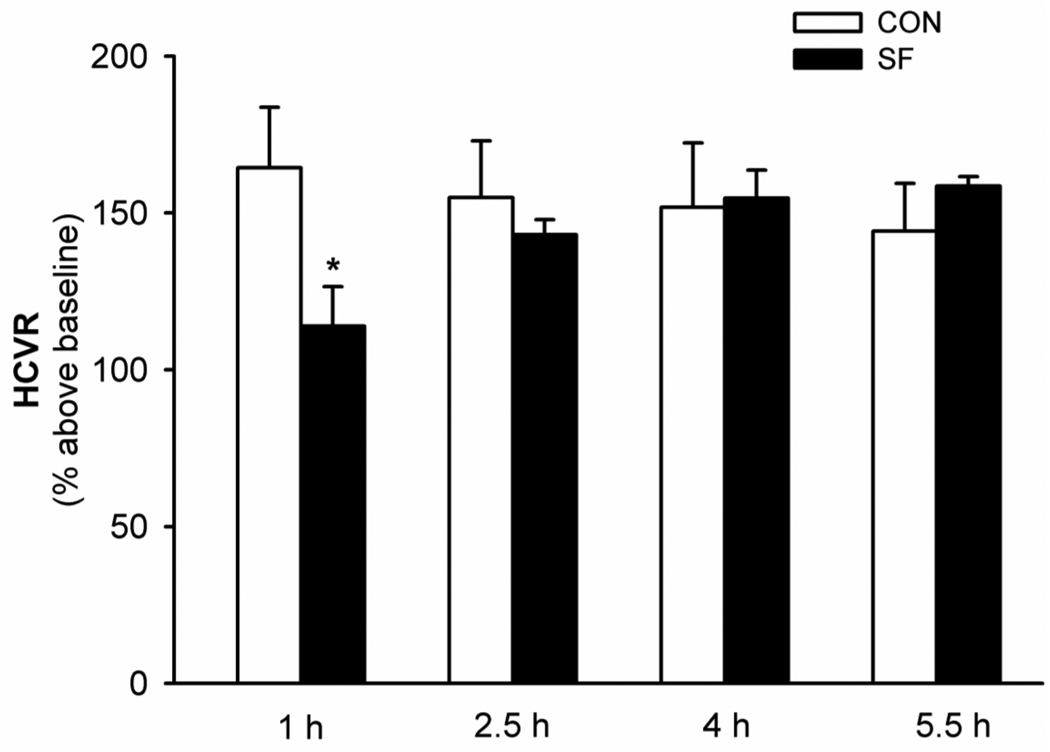
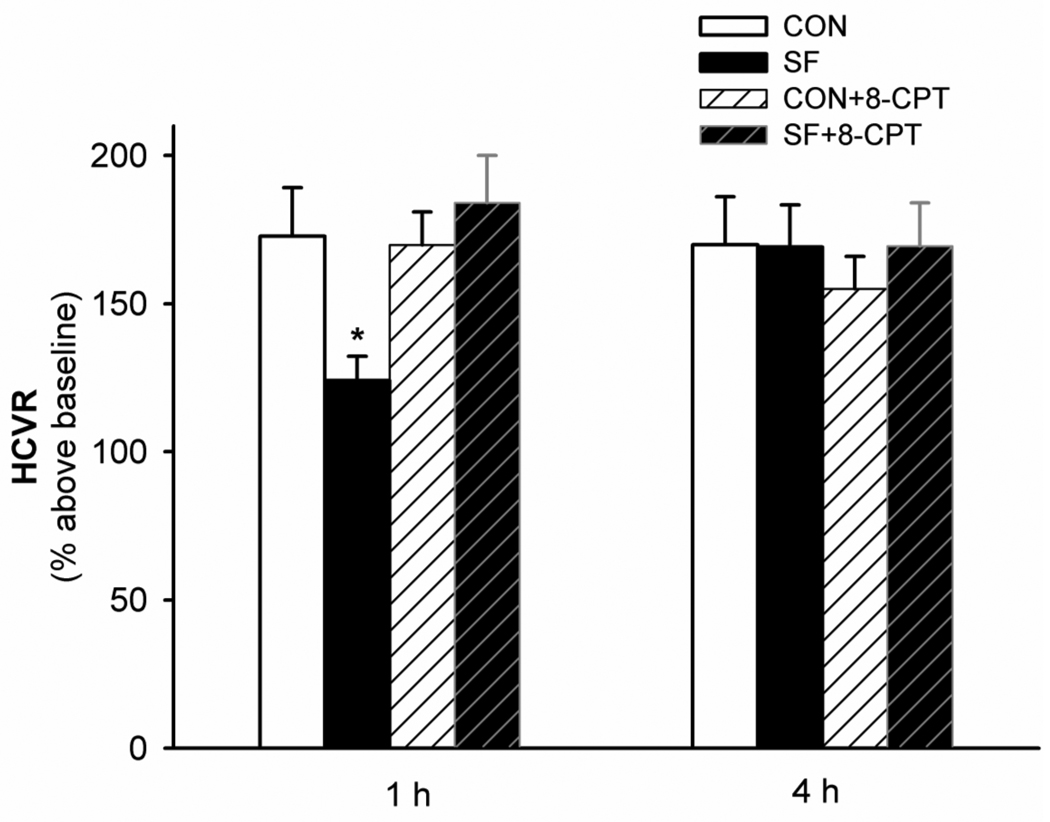
Sleep fragmentation (SF) and intermittent hypoxia and hypercapnia are the primary events associated with obstructive sleep apnea (OSA). We previously found that SF eliminates ventilatory long-term facilitation and attenuates poikilocapnic hypoxic ventilatory responses (HVR). This study examined the effect of SF on isocapnic HVR and hypercapnic ventilatory responses (HCVR), and investigated the time course of and the role of adenosine A1 receptors in these SF effects in conscious adult male Sprague-Dawley rats. SF was achieved by periodic, forced locomotion in a rotating drum (30 s rotation/90 s stop for 24 h). Ventilation during baseline, isocapnic hypoxia (11% O₂ plus 4% CO₂) and hypercapnia (6% CO₂) was measured using plethysmography. About 1h after 24h SF, resting ventilation, arterial blood gases and isocapnic HVR (control: 169.3 ± 11.5% vs. SF: 170.0 ± 10.3% above baseline) were not significantly changed, but HCVR was attenuated (control: 172.8 ± 17.5% vs. SF: 129.5 ± 9.6%; P = 0.003). This attenuated HCVR then returned spontaneously to the control level ∼4 h after SF (168.9 ± 12.1%). This HCVR attenuation was also reversed (184.0 ± 17.5%) by systemic injection of the adenosine A1 receptor antagonist 8-CPT (2.5 mg/kg) shortly after SF, while 8-CPT at this dose had little effect on HCVR in control rats (169.9 ± 11.8%). Collectively, these results suggest that: (1) 24 h SF does not change isocapnic HVR but causes an attenuation of HCVR; and (2) this attenuation lasts for only a few hours and requires activation of adenosine A1 receptors.
睡眠片段化(SF)和间歇性低氧高碳酸血症是与阻塞性睡眠呼吸暂停(OSA)相关的主要事件。我们之前发现 SF 消除了通气的长期易化作用,并减弱了变二氧化碳性低氧通气反应(HVR)。本研究检测了 SF 对等二氧化碳性 HVR 和高二氧化碳性通气反应(HCVR)的影响,并研究了腺苷 A1 受体在 SF 这些作用中的时程及其作用在清醒成年雄性 Sprague-Dawley 大鼠中。SF 通过在旋转鼓中周期性强制运动来实现(30s 旋转/90s 停止,持续 24 小时)。使用 plethysmography 测量基线、等二氧化碳性低氧(11% O₂加 4% CO₂)和高二氧化碳(6% CO₂)期间的通气量。在 SF 后约 1 小时,休息时通气量、动脉血气和等二氧化碳性 HVR(对照:比基线高 170.0 ± 10.3% vs. SF:170.0 ± 10.3%)没有明显变化,但 HCVR 减弱(对照:比基线高 172.8 ± 17.5% vs. SF:129.5 ± 9.6%;P = 0.003)。这种减弱的 HCVR 随后在 SF 后约 4 小时自发恢复到对照水平(168.9 ± 12.1%)。在 SF 后不久,通过全身注射腺苷 A1 受体拮抗剂 8-CPT(2.5mg/kg),也可以逆转这种 HCVR 衰减(184.0 ± 17.5%),而在对照大鼠中,8-CPT 在该剂量下对 HCVR 几乎没有影响(169.9 ± 11.8%)。总之,这些结果表明:(1)24 小时 SF 不会改变等二氧化碳性 HVR,但会导致 HCVR 减弱;(2)这种衰减仅持续数小时,需要激活腺苷 A1 受体。