Genome Technology Branch, National Human Genome Research Institute, National Institutes of Health, Bethesda, MD, USA.
Evodevo. 2010 Oct 4;1(1):9. doi: 10.1186/2041-9139-1-9.
The much-debated phylogenetic relationships of the five early branching metazoan lineages (Bilateria, Cnidaria, Ctenophora, Placozoa and Porifera) are of fundamental importance in piecing together events that occurred early in animal evolution. Comparisons of gene content between organismal lineages have been identified as a potentially useful methodology for phylogenetic reconstruction. However, these comparisons require complete genomes that, until now, did not exist for the ctenophore lineage. The homeobox superfamily of genes is particularly suited for these kinds of gene content comparisons, since it is large, diverse, and features a highly conserved domain.
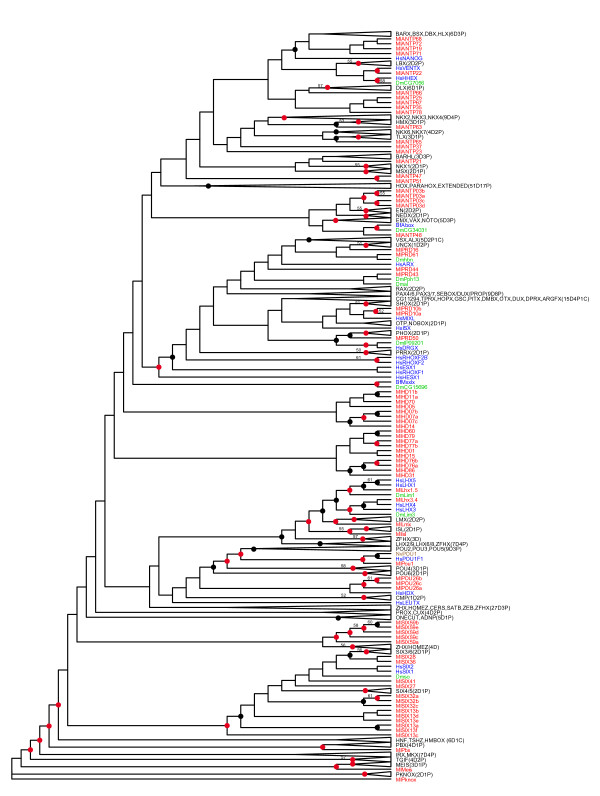
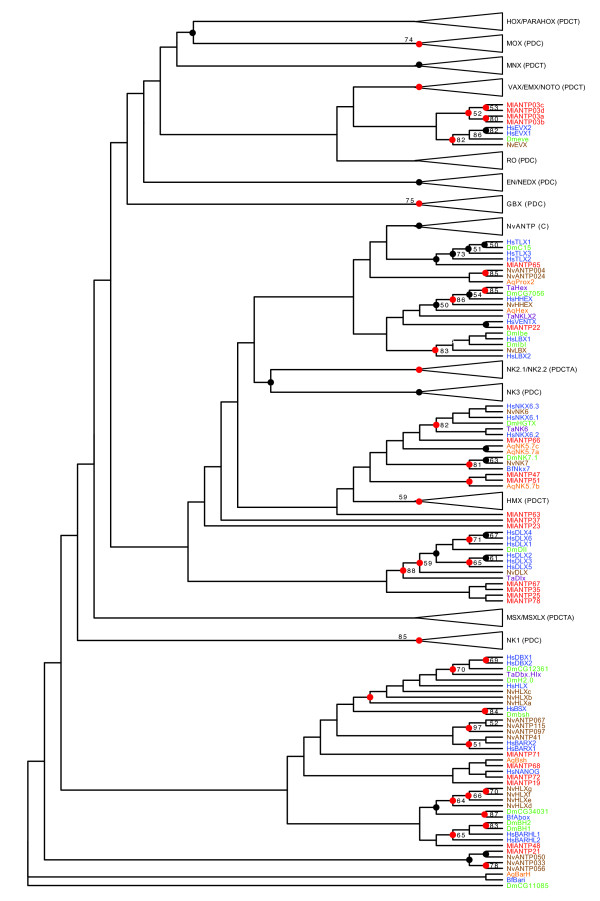
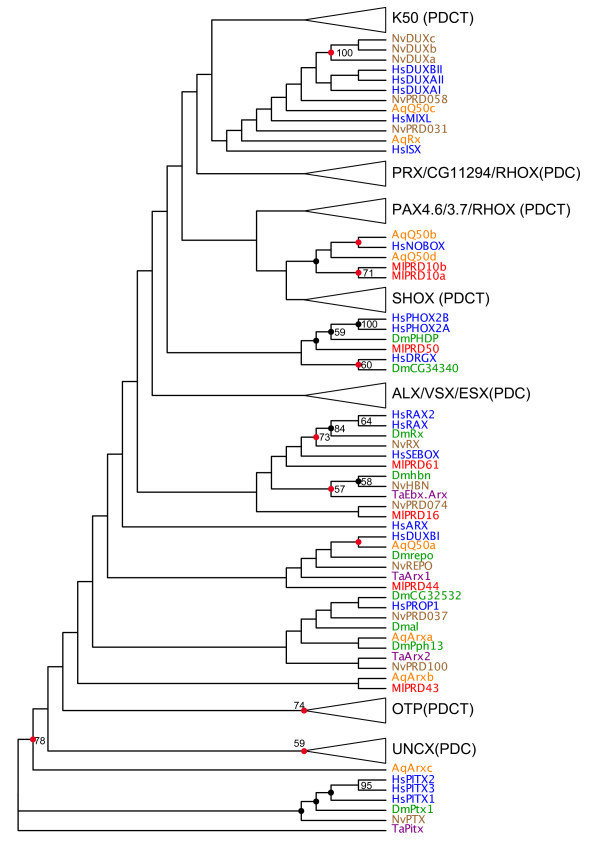
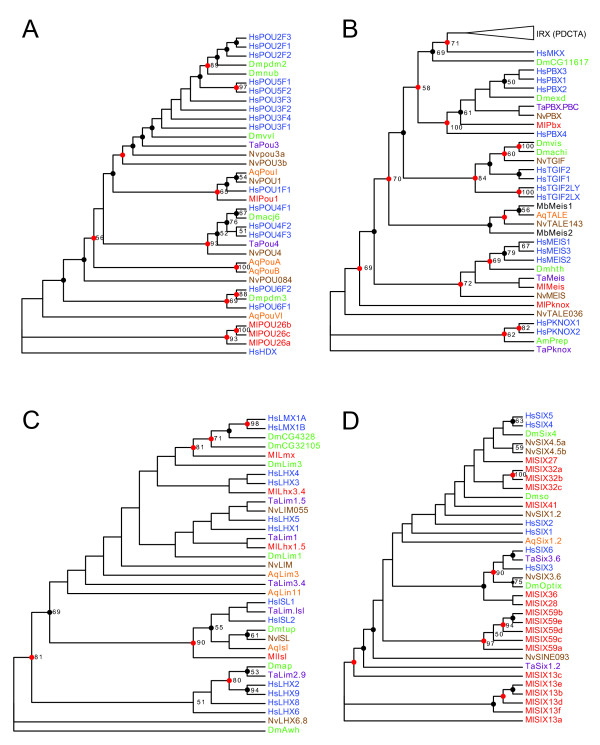
We have used a next-generation sequencing approach to generate a high-quality rough draft of the genome of the ctenophore Mnemiopsis leidyi and subsequently identified a set of 76 homeobox-containing genes from this draft. We phylogenetically categorized this set into established gene families and classes and then compared this set to the homeodomain repertoire of species from the other four early branching metazoan lineages. We have identified several important classes and subclasses of homeodomains that appear to be absent from Mnemiopsis and from the poriferan Amphimedon queenslandica. We have also determined that, based on lineage-specific paralog retention and average branch lengths, it is unlikely that these missing classes and subclasses are due to extensive gene loss or unusually high rates of evolution in Mnemiopsis.
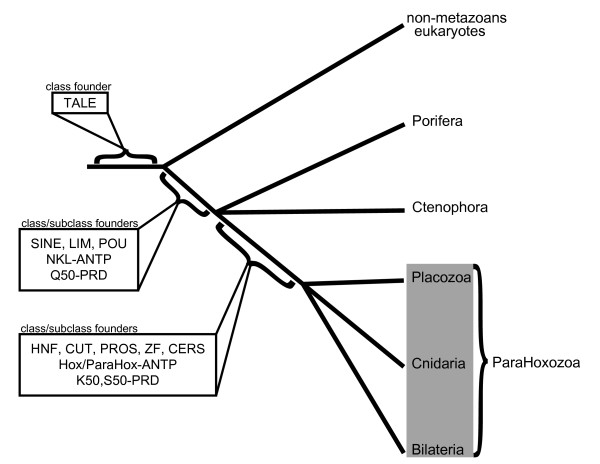
This paper provides a first glimpse of the first sequenced ctenophore genome. We have characterized the full complement of Mnemiopsis homeodomains from this species and have compared them to species from other early branching lineages. Our results suggest that Porifera and Ctenophora were the first two extant lineages to diverge from the rest of animals. Based on this analysis, we also propose a new name - ParaHoxozoa - for the remaining group that includes Placozoa, Cnidaria and Bilateria.
五个早期分支的后生动物谱系(两侧对称动物、刺胞动物、栉水母动物、扁盘动物和多孔动物)的进化关系备受争议,对于拼凑动物进化早期发生的事件具有重要意义。生物体谱系之间的基因内容比较已被确定为一种潜在有用的系统发育重建方法。然而,这些比较需要完整的基因组,而直到现在,栉水母动物谱系还没有这样的基因组。同源盒超家族基因特别适合进行这种基因内容比较,因为它庞大、多样化,并且具有高度保守的结构域。
我们使用下一代测序方法生成了栉水母动物 Mnemiopsis leidyi 的高质量基因组草图,并从该草图中鉴定出了一组 76 个含有同源盒的基因。我们将这个集合按已建立的基因家族和类进行了系统发育分类,然后将这个集合与其他四个早期分支后生动物谱系的物种的同源域库进行了比较。我们已经确定了几个似乎缺失于 Mnemiopsis 和多孔动物 Amphimedon queenslandica 的重要同源域类和子类。我们还确定,基于谱系特异性的旁系同源保留和平均分支长度,这些缺失的类和子类不太可能是由于 Mnemiopsis 中广泛的基因丢失或异常高的进化速度造成的。
本文首次提供了第一个栉水母动物基因组的初步研究。我们已经从该物种中鉴定出了 Mnemiopsis 同源域的完整组成,并将其与其他早期分支谱系的物种进行了比较。我们的研究结果表明,多孔动物和栉水母动物是最早与其他动物谱系分化的两个现存谱系。基于这项分析,我们还提出了一个新的名称——ParaHoxozoa,用于包括扁盘动物、刺胞动物和两侧对称动物在内的剩余组。