Department of Microbiology, Cell and Tumor Biology, Karolinska Institutet, Stockholm, Sweden.
PLoS One. 2010 Sep 30;5(9):e13087. doi: 10.1371/journal.pone.0013087.
Intervention strategies for obesity are global issues that require immediate attention. One approach is to exploit the growing consensus that beneficial gut microbiota could be of use in intervention regimes. Our objective was to determine the mechanism by which the probiotic bacteria Lactobacillus paracasei ssp paracasei F19 (F19) could alter fat storage. Angiopoietin-like 4 (ANGPTL4) is a circulating lipoprotein lipase (LPL) inhibitor that controls triglyceride deposition into adipocytes and has been reported to be regulated by gut microbes.
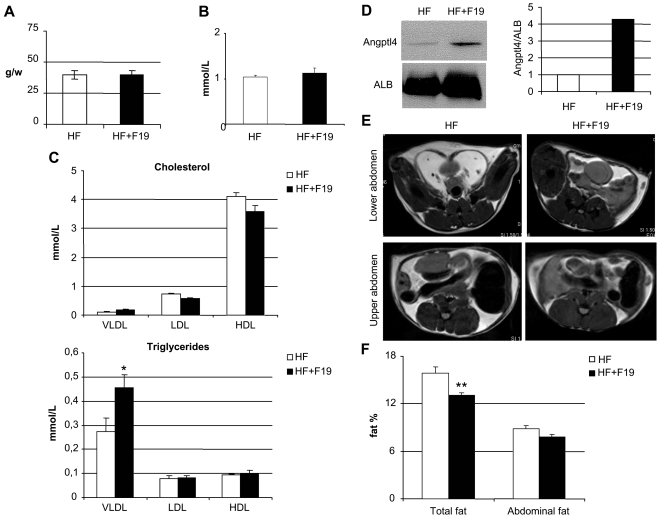
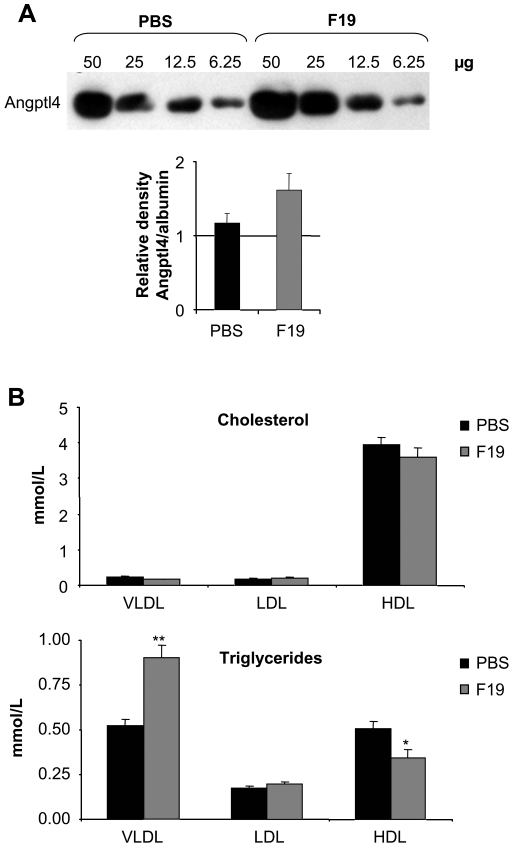
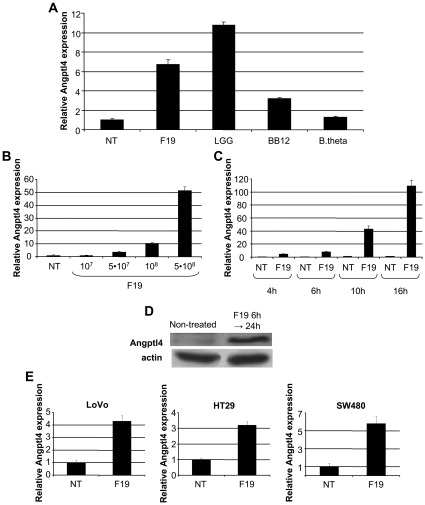
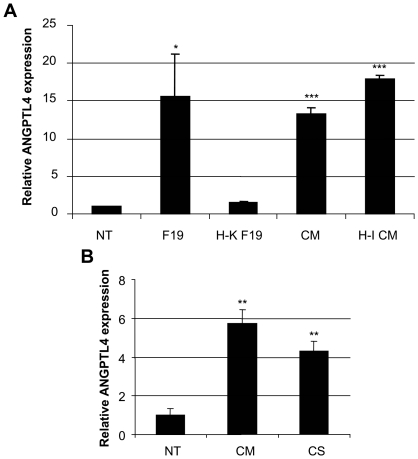
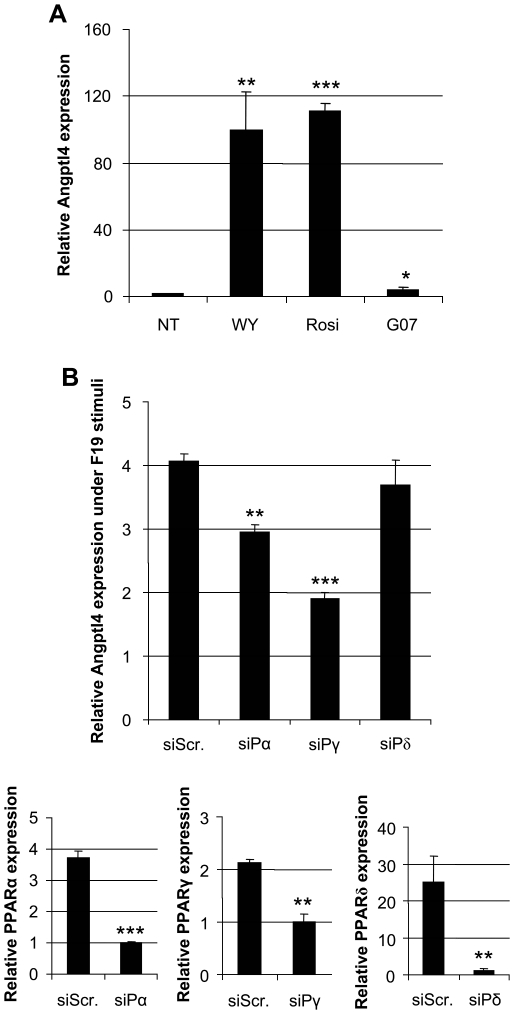
METHODOLOGY/PRINCIPAL FINDINGS: A diet intervention study of mice fed high-fat chow supplemented with F19 was carried out to study potential mechanistic effects on fat storage. Mice given F19 displayed significantly less body fat, as assessed by magnetic resonance imaging, and a changed lipoprotein profile. Given that previous studies on fat storage have identified ANGPTL4 as an effector, we also investigated circulating levels of ANGPTL4, which proved to be higher in the F19-treated group. This increase, together with total body fat and triglyceride levels told a story of inhibited LPL action through ANGPTL4 leading to decreased fat storage. Co-culture experiments of colonic cell lines and F19 were set up in order to monitor any ensuing alterations in ANGPTL4 expression by qPCR. We observed that potentially secreted factors from F19 can induce ANGPTL4 gene expression, acting in part through the peroxisome proliferator activated receptors alpha and gamma. To prove validity of in vitro findings, germ-free mice were monocolonized with F19. Here we again found changes in serum triglycerides as well as ANGPTL4 in response to F19.
CONCLUSIONS/SIGNIFICANCE: Our results provide an interesting mechanism whereby modifying ANGPTL4, a central player in fat storage regulation, through manipulating gut flora could be an important gateway upon which intervention trials of weight management can be based.
肥胖干预策略是全球关注的焦点问题,需要立即采取行动。一种方法是利用越来越多的共识,即有益的肠道微生物群可能对干预方案有用。我们的目的是确定益生菌 Lactobacillus paracasei ssp paracasei F19(F19)改变脂肪储存的机制。血管生成素样蛋白 4(ANGPTL4)是一种循环脂蛋白脂肪酶(LPL)抑制剂,可控制甘油三酯沉积到脂肪细胞中,据报道其受到肠道微生物的调节。
方法/主要发现:对喂食高脂肪饲料并补充 F19 的小鼠进行饮食干预研究,以研究对脂肪储存的潜在机制影响。给予 F19 的小鼠通过磁共振成像(MRI)评估,体脂明显减少,且脂蛋白谱发生变化。鉴于先前关于脂肪储存的研究已将 ANGPTL4 鉴定为效应物,我们还研究了循环 ANGPTL4 水平,结果证明 F19 处理组的水平更高。这种增加,以及总体脂肪和甘油三酯水平,表明通过 ANGPTL4 抑制 LPL 作用导致脂肪储存减少。为了监测 F19 潜在分泌因子对 ANGPTL4 表达的任何后续变化,我们建立了结肠细胞系和 F19 的共培养实验。我们观察到,F19 中可能分泌的因子可以通过 qPCR 诱导 ANGPTL4 基因表达,部分通过过氧化物酶体增殖物激活受体α和γ起作用。为了证明体外发现的有效性,无菌小鼠用 F19 单定植。在这里,我们再次发现 F19 对血清甘油三酯和 ANGPTL4 的变化做出反应。
结论/意义:我们的结果提供了一个有趣的机制,即通过操纵肠道菌群来改变脂肪储存调节中的关键因子 ANGPTL4,可能成为体重管理干预试验的重要基础。