Department of Environmental and Preventive Medicine, Oita University Faculty of Medicine, Idaigaoka, Hasama-machi, Yufucity, Oita 879-5593, Japan.
Nat Rev Gastroenterol Hepatol. 2010 Nov;7(11):629-41. doi: 10.1038/nrgastro.2010.154. Epub 2010 Oct 12.
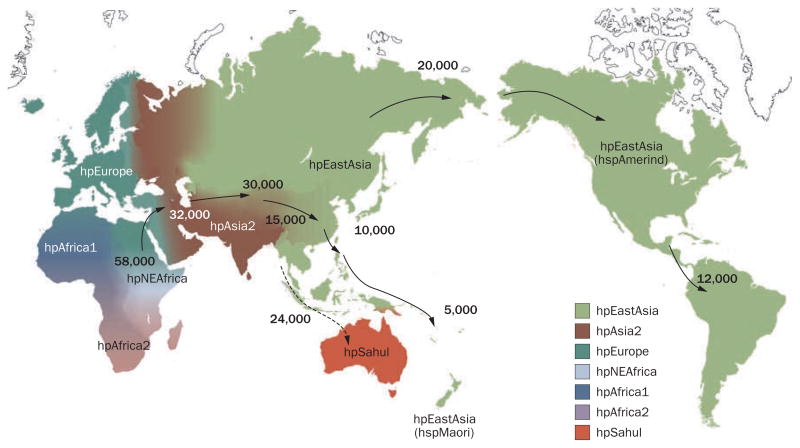
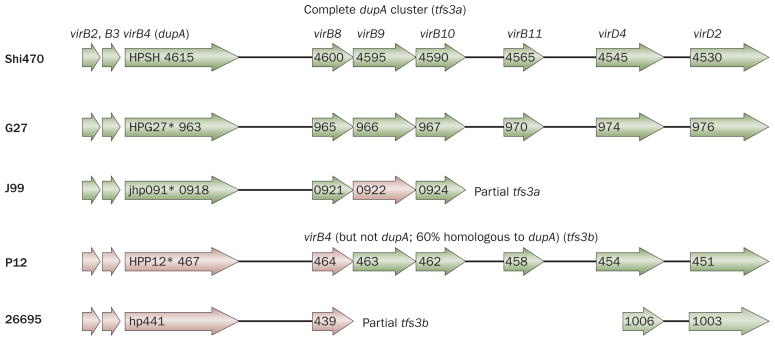
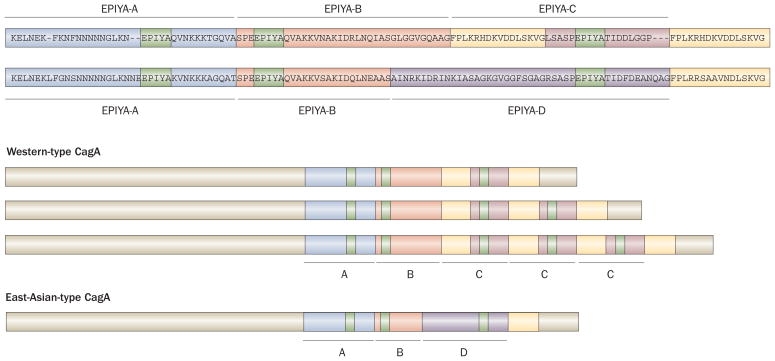
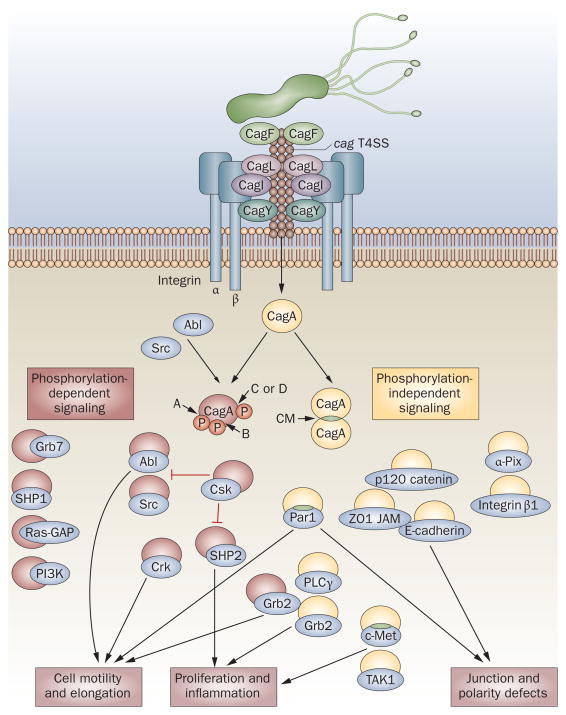
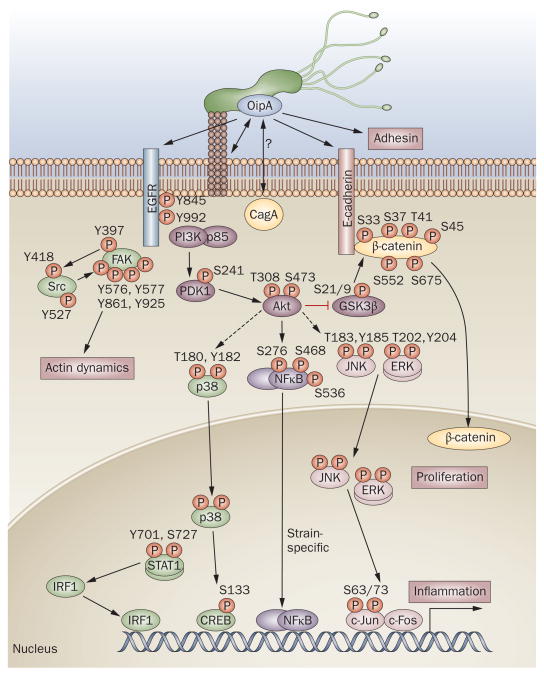
Helicobacter pylori plays an essential role in the development of various gastroduodenal diseases; however, only a small proportion of people infected with H. pylori develop these diseases. Some populations that have a high prevalence of H. pylori infection also have a high incidence of gastric cancer (for example, in East Asia), whereas others do not (for example, in Africa and South Asia). Even within East Asia, the incidence of gastric cancer varies (decreasing in the south). H. pylori is a highly heterogeneous bacterium and its virulence varies geographically. Geographic differences in the incidence of gastric cancer can be explained, at least in part, by the presence of different types of H. pylori virulence factor, especially CagA, VacA and OipA. However, it is still unclear why the pathogenicity of H. pylori increased as it migrated from Africa to East Asia during the course of evolution. H. pylori infection is also thought to be involved in the development of duodenal ulcer, which is at the opposite end of the disease spectrum to gastric cancer. This discrepancy can be explained in part by the presence of H. pylori virulence factor DupA. Despite advances in our understanding of the development of H. pylori-related diseases, further work is required to clarify the roles of H. pylori virulence factors.
幽门螺杆菌在各种胃十二指肠疾病的发展中起着至关重要的作用;然而,只有一小部分感染幽门螺杆菌的人会患上这些疾病。一些幽门螺杆菌感染率较高的人群也有较高的胃癌发病率(例如在东亚),而另一些人群则没有(例如在非洲和南亚)。即使在东亚,胃癌的发病率也存在差异(南部地区有所下降)。幽门螺杆菌是一种高度异质性的细菌,其毒力在地理上存在差异。胃癌发病率的地域差异至少部分可以用不同类型的幽门螺杆菌毒力因子来解释,特别是 CagA、VacA 和 OipA。然而,目前仍不清楚为什么在进化过程中,幽门螺杆菌从非洲迁移到东亚时,其致病性会增加。幽门螺杆菌感染也被认为与十二指肠溃疡的发展有关,十二指肠溃疡是与胃癌相对的疾病谱的另一端。这种差异可以部分解释为存在幽门螺杆菌毒力因子 DupA。尽管我们对幽门螺杆菌相关疾病的发展有了更深入的了解,但仍需要进一步的研究来阐明幽门螺杆菌毒力因子的作用。