Department of Standard Research, Korea Institute of Oriental Medicine, 483 Expo-ro, Yuseong-gu, Daejeon, 305-811, Korea.
J Neuroinflammation. 2010 Oct 15;7:69. doi: 10.1186/1742-2094-7-69.
Amyotrophic lateral sclerosis (ALS) is a disease affecting the central nervous system that is either sporadic or familial origin and causing the death of motor neurons. One of the genetic factors contributing to the etiology of ALS is mutant SOD1 (mtSOD1), which induces vulnerability of motor neurons through protein misfolding, mitochondrial dysfunction, oxidative damage, cytoskeletal abnormalities, defective axonal transport, glutamate excitotoxicity, inadequate growth factor signaling, and neuroinflammation. Bee venom has been used in the practice of Oriental medicine and evidence from the literature indicates that BV plays an anti-inflammatory or anti-nociceptive role against inflammatory reactions associated with arthritis and other inflammatory diseases. The purpose of the present study was to determine whether bee venom suppresses motor neuron loss and microglial cell activation in hSOD1G93A mutant mice.
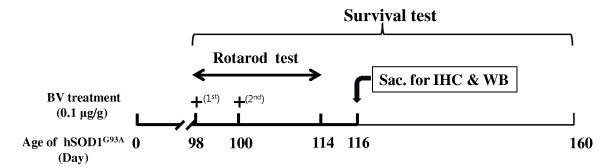
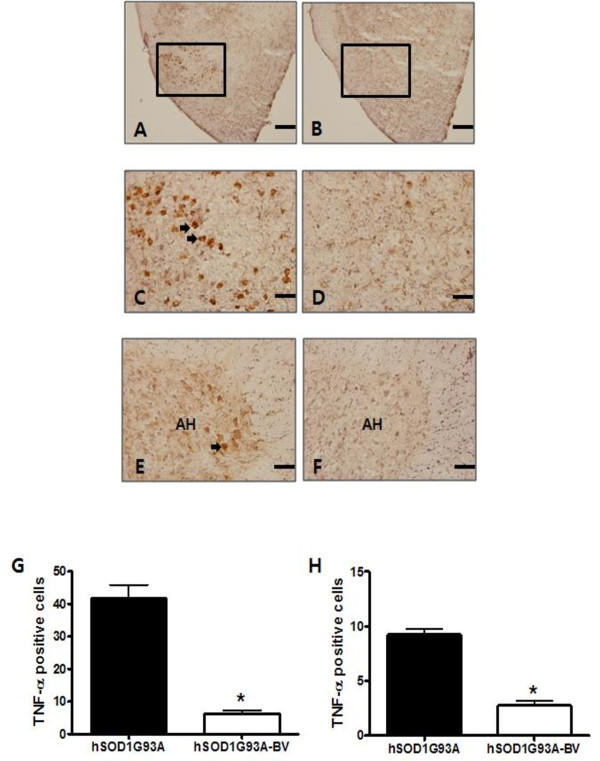
Bee venom (BV) was bilaterally injected (subcutaneously) into a 14-week-old (98 day old) male hSOD1G93A animal model at the Zusanli (ST36) acupoint, which is known to mediate an anti-inflammatory effect. For measurement of motor activity, rotarod test was performed and survival statistics were analyzed by Kaplan-Meier survival curves. The effects of BV treatment on anti-neuroinflammation of hSOD1G93A mice were assessed via immunoreactions using Iba 1 as a microglia marker and TNF-α antibody. Activation of ERK, Akt, p38 MAP Kinase (MAPK), and caspase 3 proteins was evaluated by western blotting.
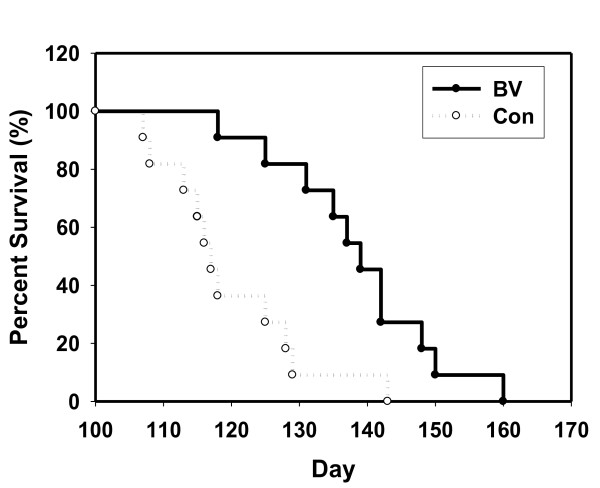
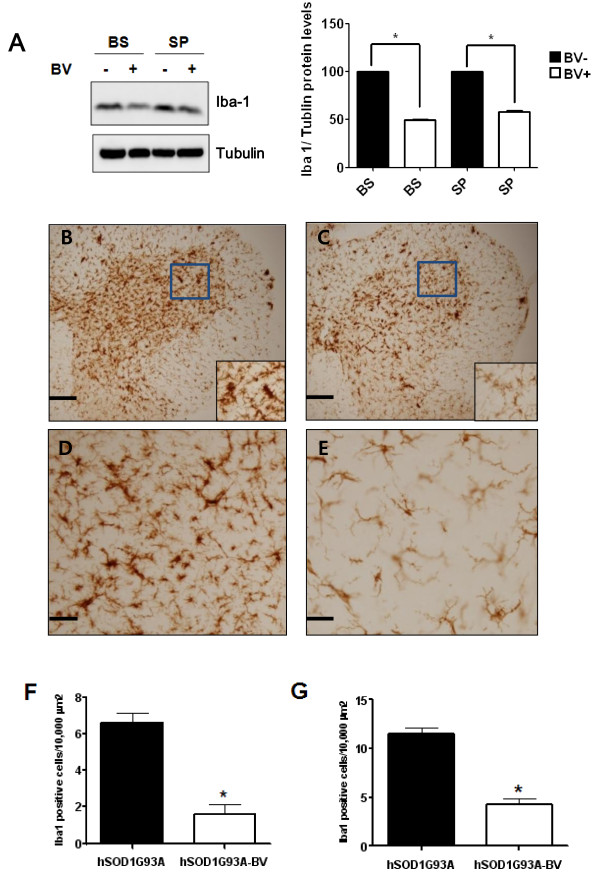
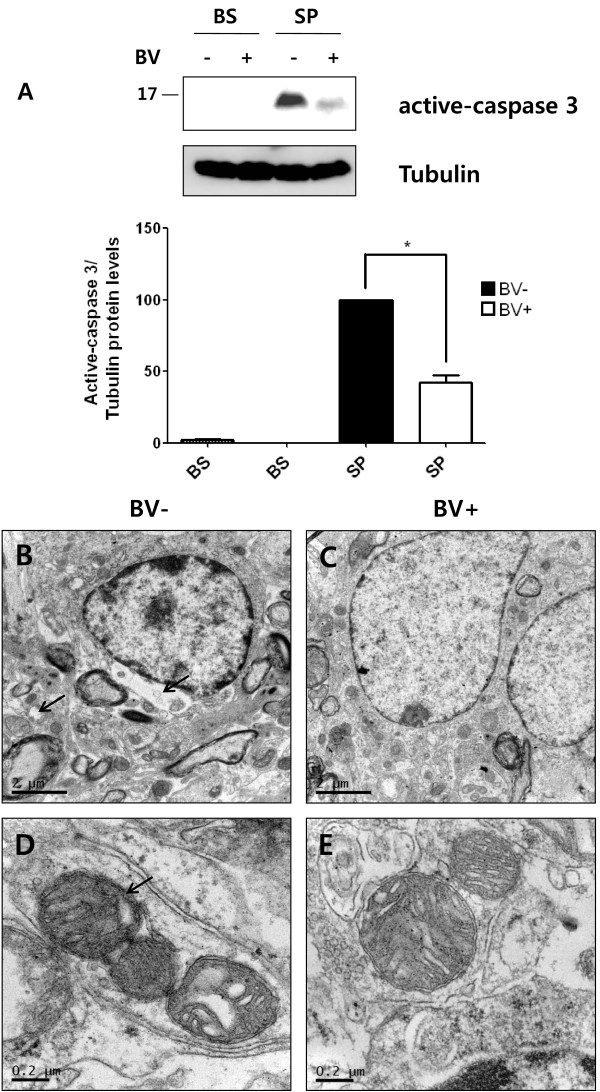
BV-treated mutant hSOD1 transgenic mice showed a decrease in the expression levels of microglia marker and phospho-p38 MAPK in the spinal cord and brainstem. Interestingly, treatment of BV in symptomatic ALS animals improved motor activity and the median survival of the BV-treated group (139 ± 3.5 days) was 18% greater than control group (117 ± 3.1 days). Furthermore, we found that BV suppressed caspase-3 activity and blocked the defects of mitochondrial structure and cristae morphology in the lumbar spinal cord of hSOD1G93A mice at the symptomatic stage.
From these findings, our research suggests BV could be a potential therapeutic agent for anti-neuroinflammatory effects in an animal model of ALS.
肌萎缩侧索硬化症(ALS)是一种中枢神经系统疾病,有散发性或家族性起源,并导致运动神经元死亡。导致 ALS 病因的遗传因素之一是突变 SOD1(mtSOD1),它通过蛋白质错误折叠、线粒体功能障碍、氧化损伤、细胞骨架异常、轴突运输缺陷、谷氨酸兴奋性毒性、生长因子信号不足和神经炎症导致运动神经元易损。蜂毒在东方医学实践中被使用,文献中的证据表明,BV 对与关节炎和其他炎症性疾病相关的炎症反应具有抗炎或抗伤害作用。本研究的目的是确定蜂毒是否抑制 hSOD1G93A 突变型小鼠的运动神经元丢失和小胶质细胞激活。
将蜂毒(BV)双侧注射(皮下)到 14 周龄(98 天大)雄性 hSOD1G93A 动物模型的足三里(ST36)穴位,该穴位已知具有抗炎作用。为了测量运动活动,进行了旋转棒测试,并通过 Kaplan-Meier 生存曲线分析生存统计数据。通过使用 Iba1 作为小胶质细胞标志物和 TNF-α 抗体的免疫反应评估 BV 处理对 hSOD1G93A 小鼠的神经炎症的影响。通过 Western 印迹评估 ERK、Akt、p38 MAP 激酶(MAPK)和 caspase 3 蛋白的激活。
BV 处理的突变型 hSOD1 转基因小鼠显示脊髓和脑干中小胶质细胞标志物和磷酸化 p38 MAPK 的表达水平降低。有趣的是,在症状性 ALS 动物中,BV 的治疗改善了运动活动,BV 治疗组的中位生存时间(139±3.5 天)比对照组(117±3.1 天)长 18%。此外,我们发现 BV 抑制 caspase-3 活性,并阻止 hSOD1G93A 小鼠在症状期腰椎脊髓中线粒体结构和嵴形态的缺陷。
从这些发现中,我们的研究表明 BV 可能是 ALS 动物模型中抗神经炎症作用的潜在治疗剂。