Department of Robotics, Brain and Cognitive Sciences, Italian Institute of Technology, Genova, Italy.
PLoS One. 2010 Oct 20;5(10):e13506. doi: 10.1371/journal.pone.0013506.
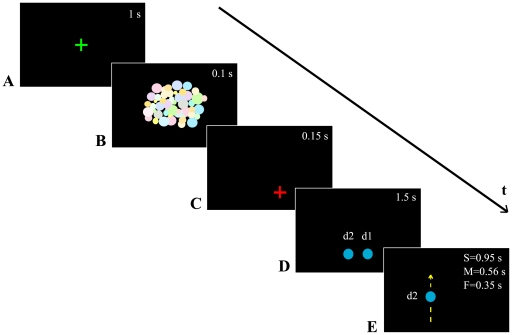
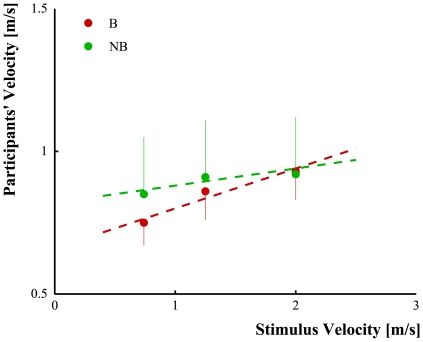
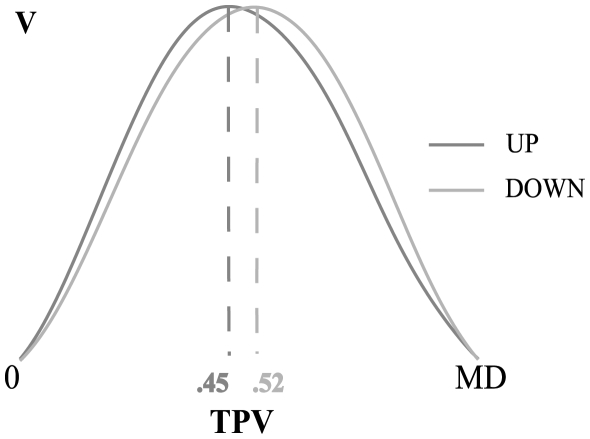
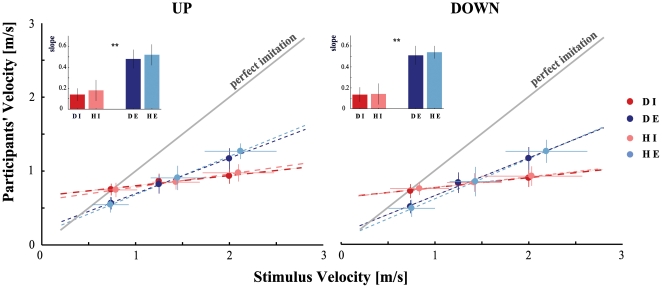
Automatic imitation is the tendency to reproduce observed actions involuntarily. Though this topic has been widely treated, at present little is known about the automatic imitation of the kinematic features of an observed movement. The present study was designed to understand if the kinematics of a previously seen stimulus primes the executed action, and if this effect is sensitive to the kinds of stimuli presented. We proposed a simple imitation paradigm in which a dot or a human demonstrator moved in front of the participant who was instructed either to reach the final position of the stimulus or to imitate its motion with his or her right arm. Participants' movements were automatically contaminated by stimulus velocity when it moved according to biological laws, suggesting that automatic imitation was kinematic dependent. Despite that the performance, in term of reproduced velocity, improved in a context of voluntary imitation, subjects did not replicate the observed motions exactly. These effects were not affected by the kind of stimuli used, i.e., motor responses were influenced in the same manner after dot or human observation. These findings support the existence of low-level sensory-motor matching mechanisms that work on movement planning and represent the basis for higher levels of social interaction.
自动模仿是指无意识地复制观察到的动作的倾向。尽管这个话题已经被广泛研究,但目前对于观察到的运动的运动学特征的自动模仿知之甚少。本研究旨在了解先前看到的刺激是否会启动执行动作的运动学,以及这种效应是否对呈现的刺激类型敏感。我们提出了一个简单的模仿范式,其中一个点或一个人类演示者在参与者面前移动,参与者被指示要么到达刺激的最终位置,要么用右臂模仿其运动。当刺激按照生物规律移动时,参与者的运动自动受到刺激速度的污染,这表明自动模仿是运动学依赖的。尽管在自愿模仿的情况下,复制速度的表现有所提高,但参与者并没有完全复制观察到的动作。这些效果不受所使用的刺激类型的影响,即在观察点或人类之后,运动反应以相同的方式受到影响。这些发现支持了存在低级别的感觉运动匹配机制,这些机制在运动规划中起作用,并构成了更高层次的社会互动的基础。