Centre for Immunity, Infection and Evolution, University of Edinburgh, Edinburgh, United Kingdom.
PLoS Biol. 2010 Oct 19;8(10):e1000525. doi: 10.1371/journal.pbio.1000525.
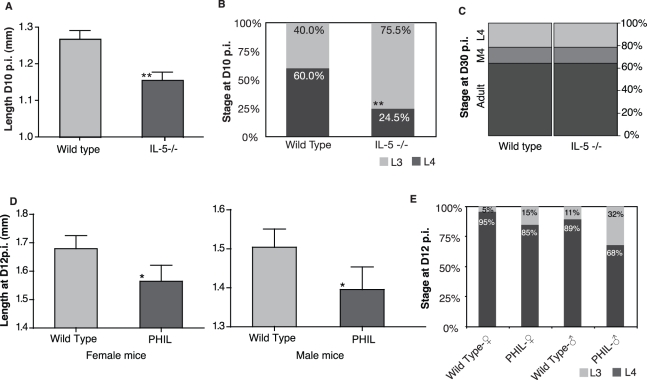
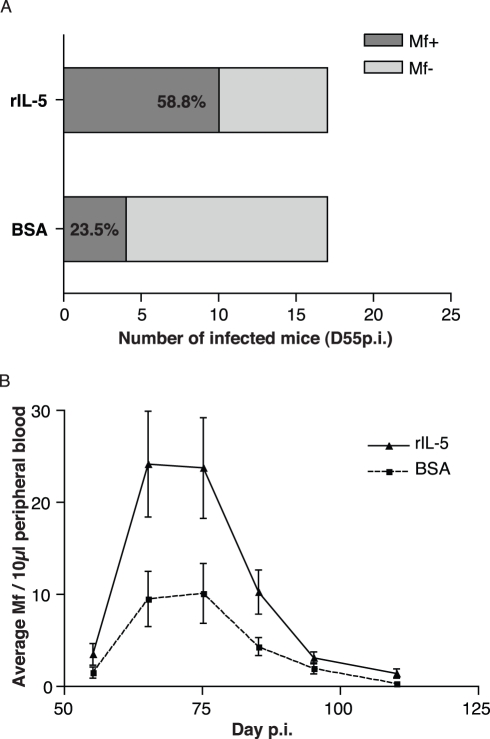
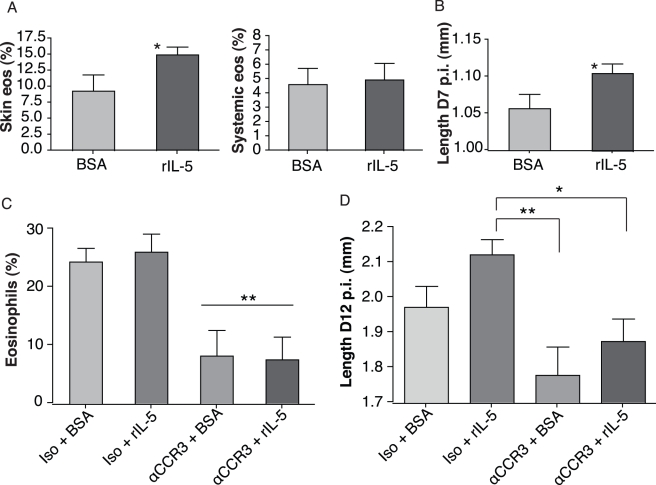
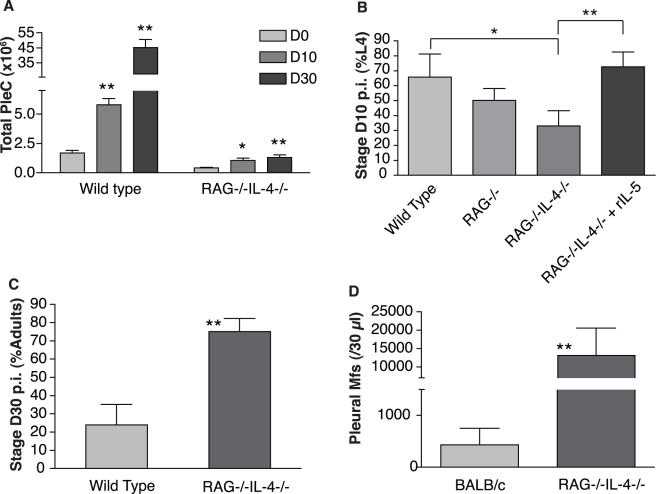
Humans and other mammals mount vigorous immune assaults against helminth parasites, yet there are intriguing reports that the immune response can enhance rather than impair parasite development. It has been hypothesized that helminths, like many free-living organisms, should optimize their development and reproduction in response to cues predicting future life expectancy. However, immune-dependent development by helminth parasites has so far eluded such evolutionary explanation. By manipulating various arms of the immune response of experimental hosts, we show that filarial nematodes, the parasites responsible for debilitating diseases in humans like river blindness and elephantiasis, accelerate their development in response to the IL-5 driven eosinophilia they encounter when infecting a host. Consequently they produce microfilariae, their transmission stages, earlier and in greater numbers. Eosinophilia is a primary host determinant of filarial life expectancy, operating both at larval and at late adult stages in anatomically and temporally separate locations, and is implicated in vaccine-mediated protection. Filarial nematodes are therefore able to adjust their reproductive schedules in response to an environmental predictor of their probability of survival, as proposed by evolutionary theory, thereby mitigating the effects of the immune attack to which helminths are most susceptible. Enhancing protective immunity against filarial nematodes, for example through vaccination, may be less effective at reducing transmission than would be expected and may, at worst, lead to increased transmission and, hence, pathology.
人类和其他哺乳动物会对寄生虫发起强烈的免疫攻击,但有趣的是,有报告称免疫反应可以增强而不是削弱寄生虫的发育。有人假设,寄生虫(像许多自由生活的生物一样)应该根据预测未来预期寿命的线索,优化其发育和繁殖。然而,寄生虫的免疫依赖发育迄今为止还没有得到这样的进化解释。通过操纵实验宿主的各种免疫反应,我们发现丝虫,即导致河盲症和象皮病等人类衰弱性疾病的寄生虫,在感染宿主时会对它们遇到的白细胞介素 5 驱动的嗜酸性粒细胞增多做出反应,从而加速其发育。因此,它们更早且更多地产生了传播阶段的微丝蚴。嗜酸性粒细胞增多是丝虫预期寿命的主要宿主决定因素,在幼虫和晚期成虫阶段,在解剖和时间上分开的位置发挥作用,并与疫苗介导的保护作用有关。因此,正如进化理论所提出的那样,丝虫能够根据其生存概率的环境预测因素来调整其繁殖计划,从而减轻其最易受免疫攻击影响的后果。例如,增强对丝虫的保护性免疫,例如通过接种疫苗,可能不会像预期的那样有效减少传播,并且在最坏的情况下,可能会导致传播增加,从而导致病理学。