Centre for Drugs and Diagnostics, Department of Tropical Disease Biology, Liverpool School of Tropical Medicine, Liverpool L3 5QA, United Kingdom.
Centre for Drugs and Diagnostics, Department of Tropical Disease Biology, Liverpool School of Tropical Medicine, Liverpool L3 5QA, United Kingdom
J Immunol. 2020 Aug 1;205(3):731-740. doi: 10.4049/jimmunol.1901244. Epub 2020 Jun 22.
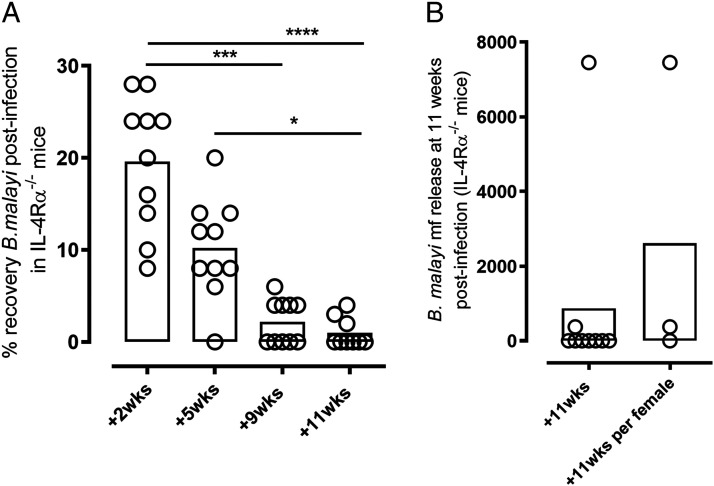
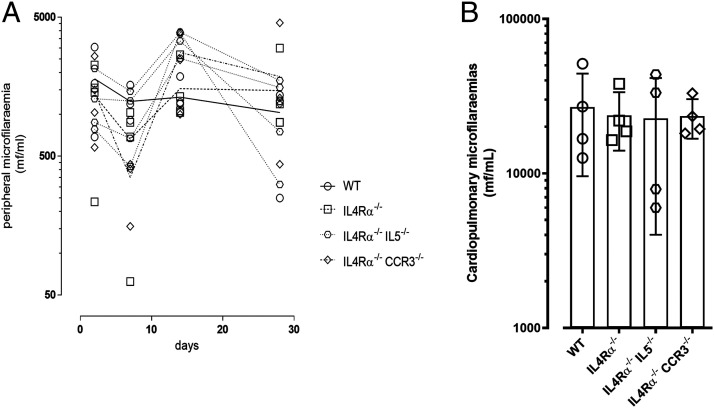
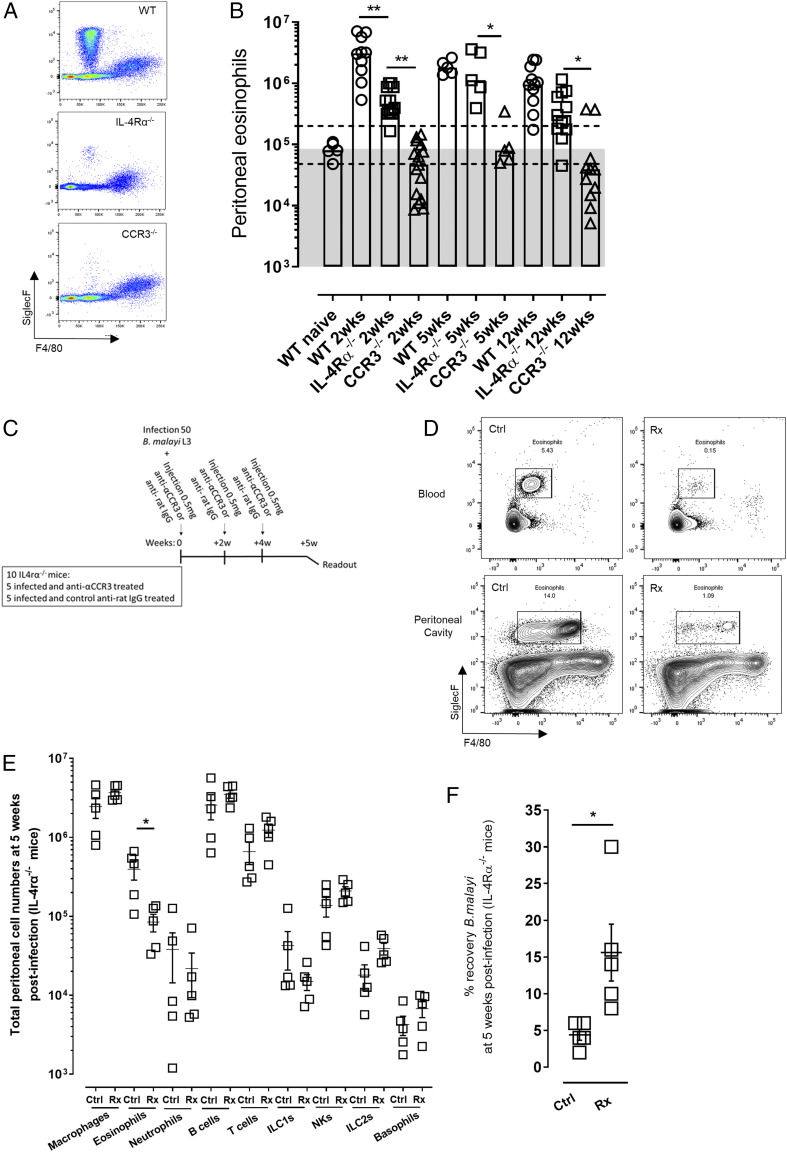
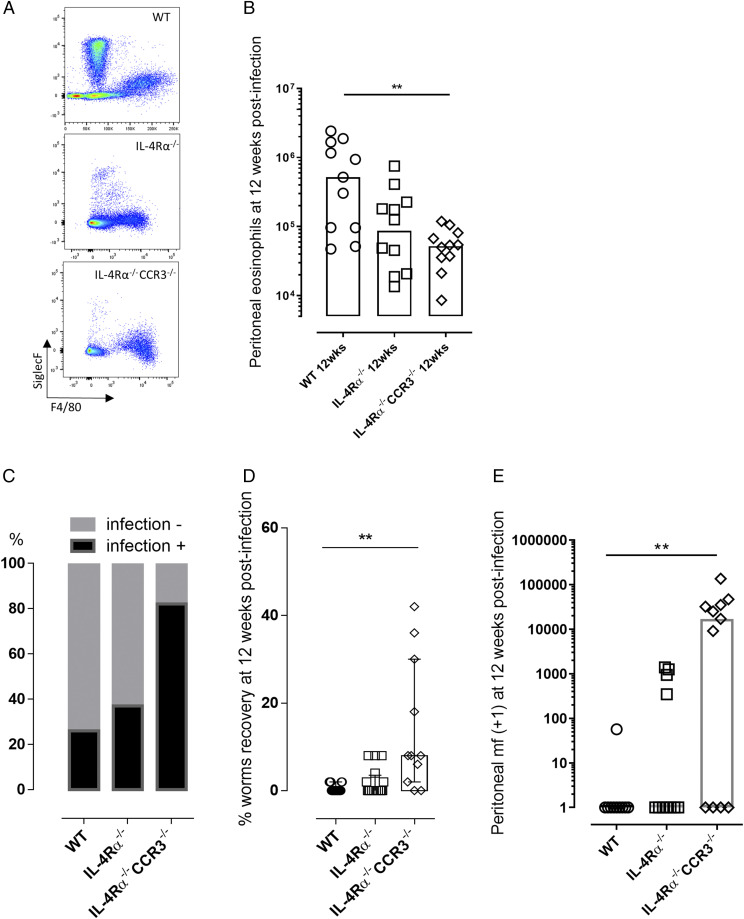
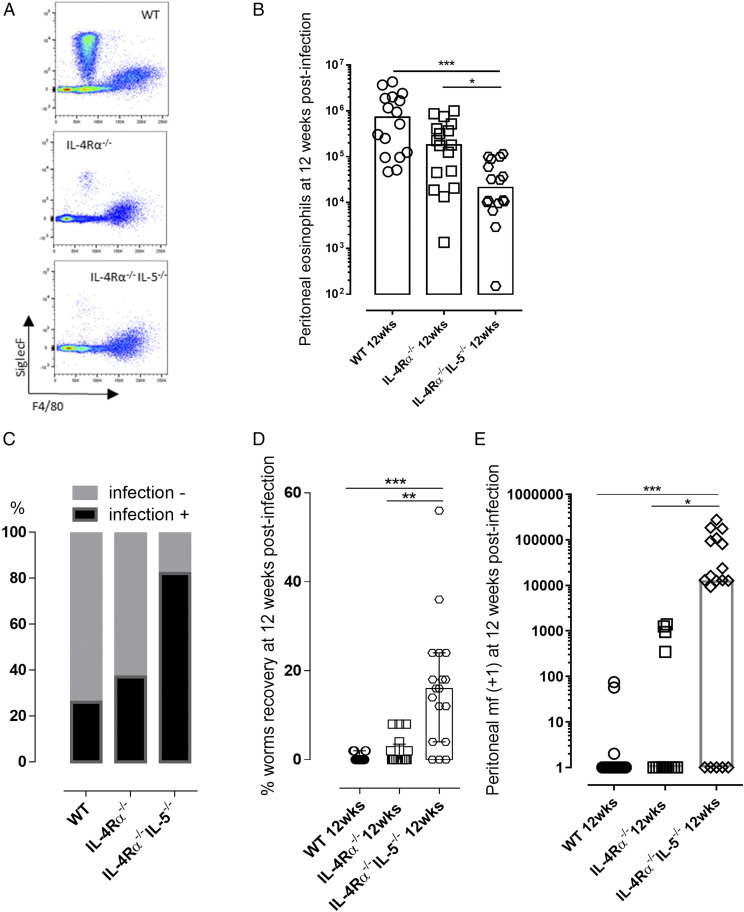
Helminth infections are accompanied by eosinophilia in parasitized tissues. Eosinophils are effectors of immunity to tissue helminths. We previously reported that in the context of experimental filarial nematode infection, optimum tissue eosinophil recruitment was coordinated by local macrophage populations following IL-4R-dependent in situ proliferation and alternative activation. However, in the current study, we identify that control of chronic adult filarial worm infection is evident in IL-4Rα-deficient (IL-4Rα) mice, whereby the majority of infections do not achieve patency. An associated residual eosinophilia was apparent in infected IL-4Rα mice. By treating IL-4Rα mice serially with anti-CCR3 Ab or introducing a compound deficiency in CCR3 within IL-4Rα mice, residual eosinophilia was ablated, and susceptibility to chronic adult infection was established, promoting a functional role for CCR3-dependent eosinophil influx in immune control in the absence of IL-4/IL-13-dependent immune mechanisms. We investigated additional cytokine signals involved in residual eosinophilia in the absence IL-4Rα signaling and defined that IL-4Rα/IL-5 double-knockout mice displayed significant eosinophil deficiency compared with IL-4Rα mice and were susceptible to chronic fecund adult filarial infections. Contrastingly, there was no evidence that either IL-4R-dependent or IL-4R-independent/CCR3/IL-5-dependent immunity influenced microfilarial loads in the blood. Our data demonstrate multiplicity of Th2-cytokine control of eosinophil tissue recruitment during chronic filarial infection and that IL-4R-independent/IL-5- and CCR3-dependent pathways are sufficient to control filarial adult infection via an eosinophil-dependent effector response prior to patency.
蠕虫感染伴随着寄生虫组织中的嗜酸性粒细胞增多。嗜酸性粒细胞是对组织蠕虫免疫的效应物。我们之前报道过,在实验性丝虫感染的背景下,局部巨噬细胞群在 IL-4R 依赖性原位增殖和替代激活后,协调最佳的组织嗜酸性粒细胞募集。然而,在目前的研究中,我们发现 IL-4Rα 缺陷(IL-4Rα)小鼠对慢性成虫丝虫感染的控制是明显的,其中大多数感染无法通畅。在感染的 IL-4Rα 小鼠中明显存在残余嗜酸性粒细胞增多。通过连续用抗 CCR3 Ab 处理 IL-4Rα 小鼠或在 IL-4Rα 小鼠中引入 CCR3 的复合缺陷,残余嗜酸性粒细胞被消除,并且对慢性成虫感染的易感性得到确立,从而促进了 CCR3 依赖性嗜酸性粒细胞流入在没有 IL-4/IL-13 依赖性免疫机制的情况下对免疫控制的功能作用。我们研究了在没有 IL-4Rα 信号的情况下残余嗜酸性粒细胞中涉及的其他细胞因子信号,并定义了 IL-4Rα/IL-5 双敲除小鼠与 IL-4Rα 小鼠相比表现出显著的嗜酸性粒细胞缺乏症,并且易感性增加慢性丰富的成虫丝虫感染。相比之下,没有证据表明 IL-4R 依赖性或 IL-4R 非依赖性/CCR3/IL-5 依赖性免疫影响血液中的微丝蚴负荷。我们的数据表明,在慢性丝虫感染期间,多种 Th2 细胞因子控制嗜酸性粒细胞组织募集,并且 IL-4R 非依赖性/IL-5 和 CCR3 依赖性途径在通畅之前通过嗜酸性粒细胞依赖性效应反应足以控制成虫丝虫感染。